Showing posts with label Bukit Timah. Show all posts

Saturday, September 1, 2012

International Vulture Awareness Day: Vultures in Singapore

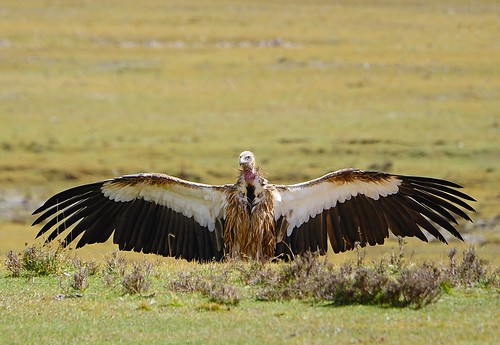
Gyps himalayensis , Himalayan Griffon, in Tibetan "mkha' la 'khor མཁའ་ལ་འཁོར་"
(Photo by reurinkjan)

Today is International Vulture Awareness Day, and I thought it would be appropriate to write about records of vultures in Singapore.

But why do we need a day to celebrate vultures? As stated on the International Vulture Awareness Day website:
Vultures are an ecologically vital group of birds that face a range of threats in many areas that they occur. Populations of many species are under pressure and some species are facing extinction.

The International Vulture Awareness Day has grown from Vulture Awareness Days run by the Birds of Prey Programme in South Africa and the Hawk Conservancy Trust in England, who decided to work together and expand the initiative into an international event.

It is now recognised that a co-ordinated international day will publicise the conservation of vultures to a wider audience and highlight the important work being carried out by the world's vulture conservationists.


Friday, July 20, 2012

DENSO Youth for Earth Action

IMG_5898

For the last 3 days, I have been involved with DENSO Youth for Earth Action (DYEA), an international programme to support youths in Japan and ASEAN who are passionate about doing something for the environment in their home countries.

Monday, October 18, 2010

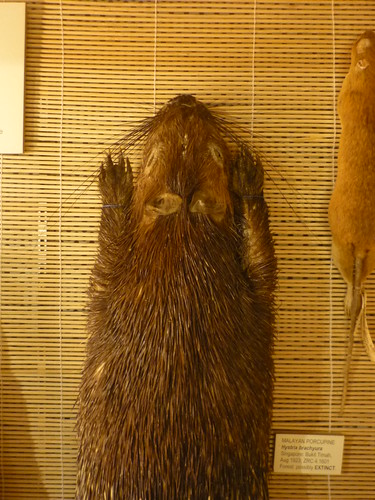
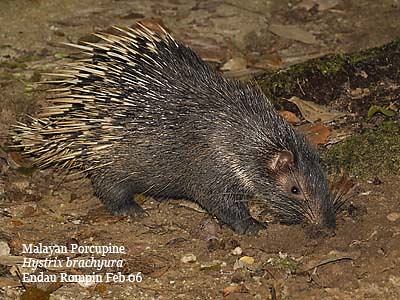
Raffles Museum Treasures: Malayan porcupine

P1430922
Malayan porcupine (Hystrix brachyura)
Collected from Bukit Timah, August 1923
Native to Singapore: Critically Endangered

Habitatnews: The Tekong Porcupine
Tekong's treasures
IUCN Red List


(Photo by kwokwai76)

Tuesday, October 5, 2010

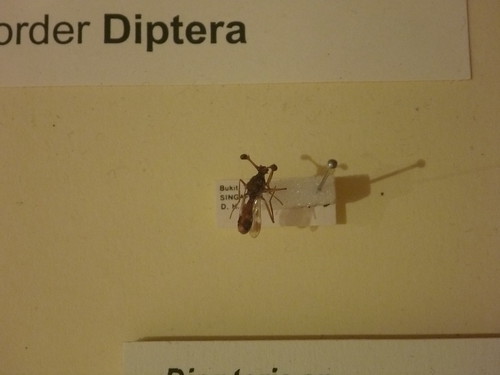
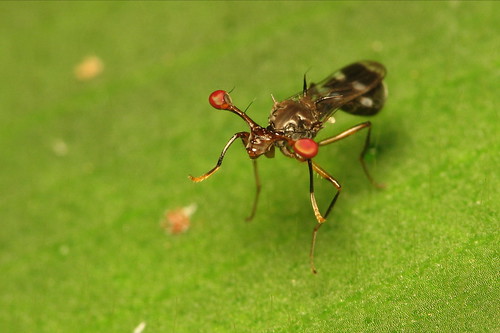
Raffles Museum Treasures: Stalk-eyed fly

P1010610
Stalk-eyed fly (?Teleopsis quinqueguttata)
Collected from Bukit Timah, June 1985
Native to Singapore

This specimen was labelled as "Diopteris sp.", which is probably an error, as this name apparently doesn't exist.

Karthik's Journey: Stalk-eyed Fly
Pharyngula: The Lovely Stalk-eyed Fly
Female choice response to artificial selection on an
exaggerated male trait in a stalk-eyed fly


Teleopsis quinqueguttata
(Photo by spilopterus)

Sunday, August 29, 2010

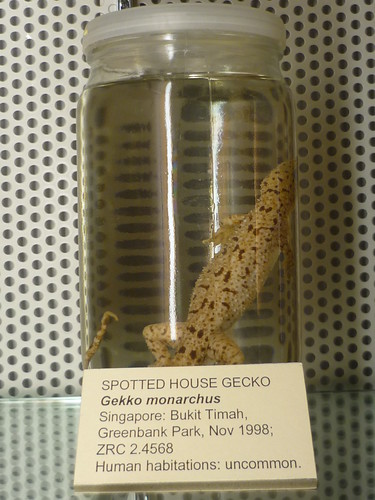
Raffles Museum Treasures: Spotted house gecko

P1430987
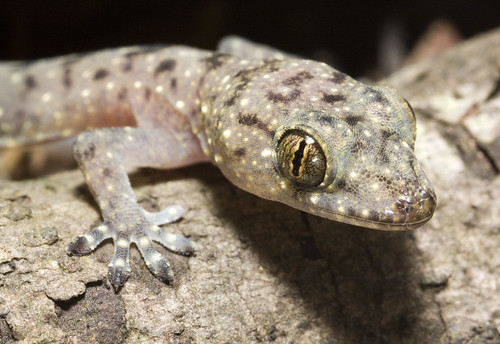
Spotted house gecko (Gekko monarchus)
Collected from Bukit Timah, November 1998
Native to Singapore

Wildlife Singapore
Ecology Asia


(Photo by Marcus)

Sunday, July 18, 2010

Raffles Museum Treasures: Banded leaf monkey

P1130843
Banded leaf monkey (Presbytis femoralis)
Collected from Bukit Timah Nature Reserve, October 1987
Native to Singapore: Critically Endangered

This elderly female was the last survivor of the troop which once inhabited the forests of the Bukit Timah Nature Reserve. One day in October 1987, she left the safety of the trees and descended to the ground, where she was set upon and fatally mauled by a pack of dogs.

In the 1920s, this monkey was reported to be present in various parts of Singapore, including Changi, Tampines, Bukit Timah, Pandan and Tuas. Today, the species still barely clings on in the forests of the Central Catchment Area, where at least 40 are known to roam the MacRitchie and Lower Peirce Reservoir areas.

Rare Singapore monkey species in better shape than thought
Wildlife Singapore
Singapore Red Data Book
NParks FaunaWeb
Ecology Asia
The Primata
IUCN Red List
ARKive


(Photo by hiker1974)

Friday, June 11, 2010

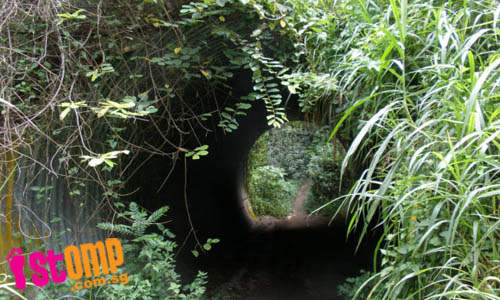
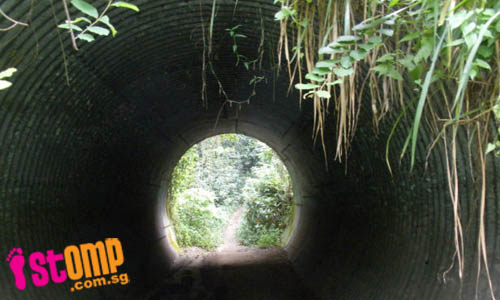
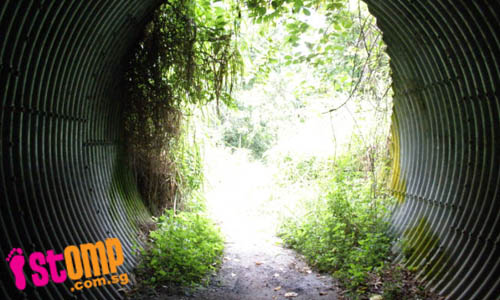
Safe or not? Neglected tunnel is covered with overgrown vegetation

 Safe or not? Neglected tunnel is covered with overgrown vegetation
This tunnel along a cycling track has become covered with dense vegetation. STOMPer Mountain Biker is concerned that it could harbour snakes and spiders as well.

Said the STOMPer in an email today (June 11):

"Last week I went cycling on my mountain bike from Hindhede Loop to Asas Loop and had to pass through this tunnel, which is now overgrown with grass, branches and bushes.

"I have an innate fear of snakes and spiders and cycling through the tunnel made me very nervous.

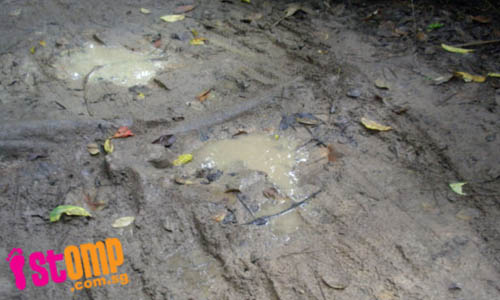
"It was just after the rain and the biking trail path was very slippery and muddy

"I hope NParks can remove the overgrown vegetation and make the trail safe for mountain bikers like my buddies and me."

 Safe or not? Neglected tunnel is covered with overgrown vegetation
 Safe or not? Neglected tunnel is covered with overgrown vegetation
 Safe or not? Neglected tunnel is covered with overgrown vegetation

Related posts: Overgrown plants around this overhead bridge creeps me out (24th April 2010)
Palm tree flowers attract bees and pose danger to passers-by (12th April 2010)
Overgrown mango tree makes me tremble whenever I cross overhead bridge (20th March 2010)
I say my prayers whenever I cross this messy and ugly bridge (3rd January 2010)
"Overgrown creepers at Penjuru bus stop gives me sense that living things lurk behind" (3rd November 2009)
Creepers growing up Harbourfront floodlights could be the heart of darkness (22nd September 2009)

Not again.

facepalm

Saturday, November 14, 2009

Climbing Bukit Timah

P1310849

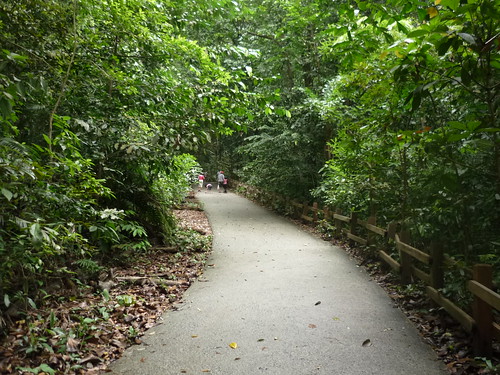
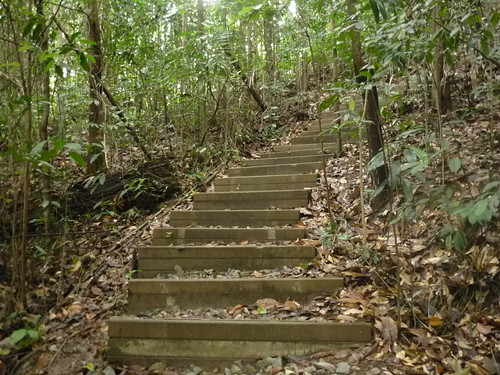
Despite my passion and interest in exploring our wild places, I have to say that I have neglected the forests of the Central Nature Reserves. Including today's trip, I have visited Bukit Timah Nature Reserve only a miserable 5 times in my entire life.

Today wasn't supposed to be a relaxing hike up and down the hill; this was meant to be a training session in preparation for my trip to climb Mount Kinabalu in December. Still, I did stop to take photos whenever possible.

P1310839
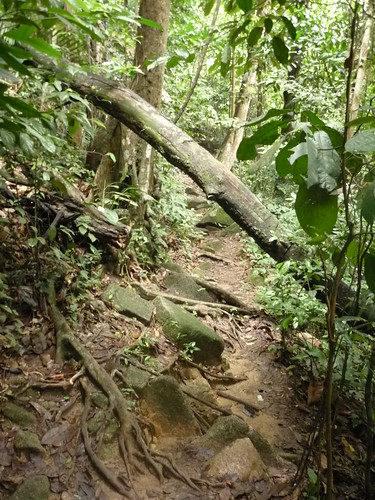
I started up the Main Road, then took the Rock Path, which was a path I had never used before.

P1310857
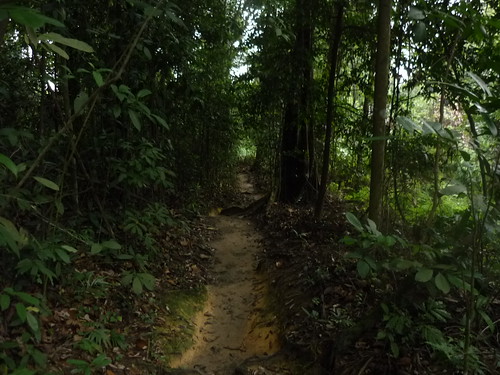
There's something about walking down narrow forest trails that never fails to remind me of the time I spent in the Maliau Basin in 2007. Especially when the trail soon forces you to grab onto tree trunks, or even get down on all fours as you scramble over obstacles. One big difference though is the absence of bloodthirsty leeches.

P1310893
Despite it being a weekend, there were not many people using these trails, possibly because of the somewhat rainy weather. At least it didn't rain while I was there, and it did make for a relatively pleasant and cooling hike through the forest.

P1310912
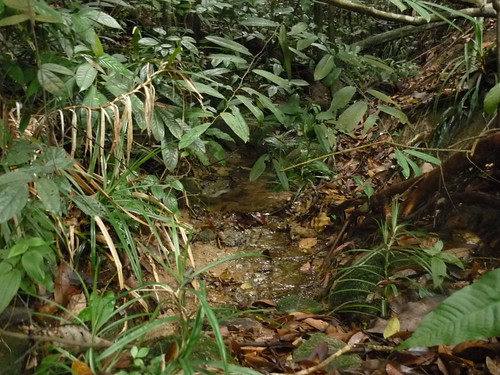
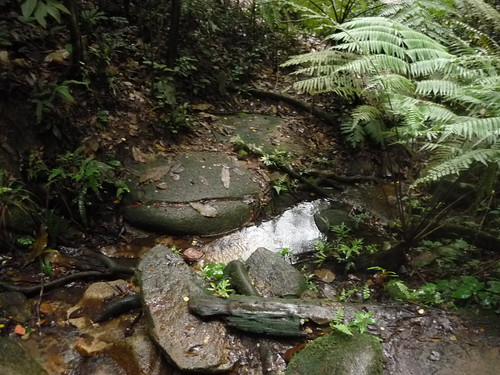
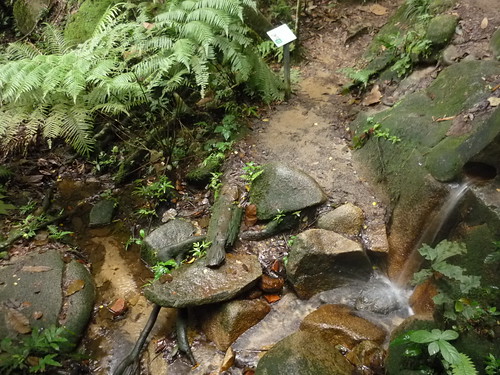
It's always nice to stop for a break at one of these small forest streams.

P1310950
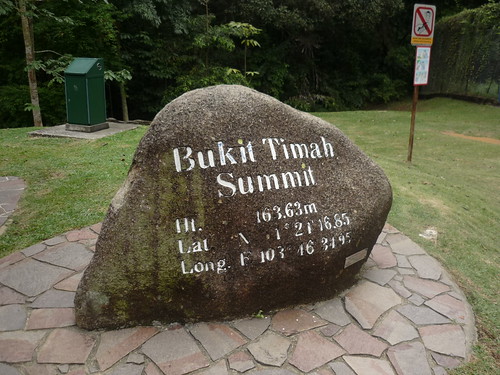
After scaling the Rock Path, I went up the Summit Path, and finally reached the highest point in Singapore.

P1310951
The reason behind such a blatant showcase of stupidity still eludes me.

I continued down the Rengas Path.

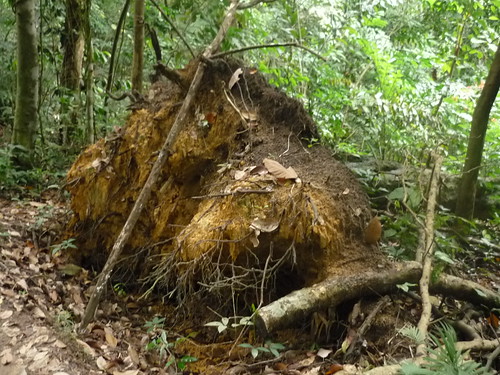
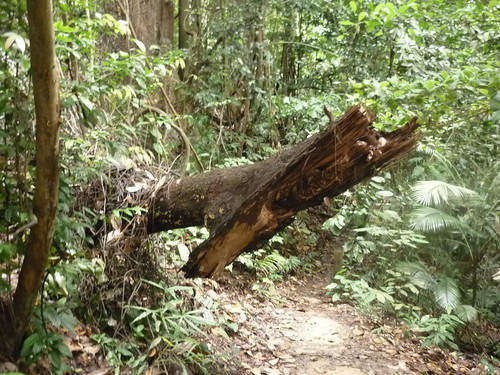
P1310979
Signs of treefall are everywhere, but this is probably a very recent case. While trees die and fall all the time, it does raise a lot of questions about the continued health of our rainforests.

P1310880
Are our trees dying at an especially high rate? And if so, what could be the reason? Accelerated erosion from trampling? Changes in the microclimate of the forest due to opening up of trails, leading to increase in penetration of sunlight, decrease in humidity, loss of moisture and stability of the soil?

P1310933
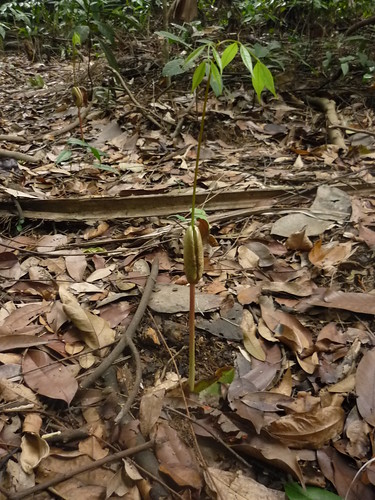
And even if trees are dying at apparently normal rates comparable to more pristine habitats, one wonders about recruitment of seedlings. Are enough seedlings germinating and surviving to replace their fallen predecessors? How has the loss of many of our large frugivores affected the dispersal of seeds? The tangled and intricate tapestry that links a multitude of species is especially apparent in rainforest ecosystems.

P1320080
The Dairy Farm Loop branches off the Rengas Path. This was another trail I had yet to visit.

P1320024
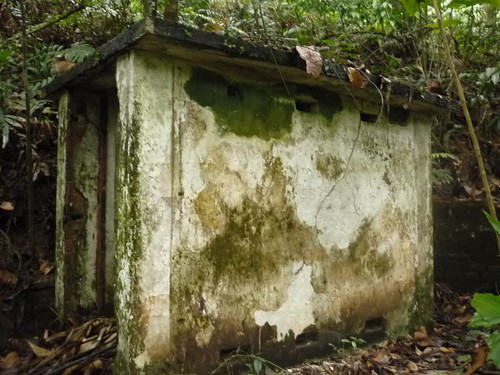
Even within these forests, it is not difficult to discover signs of past human activity.

P1320035
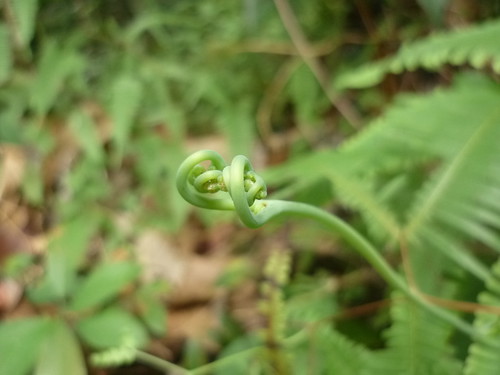
There are small clearings with dense patches of ferns and other secondary vegetation more typical of forest edges. The young fronds always make for interesting photo subjects.
P1320079
I continued down Seraya Loop.

P1320084
There are regular reminders to stick to the trail. Still, one wonders if there are people brave or stupid enough to ignore the warning signs, and get themselves killed or seriously injured.

P1320091
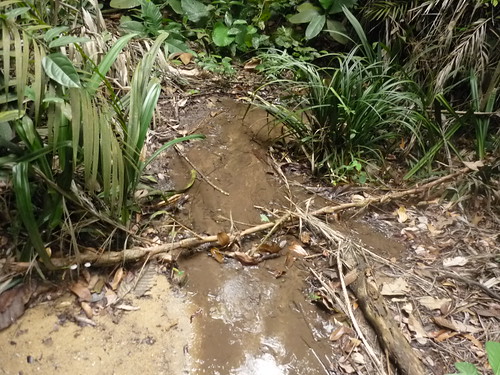
I cross another stream. This one seems more heavily silted up and clogged with forest debris though.

P1320095
Reaching Jungle Fall Path was somewhat of a relief, as I was quite exhausted by now, and was ready to head back down towards the Visitor Centre.

P1320109
There is something very disappointing when you realise that the waterfall here flows out of a drain.

P1320191
Upon returning to the Main Road, it was a brisk walk downhill back to the Visitor Centre.

Long-tailed macaque (Macaca fascicularis)
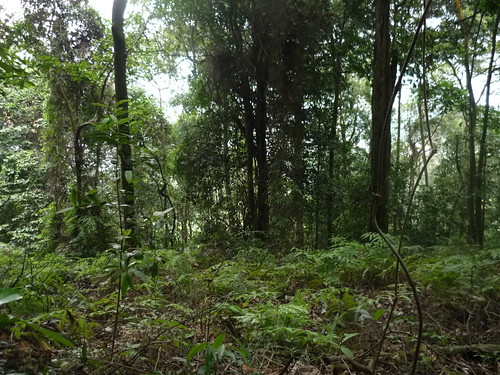
As I headed out of the nature reserve and returned to civilisation, I could not help but notice the construction works going on right at the edge of the forest. The impacts of urban development, as well as the inevitable human-animal conflict that results, raise a lot of questions about the long-term survival of this last substantial patch of primary rainforest.

Hopefully, the planned ecological corridor that intends to reconnect Bukit Timah to the Central Catchment Area will help revitalise these forests, giving them a new lease of life as reunited fragments of a larger whole.

Bukit Timah is priceless, not just in terms of its biological treasures, but also in its iconic status as part of our natural heritage. While its continued existence as a Nature Reserve appears secure for now, the forests are in a state of upheaval, slowly changing in the face of degradation and loss of the vital links that once sustained certain elements of this habitat. Hopefully, the forest will weather these changes, and continue to flourish. It may not be the same forest that once captivated Wallace, but it is still a very important forest in our collective psyche, and any further loss and degradation would be an unspeakable tragedy for all.

Missing

P1320079

Singapore's last remnants of rainforest harbour few remaining hazards for careless hikers; having lost virtually all of our large mammals, wannabe explorers, blind and deaf to everything around them, have no fear of being ambushed and eaten by jungle denizens. By our hand, the forests have been tamed, sanitised, and made almost entirely safe for everyone to explore and enjoy. What remains is but a shadow of a forest primeval, a shell that at first glance still seems wild and untamed, but which actually disguises a biome thrown off kilter.
P1310841

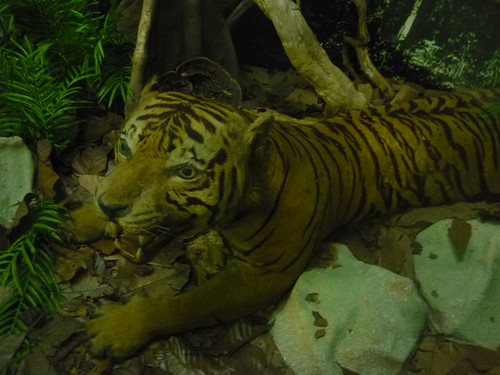
If only the forest could share the stories from its past, of the rumbling growls of tigers, of the clash of antlers as stags fought, of the thundering of hooves as wild boar charged through the undergrowth. In a forest devoid of its megafauna, and subsequently thrown into a state of disarray, do the trees clamour for the return of the tiger?

P1320181

The tiger is long gone, and will never return. And yet, if you just close your eyes, allow your mind to wander, and listen, you may just catch the slightest ghost of a roar of a long-dead big cat. And for a moment, you forget everything else, and you feel the rush of adrenaline coursing through your veins, as dulled senses are heightened once again, awakening memories once thought lost and buried.

Wednesday, August 12, 2009

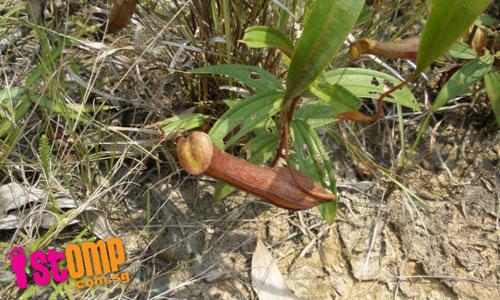
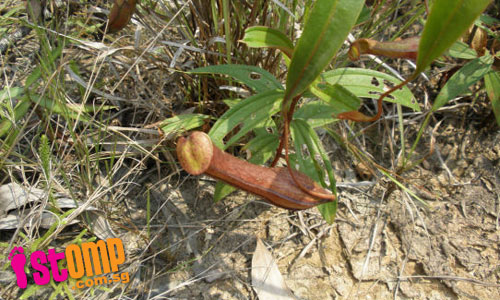
This pitcher plant captures insects for their nutrients!

This pitcher plant captures insects for their nutrients!
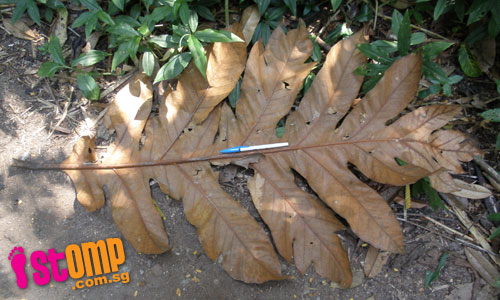
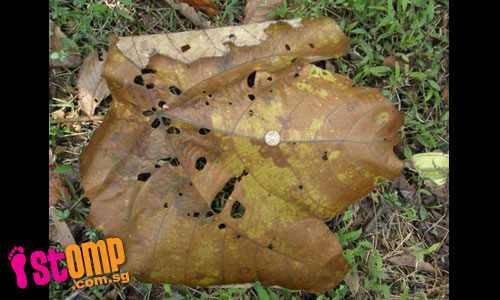
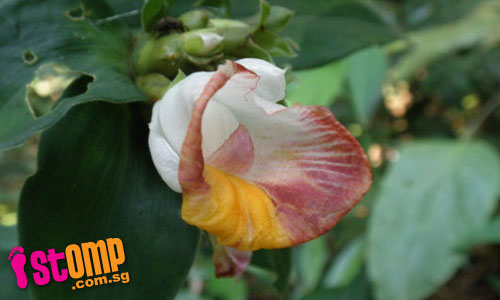
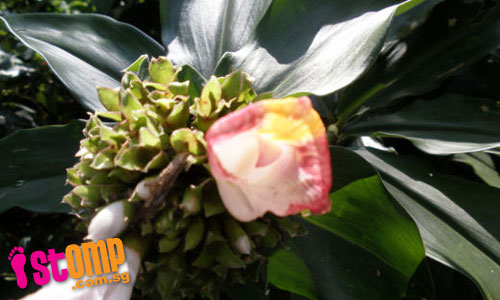
A STOMPer was trekking through Bukit Timah Nature Reserve when he saw all these rare and exotic plants with leaves so huge that they left him amazed.

Trekker told STOMP via email today (Aug 12):

"These pictures were taken near the forest trails of the Bukit Timah Nature Reserve.

"This pitcher plant grows near sandy soil where there is little water.

"While plants get their energy from sunlight, air and water, they still need nitrogen and phosphorus to grow.

"In some places they are so rare that it is hard for plants to grow.

"Some plants have resorted to getting nitrogen from living insects.

"With slippery pitchers they catch insects like ants and mosquitoes and digest them to get precious nutrients.

"The pitcher plant can grow in extreme habitats where there is a lack of nutrients.

This pitcher plant captures insects for their nutrients!
"This leaf from a giant tree is almost 1m long and if you look at the pen you can gauge the size of the leaf.
This pitcher plant captures insects for their nutrients!
"This leaf is big and if you look at the $1 coin you can assess the size of the leaf.
This pitcher plant captures insects for their nutrients!
"The forest abounds rare plants like the African spiral flag (Costus lucanusianus) which blooms flowers the whole year round.
This pitcher plant captures insects for their nutrients!
"This plant grows in dark and damp places and its brightly-coloured flowers attract bees and butterflies."
This pitcher plant captures insects for their nutrients!

Related posts: Meet the carnivorous pitcher plant (28th June 2009)