Showing posts with label Ang Mo Kio. Show all posts

Saturday, September 1, 2012

International Vulture Awareness Day: Vultures in Singapore

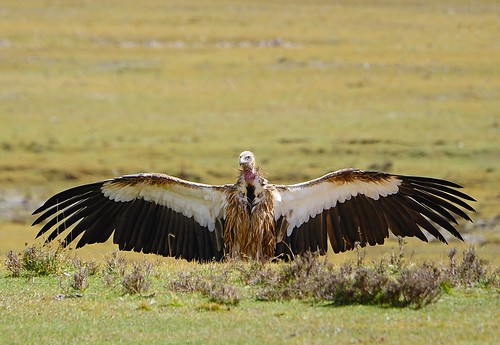
Gyps himalayensis , Himalayan Griffon, in Tibetan "mkha' la 'khor མཁའ་ལ་འཁོར་"
(Photo by reurinkjan)

Today is International Vulture Awareness Day, and I thought it would be appropriate to write about records of vultures in Singapore.

But why do we need a day to celebrate vultures? As stated on the International Vulture Awareness Day website:
Vultures are an ecologically vital group of birds that face a range of threats in many areas that they occur. Populations of many species are under pressure and some species are facing extinction.

The International Vulture Awareness Day has grown from Vulture Awareness Days run by the Birds of Prey Programme in South Africa and the Hawk Conservancy Trust in England, who decided to work together and expand the initiative into an international event.

It is now recognised that a co-ordinated international day will publicise the conservation of vultures to a wider audience and highlight the important work being carried out by the world's vulture conservationists.


Tuesday, May 4, 2010

Birds harass residents of estate daily

 Birds harass residents of estate daily
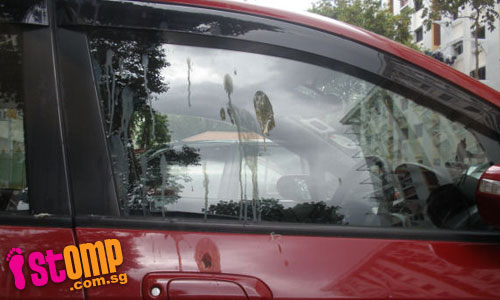
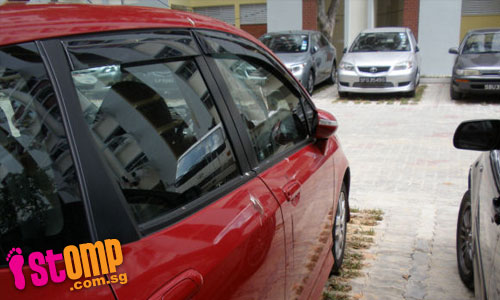
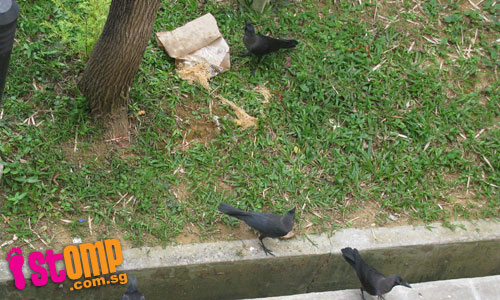
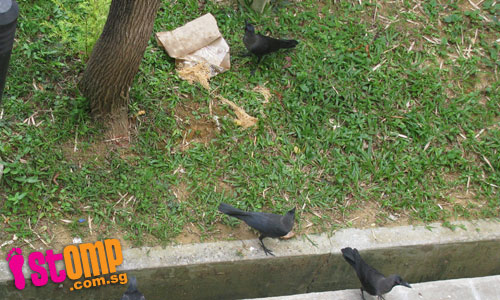
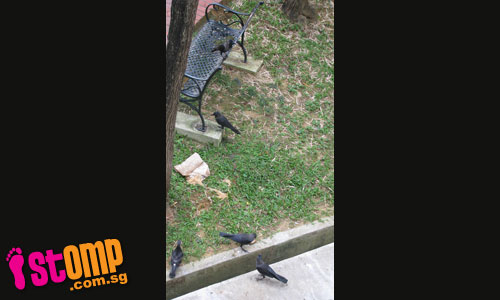
STOMPer Anti-crow is unhappy with the large population of birds in his estate. According to him, the birds would harass the residents with their loud screeching and stain cars with their droppings.

The STOMPer said in an email to us today (May 3):

"These pictures were taken at the carpark beside Block 101, Ang Mo Kio Avenue 3.

"Each morning when I go to my car I notice that the whole car would be splattered with bird droppings. There are dropping on the windscreen, roof, windows and bonnet.

"Every evening a swarm of birds would gather in the branches of the tall trees in the carpark. They scream for almost two hours and after their nocturnal visit, the aftermath was obvious the next morning.

"They are a bane to the residents in this estate.

"I hope the NEA will send its team of sharpshooters to ensure the reduction of the bird population. We need some peace and solace from the daily harassment of the birds which have no respect for rich and poor alike."

 Birds harass residents of estate daily
 Birds harass residents of estate daily
 Birds harass residents of estate daily
 Birds harass residents of estate daily

Those certainly are some very strong words, just because of noise and bird droppings. I empathise with the residents, but I somehow feel that there is always this knee-jerk reaction to call for removal or culling whenever birds or other animals are perceived to be causing any form of disturbance or inconvenience.

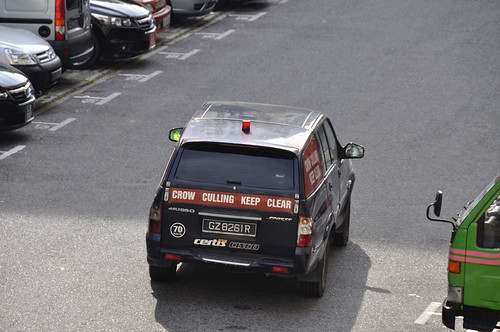
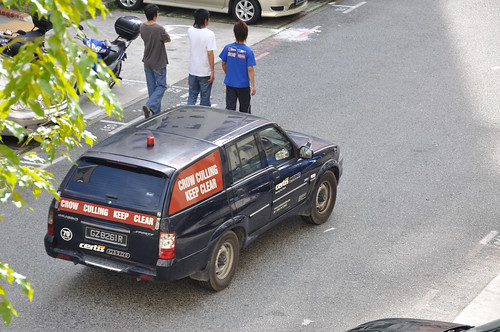
As far as I know, shooting is carried out only to control house crows (Corvus splendens), whereas for feral pigeons (Columba livia), Javan myna (Acridotheres javanicus) and common myna (Acridotheres tristis), poisoning is the preferred method. The submitter did not specify which of the species is responsible for the majority of the disturbances in his neighbourhood; the problems might be caused by only a single species, or by any combination of the 4.


(Photo by xtemujin)

I can understand that there is a need to control urban bird numbers from time to time, but I would rather that people take a more holistic approach towards pest control, rather than always calling for the authorities to shoot or poison the birds. There is no easy fix to this issue, and while culling is a highly visible strategy that does show results in the short term, it is only a temporary solution. Other strategies such as better management of disposal of food waste, curbing littering, and eliminating potential roosting and nesting sites by pruning trees are other possible measures which would need to be carried out in conjunction with culling in order to have any long-lasting impact. Winged Invaders: Pest Birds of the Asia Pacific by Navjot S. Sodhi & Ilsa Sharp is an excellent resource that examines the relationship with various bird species we consider to be pests.


(Photo by xtemujin)

It's a similar issue with other animals, from domestic animals such as stray dogs and cats, to wildlife such as monkeys and palm civets.
Besides, it also really depends a lot on one's sense of proportion. What a person may perceive as a plague of birds may simply be a normal-sized population in reality. For such individuals who might find it unpalatable to contemplate living alongside another species, buying ear plugs or a plastic cover for one's car are not very expensive options.

(Photo by Fangqi)

Once again, I'd like to highlight the dedicated Fangqi, who runs the Save The Pigeons blog.

Saturday, November 28, 2009

Crows feast on food waste which neighbour throws down everyday

 Crows feast on food waste which neighbour throws down everyday
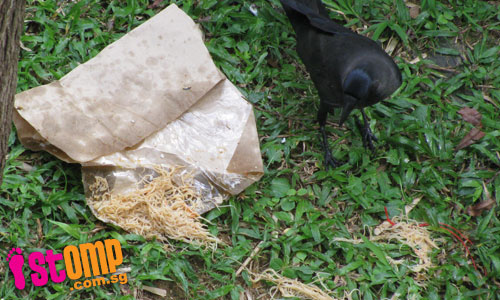
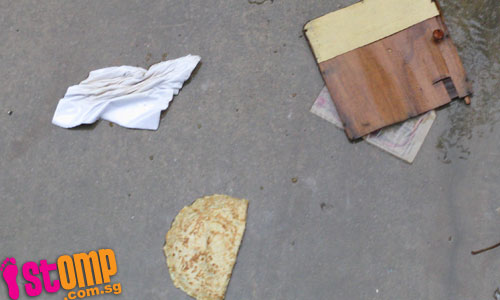
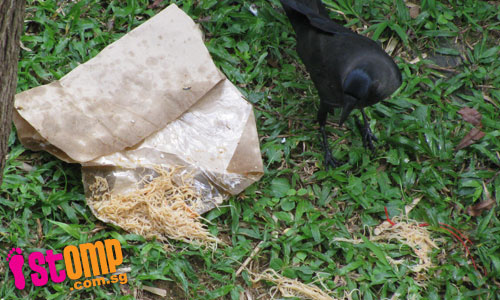
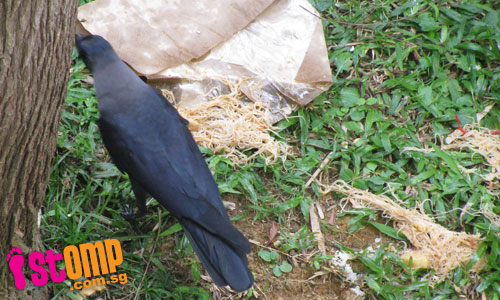
STOMPer AMK Poster's inconsiderate neighbour throws food waste down his window everyday which dirties the pathway below the block and attracts crows to that area.

The food waste even lands on this STOMPer's freshly washed clothes.

AMK Poster says:

"My inconsiderate neighbour keeps throwing food waste down from his window on an almost daily basis.

"This happens at Blk 561, Ang Mo Kio Avenue 10.

"Not only does he makes the common space below dirty and unfit for use, he also adds to inviting crows to this location.

"Crows are sometimes seen perched on my kitchen window sill and on my laundry waiting for the food.

"As they constantly come and sit on my laundry, they leave their droppings on the laundry.

"Also, sometimes the food lands on my baby's clothes, left out to dry.

"I think these people should really be educated on high rise living and how their dirty habits cause inconvenience to others living here.

"Hoping for the TC to take some action."

 Crows feast on food waste which neighbour throws down everyday
 Crows feast on food waste which neighbour throws down everyday
 Crows feast on food waste which neighbour throws down everyday
 Crows feast on food waste which neighbour throws down everyday
 Crows feast on food waste which neighbour throws down everyday
 Crows feast on food waste which neighbour throws down everyday
 Crows feast on food waste which neighbour throws down everyday

This isn't really a crow problem, it's a problem created by human behaviour. These house crows (Corvus splendens) are merely capitalising on this source of food. True, this does pose problems for other residents, but I'm sure the best solution is not to cull all the crows, but to take necessary action to correct the behaviour of the person who is tossing food out of the window.

Wednesday, May 20, 2009

Unsightly dead plants at AMK Hub spoils S'pore's green and clean image

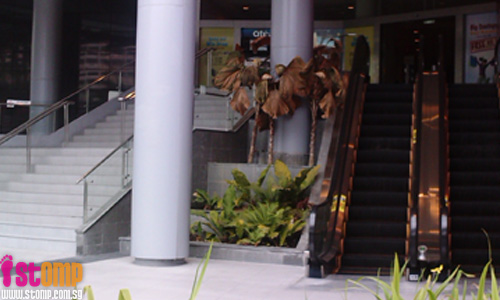
STOMP20052009(1)-001Unsightly dead plants at AMK Hub spoils S'pore's green and clean image
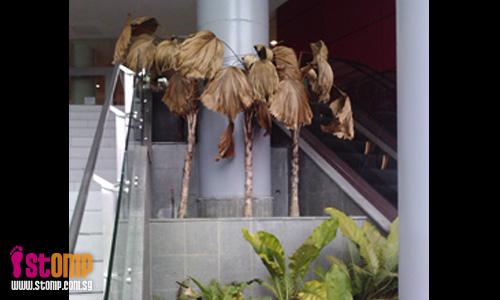
Singapore is a clean and green country but look at the unsightly dead plants at AMK Hub, says STOMPer Sherly Boscura.

"I am a foreign student in Singapore doing my work attachment.

"Singapore is a clean and green country but look at the disgusting sight of dead plants at AMK Hub.

"I am wondering if the mall management is aware of it. Plants should be regularly maintained. They should not be left to survive by themselves.

"Having said that, I wish to say that the mall has a clean environment to shop in."

Unsightly dead plants at AMK Hub spoils S'pore's green and clean image

Saturday, May 9, 2009

Gecko gets free wild ride on bus

Gecko gets free wild ride on bus
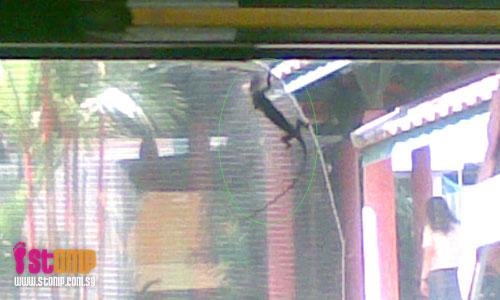
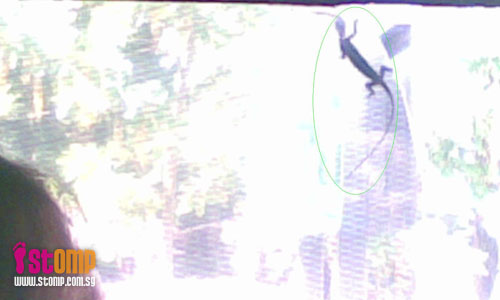
This green tree gecko got a free ride on this bus travelling from Upper Thomson Road to Ang Mo Kio, according to STOMPer Andre, who witnessed its sheer tenacity and determination to cling onto the vehicle.

In an email to STOMP today (May 8), the STOMPer sent in these modified pictures and wrote:

"After a nature visit to Lower Peirce Reservoir located at Upper Thomson Road my girlfriend and I took Bus 169 to Ang Mo Kio for lunch.

"We were really amused with a luminous green tree gecko which was about 25 cm(head to tail) clinging on to the window throughout the journey till it reached Ang Mo Kio bus terminal where we spotted it jumping off about a meter to a low branch.

"We were really impressed by its sheer determination of travelling so dangerously to reach its destination for free. A free ride indeed on Vesak Day."

Gecko gets free wild ride on bus

It's a changeable lizard (Calotes versicolor), not a 'luminous green tree gecko'.

It is very interesting behaviour, and I wonder if this is one way in which an invasive species can quickly spread into new areas.

The changeable lizard is not native to Singapore, and first appeared only in the 1980s, presumably having stowed away on ships and motor vehicles arriving from Thailand or the northern states of Peninsular Malaysia, where this species is native. Having established breeding populations in Singapore, it soon spread throughout the country, and is now found everywhere, even on the smaller offshore islands. Unfortunately, its success has come at the expense of its relative, the green crested lizard (Bronchocela cristatella). Through competition and possibly predation, the changeable lizard has displaced the green crested lizard in much of Singapore.

I wonder if the spread of this introduced species in Singapore was inadvertently facilitated by motor vehicles. It's not as far-fetched as it seems. After all, whether it's grass seeds lodged in tyre treads, or snakes stowed away in cargo, we have unknowingly assisted many species in crossing continents and oceans, enabling them to colonise new areas far beyond their native range.

Thursday, April 23, 2009

Storm winds whip S'pore: Just look at the damage caused

Storm winds whip S'pore: Just look at the damage caused
Singaporeans woke up this morning in the wake of a violent storm that started late last night and lasted till the wee hours of this morning (Apr 23).

STOMPers from all over Singapore sent in pictures of the damage wrought by the huge winds.

Munish, a longtime resident of Dover Road had this to say of the storm winds:

"I stay at Block 31 Dover Road.

"Last night's wind uprooted these trees. I've been staying here over 30 yrs and this is the very first time this thing has happened."

STOMPer Astonished also reported winds strong enough to fell trees:

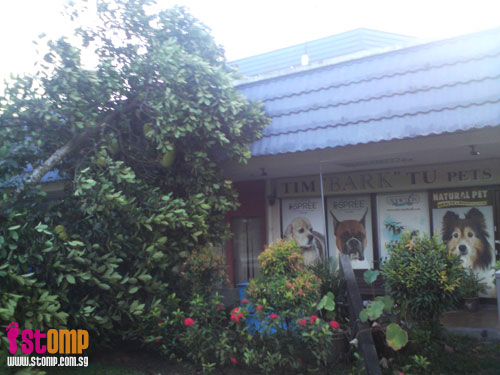
"Lightning and strong winds hit the trees at Hong Leong Gardens Shopping Centre, causing a tree to be uprooted.

"The tree hit the roof of the shop houses there."

He added:

"I think it should be a precaution for Nparks and area management to beware of how you plant the trees in areas near shops, buildings and houses."

Awed by the force of the winds that felled trees in Ang Mo Kio, another STOMPer wrote:

"These felled trees are the after effects of a 'mini-typhoon' at Ang Mo Kio Street 21.

"There are many more along Yio Chu Kang Road."

Elsewhere, STOMPer Cam reported damage to the blinds at her home caused by the storm:

"I can't believe the wind was that strong! We had to go cut it down in case it fell and hurt someone. The whole balcony is a big mess."

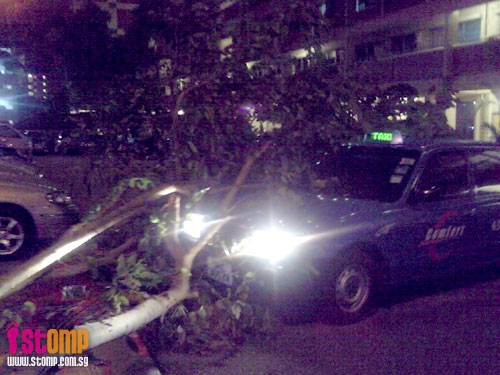
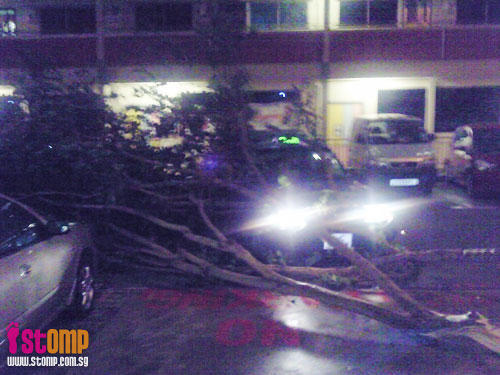
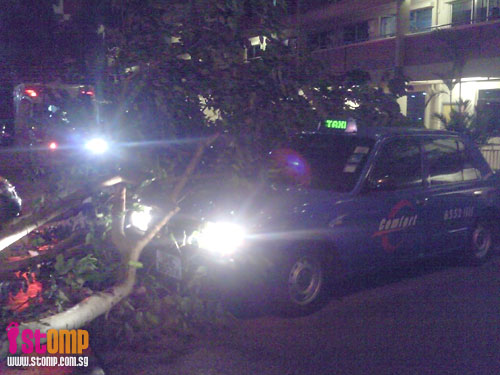
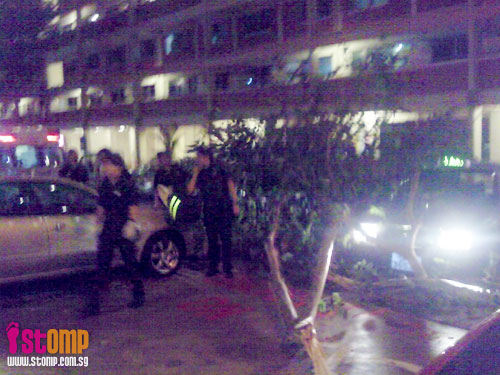
Further north in Bishan, winds tore down branches from a tree that landed on a taxi, damaging the bonnet of the vehicle.

Said the STOMPer of damage:

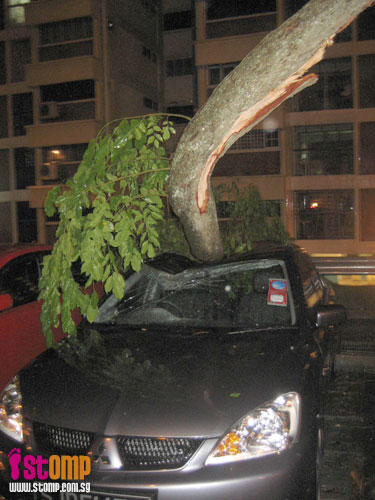
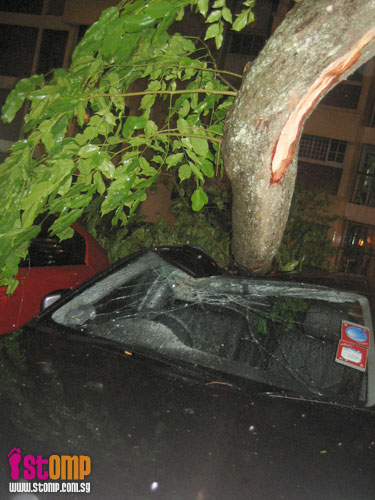
"On April 22 at about 11.30 pm, part of this tree broke and fell onto a taxi which had just dropped a passenger at the carpark of Bishan Street 22, at Block 229."

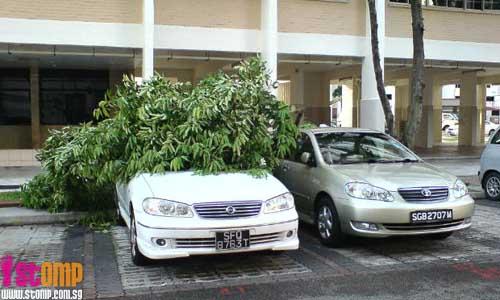
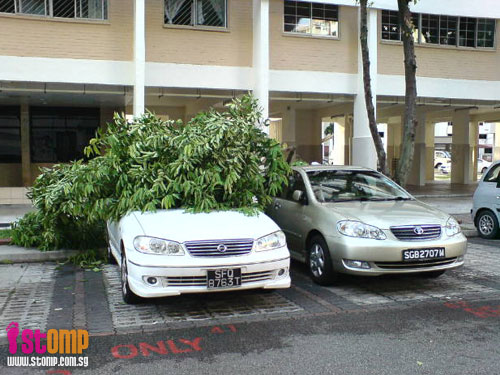
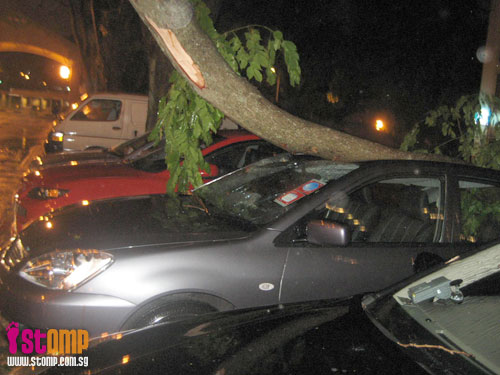
At St George road in the Serangoon area, branches also fell on these two cars at a carpark.

In her MMS, STOMPer Fen said:

"At about 11:00 pm last night, I heard branches cracking.

"In the morning I saw that some branches had broken off completely and landed on these two cars parked at a nearby carpark.

"Both rear windshields had shattered and the car directly under the branch had a badly dented roof.

"One of the car owners had posted a note on his windscreen requesting the other owner contact him, so they could work together to clear the branches."

Another unfortunate car owner suffered at the hands of the storm, as STOMPer Faith reports:

"This happened at the carpark of Block 140, Jalan Bukit Merah, right in front of the famous Thai temple.

"A series of strong winds swept central Singapore at about 11.10pm resulting in a huge branch landing on a Mitsubishi Lancer.

"Loud crashing noises from fallen households ornaments were heard throughout the whole block. It must have been one of the strongest winds Singapore had experienced so far.

"No car siren was heard and owner was still unaware at time of my sending this email."

According to another STOMPer, winds in Singapore were strong enough to move heavy objects:

"The wind blew soo hard hard it moved road blocks and distrupted traffic."

STOMP has contacted the NEA for more details on the storm.

Storm winds whip S'pore: Just look at the damage caused
Storm winds whip S'pore: Just look at the damage caused(1)-010
Storm winds whip S'pore: Just look at the damage caused

UPDATE:
A spokesperson for the NEA had the following comments:

"A 'Sumatra' squall is a line of eastward moving intense thunderstorms accompanied by gusty winds that usually occurs between April and September.

"An average of 2-3 'Sumatra' squalls occur in a month during this period. It normally develops overnight in Sumatra and the Straits of Malacca, and affects Singapore between midnight and 9am.

"Maximum wind gusts of up to 90 km per hour from a 'Sumatra' squall have been recorded in the past.

"The strong winds that affected Singapore last night between 11 pm (22 Apr 09) and 12:30 am (23 Apr 09) were caused by an intense fast-moving 'Sumatra' squall.

"Mean wind speeds ranging from 33 to 54 km per hour were recorded across the island. The highest recorded wind gust was 83 km per hour in the western areas.

"A wind gust is a sudden brief increase in the speed of the wind.

"Short duration showers fell over most parts of the island but were heavy in only a few areas. The highest rainfall of 7.0 mm was recorded around Sembawang.

"A wind gust of similar strength was last recorded on Jun 20 2000.

"For the rest of the month, we can expect another one or two 'Sumatra' squalls but they are unlikely to be as severe as the one last night."

Related articles:
Tropical storm behind strongest winds to hit Singapore in 9 years (24th April 2009) (mirror)
Wild wind wreaks havoc (24th April 2009) (mirror)
Gusty winds and rain wreak havoc (24th April 2009) (mirror)
Gusty winds wreak havoc (24th April 2009)
Freak storm wreaks havoc (23rd April 2009)

Related post: Tree uprooted and crashes into construction site during storm in Changi Village (23rd April 2009)


A Sumatra Squall approaching eastern Singapore on 4 July 2005
(All images in this section taken from the NEA's WEATHERWise Singapore)

From the NEA's Meteorological Service FAQs:
What are Sumatras?

Sumatras are lines of thunderstorms which usually occur between March and November each year. These squalls (lines of thunderstorms) develop at night over Sumatra or the Malacca Straits and move east towards Singapore and Peninsular Malaysia usually during the pre-dawn and early morning. They are often characterised by sudden onset of strong gusty surface winds and heavy rain lasting from 1 to 2 hours as they move across the island. Maximum gusts of up to 50 knots have been recorded during the passage of a Sumatra squall (Gusts are temporary rise in wind speed).


A satellite image showing a Sumatra Squall affecting Singapore and southern Peninsular Malaysia

And from WEATHERWise Singapore:
An isolated thunderstorm cell has a short lifespan, usually less than an hour. Sometimes, a number of units or cells of thunderstorms may be organized by wind pattern or by terrain into a line. A thunderstorm line, also known as a squall line (or squall) moves and behaves collectively and can have a longer lifespan.

A Sumatra Squall is such an organised thunderstorm line that develops over Sumatra Island in Indonesia or the Straits of Malacca, often overnight, and then moves eastward to affect Peninsular Malaysia and Singapore. In a typical case, the squall line can bring about one to two hours of thundery showers. Often this happens in the predawn hours or morning. Some Sumatra Squalls are also accompanied by wind gusts of 40 to 80 km/h. Gusts are short-duration bursts of wind. Occasionally, such gusts are strong enough to uproot trees.

Sumatra Squalls can develop at any time of the year, but are uncommon during the Northeast Monsoon Season. Convergence of air streams at low levels (height of less than 1 km) over a large area is a pre-requisite for the development of a Sumatra Squall. Additionally, a general westerly wind above (between 2 to 4 km) blowing from Sumatra Island towards Singapore is needed to steer the squall line forward.


Radar images showing the passage of a Sumatra Squall.

As Kok Sheng mentioned, how apt that this spectacular show of nature's power should take place on Earth Day. It would do us well to remember that although we have the capability to drastically change the environment to suit our needs, to tame mighty rivers and level towering mountains, and even possess the ability to alter the climate, at the end of the day, we are just like any other species, at the complete mercy of the forces of nature.

Monday, March 16, 2009

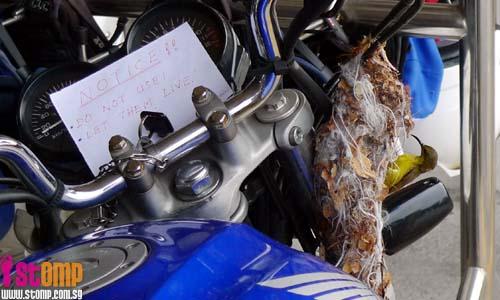
This rare Sunbird has claimed an SSDC training bike of its own

UPDATE: The title of the post has been amended to Bird builds its nest in, of all places, a bike

This rare Sunbird has claimed an SSDC training bike of its own

Falling branch danger at Clementi

Falling branch danger at Clementi
A STOMPer fears for the safety of residents in this neighbourhood, as she feels that they face the threat of being hit by this tree's falling branches.

In an email to STOMP, she says:

"I saw this at Block 716, Clementi West Street 2.

"I think this is very dangerous as the branches of the tree are falling."

Saturday, March 7, 2009

Native African plant is not flowerless, says STOMPer

Unusual sight: Flowerless plant blossoms

A STOMPer says that the plant, which STOMPer Jeffrey claimed had not borne flowers for the past 18 years, is actually a flowering plant that blossoms fortnightly.

This was in response to STOMPer Jeffrey's earlier posting, where he expressed surprise over seeing small white flowers on this plant.

The STOMPer says:

"I am surprised that Jeffrey has not seen the flowers of this plant for 18 years.

"The plant near my home was planted on a school's fence and it blooms every other week.

"It is called the Baphia Nitida which is a native plant of Africa.

"The flowers are bisexual, faintly fragrant and quite inconspicuous.

"The 5 sepals are white, modified into a larger rounded standard which has a splash of yellow just above the stalk."

Related story:
Unusual sight: Flowerless plant blossoms

Related posts: Unusual sight: Flowerless plant blossoms (6th March 2009)

It looks like my initial suspicions about the identity of this plant were correct.

Friday, March 6, 2009

Unusual sight: Flowerless plant blossoms

Unusual sight: Flowerless plant blossoms
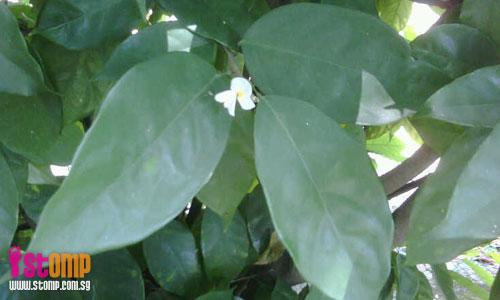
Because this plant by the side of the road on Ang Mo Kio Avenue 10 usually bears no flowers, STOMPer Jeffrey and his colleagues were surprised when they saw small white flowers on it.

Jeffrey, who has been working in the vicinity for the past 18 years, says that the plant has always been there but has never born flowers before.

He wonders if this is a auspicious sign and says:

"I saw this flower on some bushes.

"Is it normal?

"Anyway, spring is coming.

"I hope this is a sign of better prospects for Singapore's future economically."

Related story:
Native African plant is not flowerless, says STOMPer

Update: Native African plant is not flowerless, says STOMPer

I recognise the plant in question. It's very commonly planted all over Singapore, especially along wire fences. I'm not a botanist, so it took me quite some time before I could positively identify this species. Fortunately, I managed to find a copy of Wee Yeow Chin's Tropical Trees and Shrubs: A Selection for Urban Planting.

This plant is known as camwood or African sandalwood (Baphia nitida). A native of western Africa, it is a leguminous tree that can grow to about 5 metres in height. However, here in Singapore, it is pruned regularly to form hedges and living fences.


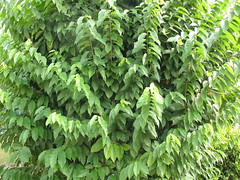
Here it is shown growing as a tree.


And here it is shown growing as a hedge.

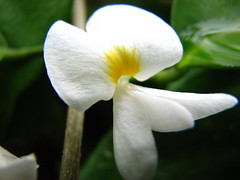
Here's a closer look at the flowers and leaves.


(Photos by woanyeen)

Traditionally, a reddish dye was extracted from the wood, and was used to dye textiles and as paint. The wood is used to make various objects such as violin bows, umbrella handles and walking sticks, while the leaves are often used as fodder.

The person who submitted this post probably needs to be a bit more observant, since I have in fact observed flowers on this plant quite frequently. The flowers are quite small, so it is probably easy to miss them.

Interestingly enough, the book says that this plant has not been observed to fruit in Singapore, although it is easily propagated by seeds and cuttings. Leguminous plants are commonly pollinated by bees, and it is likely that the west African bee species which usually pollinates this plant in its native range is absent in Singapore. However, even so, it is surprising that our native bees are not an effective substitute for this missing pollinator. If this is the case, then camwood flowers in Singapore are not being fertilised in the first place, hence explaining the lack of fruits.