Showing posts with label Sentosa. Show all posts

Tuesday, June 11, 2013

Seagrasses of Singapore (Part 3)

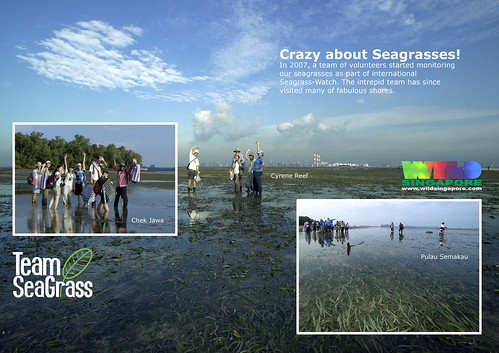
A4 Poster: TeamSeagrass--crazy about seagrasses!
(Click to enlarge)

In my previous post on seagrasses, we explored some of the reasons why seagrass meadows are important habitats, and also looked at some of the threats that seagrasses face. In this final part of the series, I'll show you some local efforts to better understand seagrasses so that we can protect them.

Seagrasses of Singapore (Part 2)

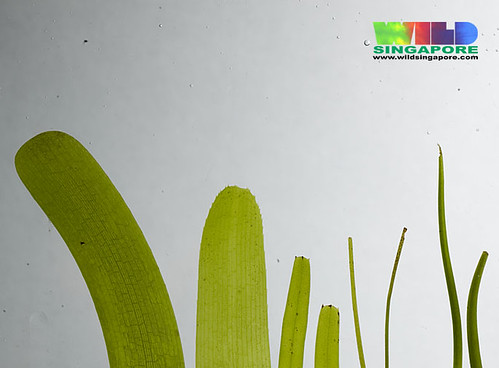
Various seagrasses
The leaves of various seagrass species found in Singapore;
(Photo by Ria Tan)

In the previous post, we took a look at seagrasses, some of the places in Singapore where you can find them, and also went through the ten species of seagrass recorded in Singapore in recent surveys. In this post, we'll find out why seagrass habitats are so important, and some of the threats they face.

Seagrasses of Singapore (Part 1)

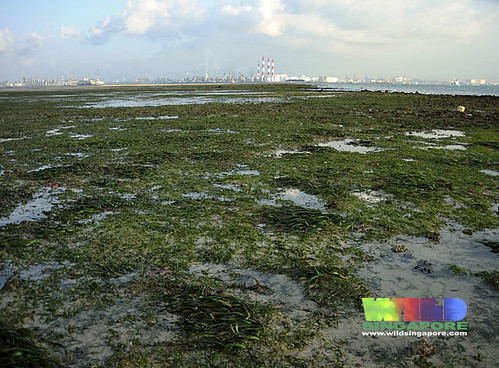
Seagrass meadows of Cyrene overlooking Jurong Island
Lush seagrass meadows of Cyrene Reef;

In my earlier post on World Oceans Day, I mentioned seagrass meadows as one of several marine habitats that can still be found in coastal areas of Singapore. But what are seagrasses? Why are they important? And what can we do to protect them?

Monday, June 20, 2011

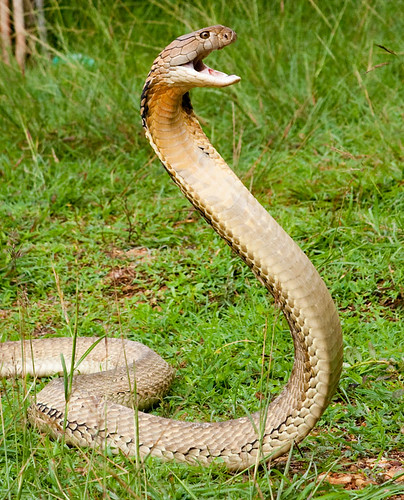
The King and I: King Cobras in Singapore

Wild King Cobra
(Photo by gerry morgan)

Singapore is home to many species of snake, from tiny burrowing blind snakes less than 20 centimetres long, feeding on soft-bodied invertebrates in the soil, to gigantic pythons more than 5 metres in length, lurking in our drains and sewers in pursuit of rats and even stray cats. While most of our snakes are quite harmless, our forests have their fair share of kraits, coral snakes and pit vipers, with venomous bites that are a genuine cause for concern. The equatorial spitting cobra (Naja sumatrana) is perhaps the most dangerous of our venomous snakes, since it is commonly encountered living near people. Yet these serpents, for all their deadly beauty, pale in comparison to a snake so feared and so iconic that it has become a symbol of the Asian rainforests, a true superstar among the snakes - the king cobra (Ophiophagus hannah).
Monday, April 5, 2010

Sunday, December 6, 2009

Special Sentosa

P1360222

Today was one of my last low tide trips for the year, and because I had not explored the shores of Sentosa for almost 6 months, I decided to check out Tanjung Rimau, a place with a great deal of sentimental value for me.

This time was a little different though, since I was joined by my good friend Valerie, who also happens to be this year's winner for the Miss Earth Singapore pageant.

P1360214
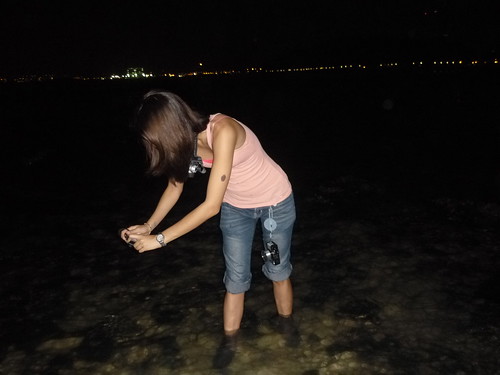
Here's a photo of Valerie on her virgin shore trip.

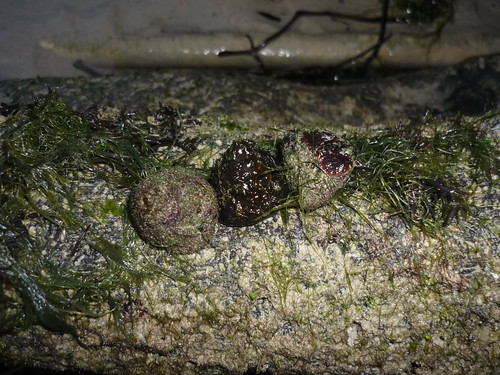
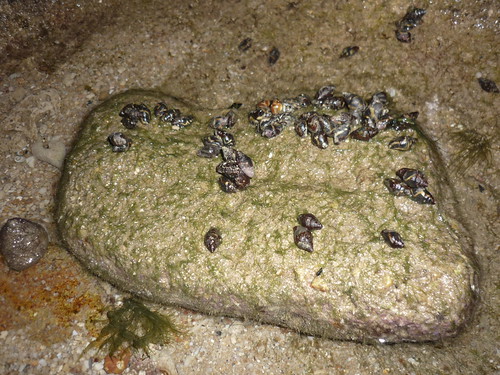
We made our way down to the shore at dusk, and as we waited for the tide to recede, we wandered amongst the rocks, looking at the various snails that lived on the high shore.

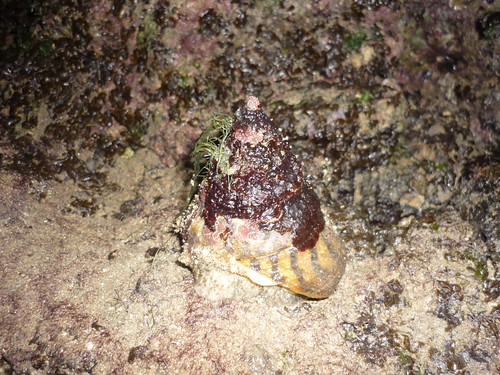
P1360172
Such as these spotted top shells (Trochus maculatus).
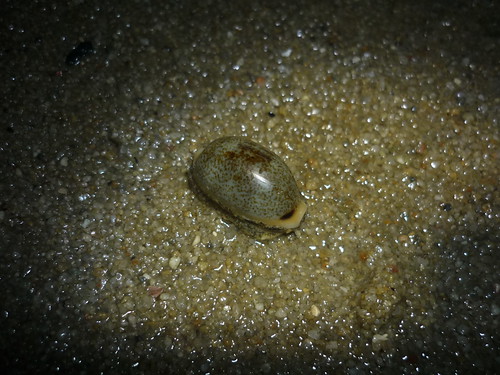
P1360174
And these lightning dove snails (Pictocolumbella ocellata). Other snails that we looked at included toothed top shell (Monodonta labio), chameleon nerite (Nerita chamaeleon), spiny drill (Thais bitubercularis), dwarf turban snail (Turbo bruneus), and ribbed turban snail (Turbo intercostalis).
P1360238
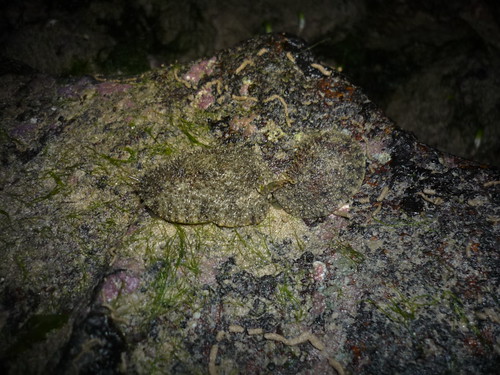
We also spotted several big pimply onch slugs (F. Onchidiidae) crawling about on the rocks.

A while later, we ventured into the shallows, where we encountered large numbers of crabs.

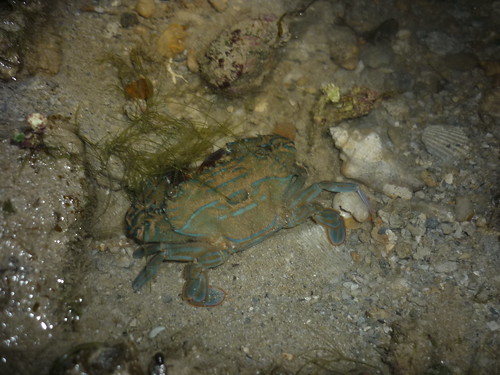
P1360234
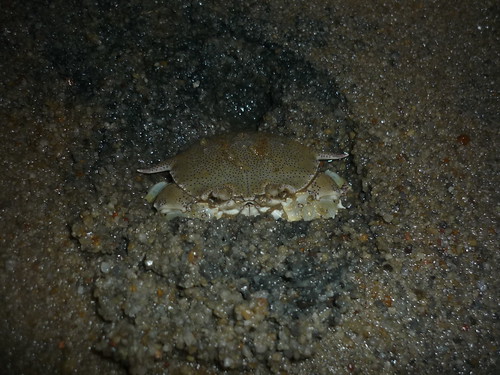
Blue swimming crabs (Thalamita danae) and blue-spined swimming crabs (Thalamita prymna) were extremely common, but as usual, they were so shy and skittish that most of them refused to stay still long enough to be photographed. This particular crab was stranded in a small pool.

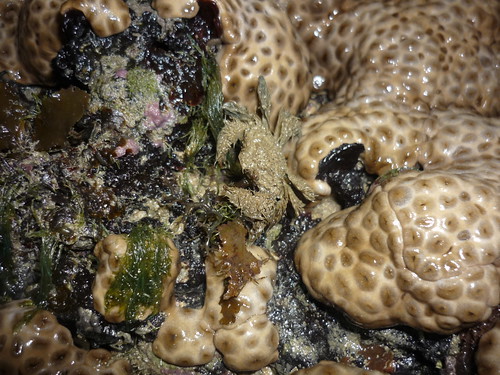
P1360212
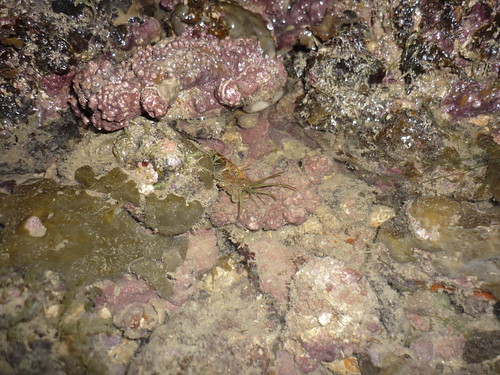
Strangely enough, we saw only a single common hairy crab (Pilumnus vespertilio). Either we were not alert enough to see more, or they were all in hiding.

As you can see from the photo, the common hairy crab was perched near a mass of sea mat zoanthids (Palythoa tuberculosa). Was it about to feed on them? The common hairy crab is a generalist omnivore, and is known to feed on zoanthids, which apparently render the crab mildly poisonous and unappetising to potential predators.

P1360181
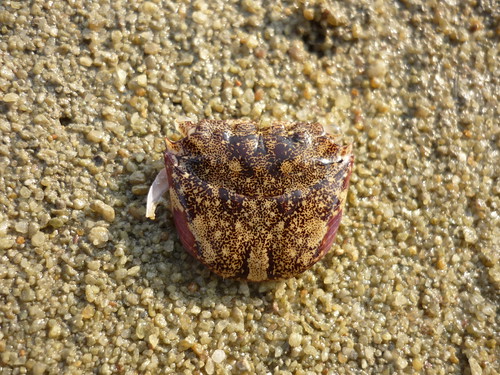
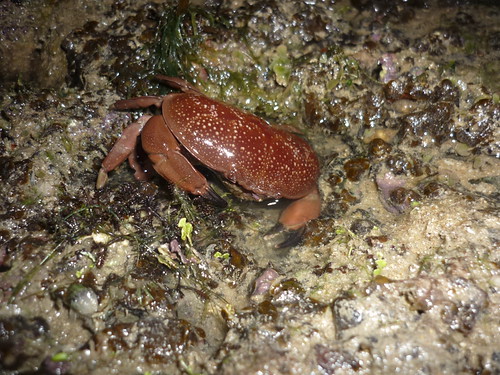
A crab that we kept seeing today was the red egg crab (Atergatis integerrimus). We saw at least 6 of them! This species is highly poisonous.

P1360216
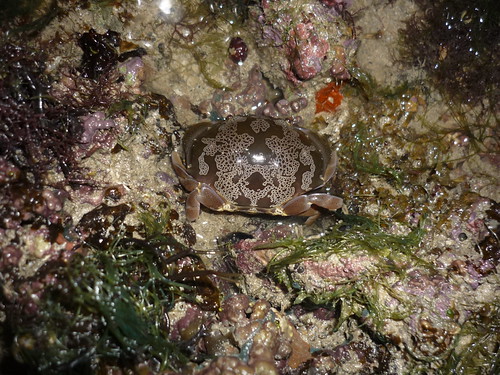
Somewhat less common was the floral egg crab (Atergatis floridus); we found 2 over the course of the visit. Like the red egg crab, it too is highly poisonous.

P1360199
A very special crab find for me was this red-eyed reef crab (Eriphia ferox). If I'm not wrong, this is my first ever sighting of this species.

Other crustaceans that we encountered included plenty of sea slaters (Ligia sp.) on the high shore, as well as glass shrimp (Palaeomon sp.) and red-nose shrimp (Periclemenes sp.) in the shallows. Of course, it was impossible to miss the loud clicking of the snapping shrimps (F. Alpheidae), even though they remained hidden in their burrows.

P1360188
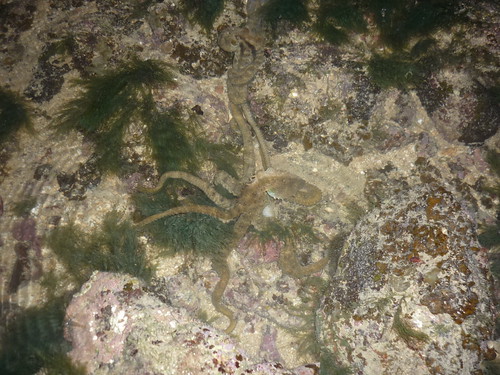
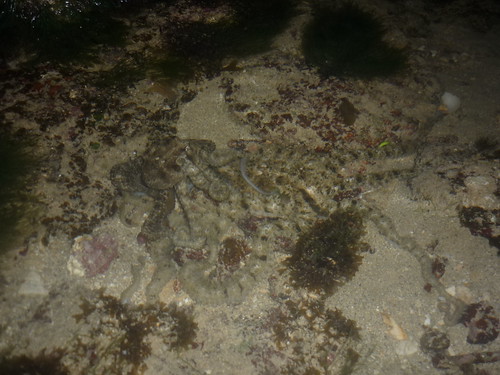
These shores are also very good for spotting two-spot reef octopus (F. Octopodidae). Both Valerie and I were extremely thrilled when we encountered a pair that seemed to be mating! Another first sighting for me.

P1360190
In male cephalopods, one of the arms, known as the hectocotylus, is modified to storm sperm packets, which he then transfers to the female by inserting this arm into her mantle cavity. You can see how the male in this photo is literally being dragged all over the place as the female moves around.

P1360228
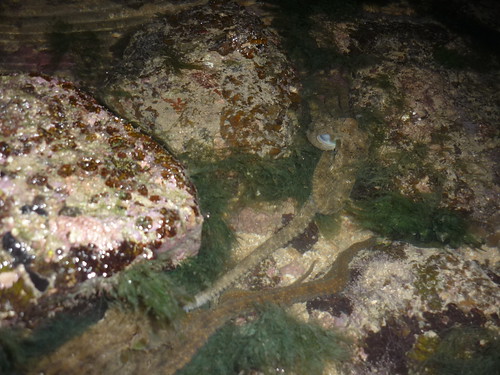
Later on, we saw a second mating pair of octopus. The smaller male spent quite a bit of time riding on top of the female's head. If octopus could talk, I can imagine the female exclaiming, "Get off! I can't see!"

P1360202
Another special find was this giant top shell (Tectus niloticus).

We didn't have much luck finding black long sea cucumber (Holothuria leucospilota), and only managed to find a small one hiding beneath a rock.

P1360208
We were however lucky enough to find another long (and disgusting) creature hiding amongst the coral rubble, the giant reef worm (Eunice aphroditois). I saw these worms on 3 separate occasions, but only managed to take 1 photo of the face. Despite their size, these worms are extremely shy and will immediately dart back into their burrows upon the slightest disturbance.

P1360210
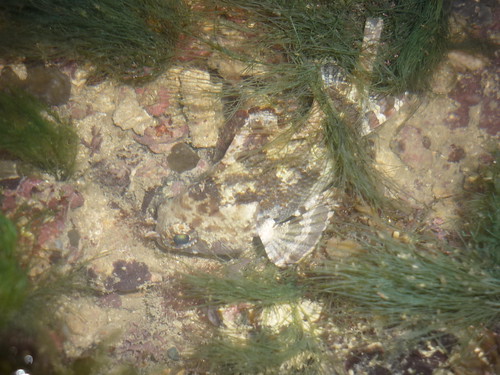
We spotted quite a lot of fish such as young mullet (F. Mugilidae) and tropical silversides (Atherinomorphus duodecimalis), but these usually swam off instantly. This false scorpionfish (Centrogenys vaigiensis) stayed still long enough for us to snap a few shots.

P1360218
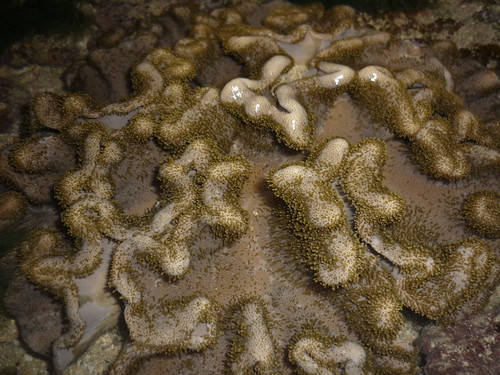
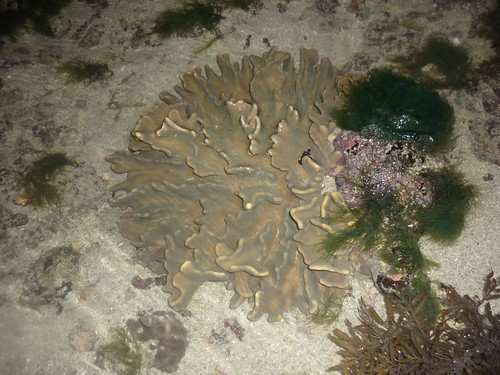
We didn't really have much time to walk around looking at corals, but we did find quite a few colonies of soft corals, such as this pinwheel leathery coral (F. Alcyoniidae).

P1360232
As well as several omelette leathery corals (F. Alcyoniidae).

P1360226
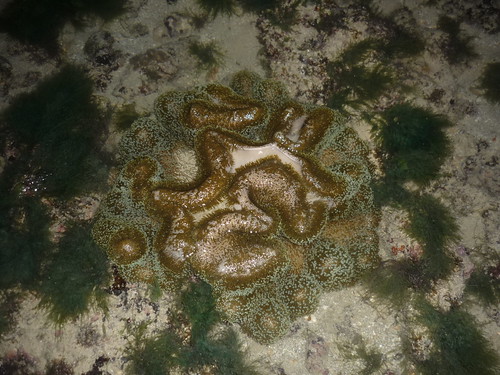
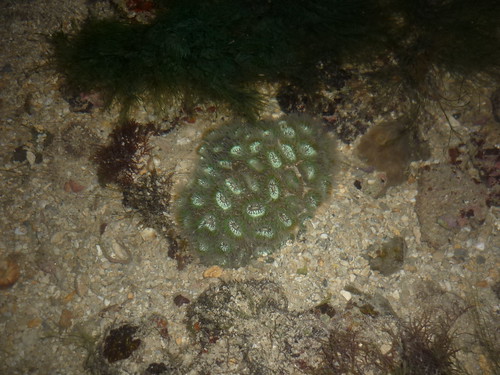
I think this is a big o-ring favid coral (F. Faviidae).

P1360244
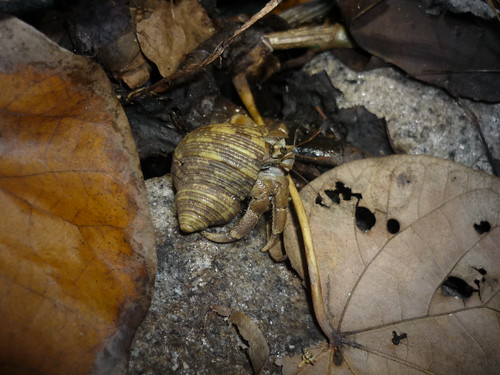
The tide rose, but just before we went back to wash up, we spent some time looking at the land hermit crabs (Coenobita cavipes) crawling about on the seawall.

P1360260 P1360251
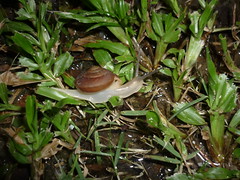
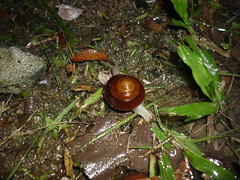
Valerie had to go off first, and as I was washing my booties, I came upon a few of these terrestrial snails.

I decided to spend just a bit of time exploring one of the islets off Siloso Beach, which are another very special place for me. The tide was steadily rising, and I was too lazy to dig out my net and container from my bag, but I could still walk around in the shallows and see what I could find.

P1360288
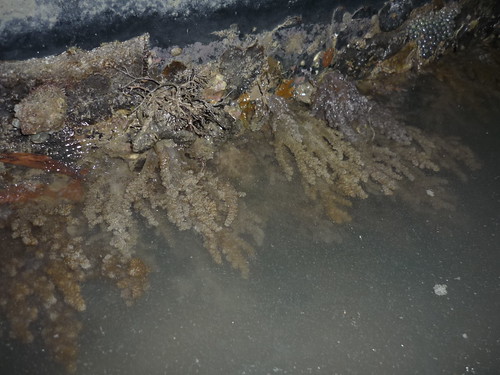
As usual, the bridge is festooned with all sorts of soft corals, zoanthids, sponges, ascidians, bivalves, and other sessile organisms.

P1360269
There were plenty of fish in the lagoons, the usual cast of characters that I'd seen on virtually all of my previous visits; tropical silverside, larger adult mullet, sand whiting (F. Sillaginidae), Kops' glass perchlet (Ambassis kopsii), all sorts of halfbeaks (F. Hemirhamphidae), orbicular cardinalfish (Sphaeraemia orbicularis), and shadow goby (Acentrogobius nebulosus). I caught a glimpse of a medium-sized striped eeltail catfish (Plotosus lineatus) as it swam around close to the surface, then darted out of sight.

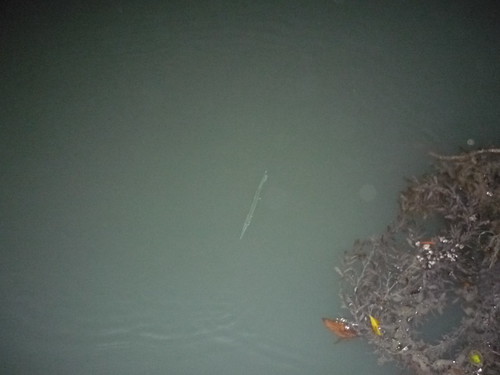
P1360268
However, this was the first time I had seen banded needlefish (Strongylura leiura) in these lagoons.

P1360265
Another fascinating find was this peacock sole (Pardachirus pavoninus) which I spotted from the bridge, hiding on the sand at Siloso Beach itself. I tried to get closer to take more photos, but it slipped beneath the bridge. I wish I had taken out my net and container, then I might have been able to ambush it and take a bunch of clear and decent (if somewhat unnatural-looking) shots. So we'll have to content ourselves with this horrible picture.

P1360280
There were plenty of crustaceans here as well, such as this spotted moon crabs. There were also quite a few blue-spined swimming crabs, flower crabs (Portunus pelagicus), and blue-tailed prawns (F. Penaeidae).

P1360277
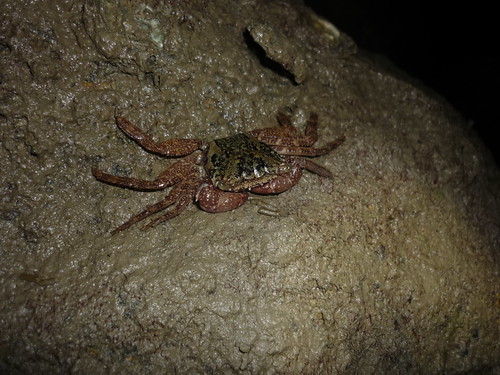
Purple climber crabs (Metopograpsus sp.) were common on the rocks and the bridge.

P1360274 P1360303
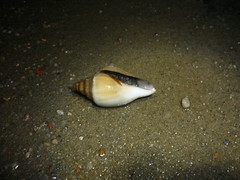
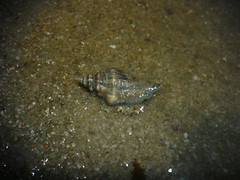
There were quite a few pearl conch (Laevistrombus turturella) and black-lipped conch (Canarium urceus) half-buried in the silt. Other snails seen included spiral melongena (Pugilina cochlidium), as well as the usual hordes of zoned horn snails (Batillaria zonalis).

P1360304
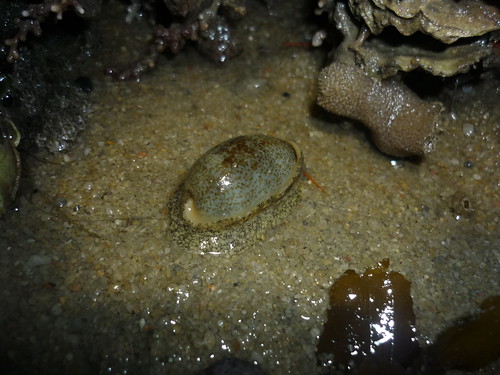
Here was a very surprising and special find, a live wandering cowrie (Cypraea errones).

P1360292
It was quite a nice coincidence, as I had just learnt that this species has a dark spot close to the front end of the shell, unlike the very similar ovum cowrie (Cypraea ovum).

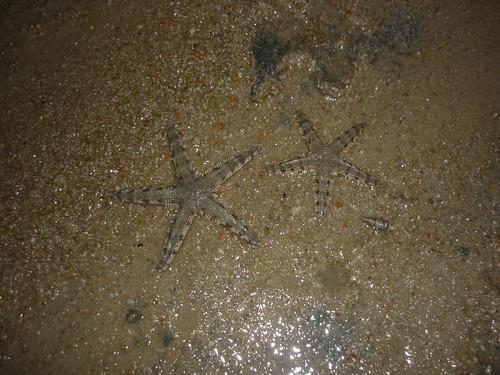
P1360285
It is always nice to find the common sea stars (Archaster typicus). I was unable to find the colony of adults that I'd found on previous occasions; I suspect that the entire group was already well submerged by the rising tide by the time I arrived. However, I did find a small group of juveniles, which is a good sign. This either means that this population of sea stars is reproducing, or that larvae are drifting in from elsewhere and settling on this shore.

P1360299
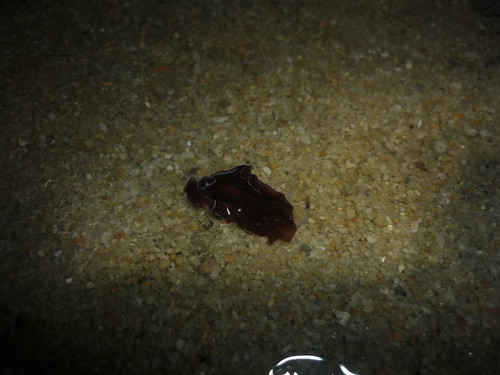
Just before I was about to call it a night and head for home, I found this tiny polyclad flatworm (Polycladida). I have no idea what it is, although my hunch is that it is a species of Pseudobiceros.

Is this another unknown species? It reminds me of the large unidentified flatworm I had found at Siloso Beach earlier this year, just that it lacks the orange margin possessed by the latter. What other secrets lay hidden in the murky depths of these lagoons?

It was getting late, so I headed back towards the Beach Station to take the bus.

P1360261
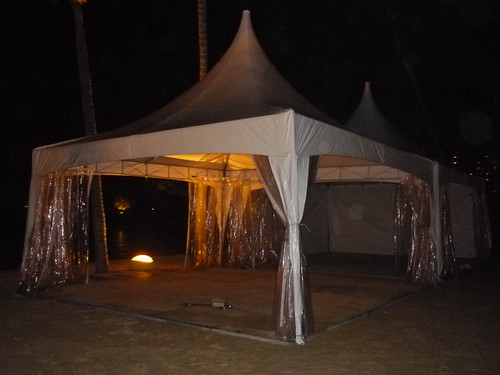
Much of Siloso Beach is being set up for ZoukOut 2009, which takes place next Saturday. Hopefully, the marine life will not be too badly affected. But then again, the creatures living in this lagoon must be very tough indeed. They already receive a daily auditory and visual assault from Café del Mar and Songs of the Sea, have survived the annual ZoukOut and Siloso Beach Party, and it seems that they have survived the construction of the MegaZip, in addition to 2 new clubs along the beach, Azzura and Wave House Sentosa.

P1360309
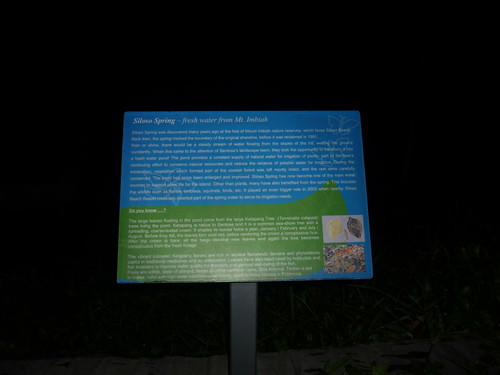
It was nice to walk past the pond and see this sign. Now I know why the pond exists in the first place.

P1360312
All around the pond, I could hear the calls of common Asian toad (Duttaphrynus melanostictus) and dark-sided chorus frog (Microhyla heymonsi), although they remained out of sight.

P1360314
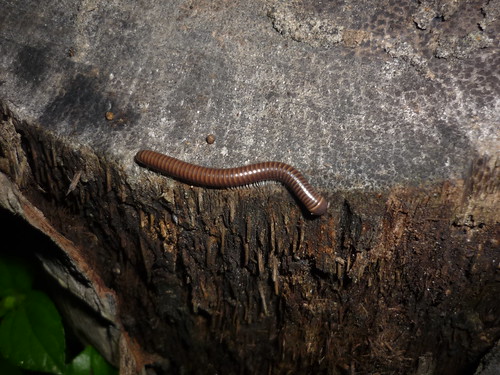
This millipede wasn't so shy though.

I didn't really get to explore the shores to my heart's content, but I was definitely very thrilled to see that these familiar shores at Sentosa still appeared to be doing quite well. No matter how many times I visit, it seems that there is always something new and surprising.

Such is the magic and beauty of the shores, that compels one to visit repeatedly, not quite knowing what to expect. You can never visit a place too often.

Tuesday, October 27, 2009

The real deal

P1310122

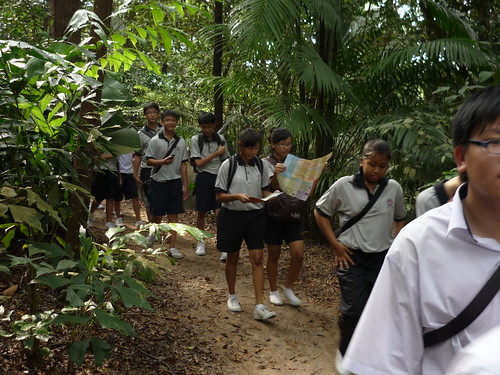
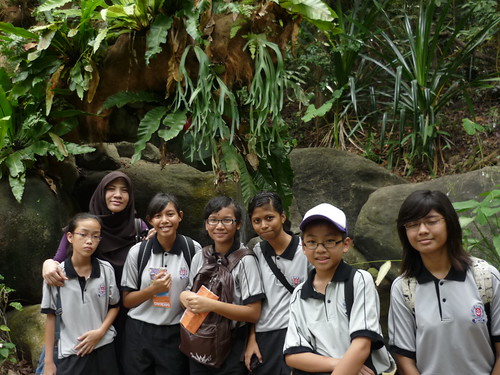
Today afternoon, I helped lead a group of students from the National Police Cadet Corps of Coral Secondary School, who were out on their Unit Hike and Community Involvement Programme at Sentosa. It had been raining heavily in the morning, so I was quite pleased that we were experiencing perfect weather.

We started out with a pleasant stroll from the Beach Station up to Imbiah Lookout, where we then began on a ramble through the Sentosa Nature Discovery.

P1310124

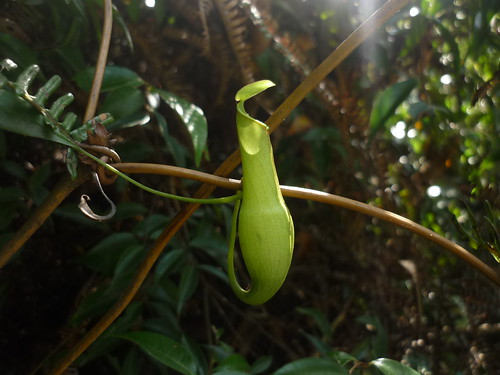
Along one portion, known as the Nepenthes trail, the cadets were treated to a close look at 2 of Singapore's native pitcher plants, the slender pitcher plant (Nepenthes gracilis) and Raffles pitcher plant (Nepenthes rafflesiana).

P1240526
This photo of the pitcher of a slender pitcher plant was taken along the trail during a previous visit.

P1310120
This is Madam Nora, one of the teachers helping out with the event.

P1310126

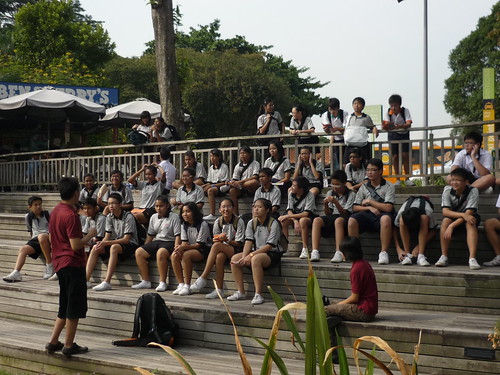
Once we'd completed the trail, and ended up at Siloso Beach, I gave a quick briefing about the next leg of the day's event, and one that I found to be of great significance - the Community Involvement Programme.

P1310128

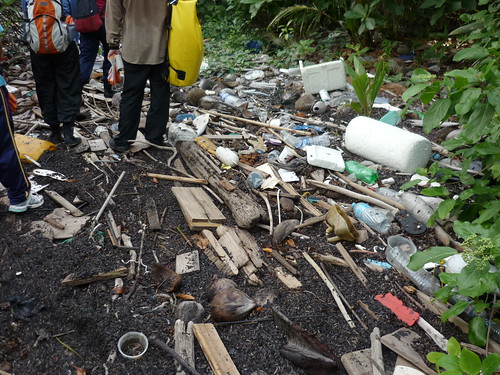
I had planned to get the cadets to clean up a stretch of shore at Tanjung Rimau, hence the purpose of my most recent visit. I knew that as students, they would probably have done quite a fair bit of beach cleanups; in fact, the lower secondary students had spent Monday and Tuesday morning picking up litter at the beach at Pasir Ris Park. However, I wanted to show them a real eye-opener, an authentic example of what happens when trash is continuously being deposited on the shore.

I find beach cleanups to be ridiculously simple jobs, especially if they are taking place mere hours after the army of cleaners has already removed much of the litter on the shore. East Coast Park and Pasir Ris Park do get heavy loads of trash, but most of it is cleared by the cleaners, who are often already hard at work even before sunrise.


Litter being cleared at East Coast Park;
(Photo by Ria)

In contrast, places like Tanjung Rimau, Tanah Merah and Pulau Semakau have almost never been cleaned up before, and so suffer from a heavy load of trash that just keeps accumulating.

P1270070
Trash on Tanah Merah;

P1300533
Trash on northern shore of Pulau Semakau;

And so, although we would probably make only a small dent in the amount of rubbish on Tanjung Rimau, at least the cadets would truly realise the impact of marine trash, and how they could help make a difference, both as individuals and as a group.

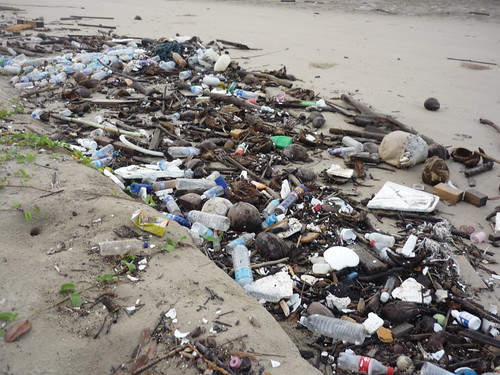
The cadets reached the shore and got down to work. This was what they had to tackle:

P1310038
This photo was taken on my previous visit, but you get the idea.

P1310130
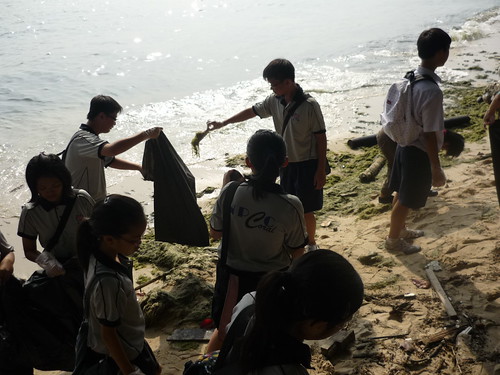
Most of the cadets were truly taken aback at all the rubbish that had washed up on the beach, and many of them soon took to their task with enthusiasm.

P1310134
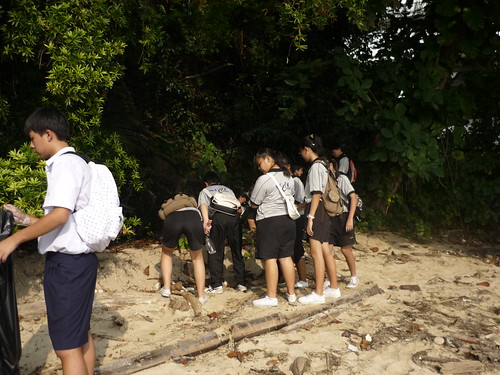
Some ventured into the undergrowth to clear up all the empty water bottles and plastic bags.

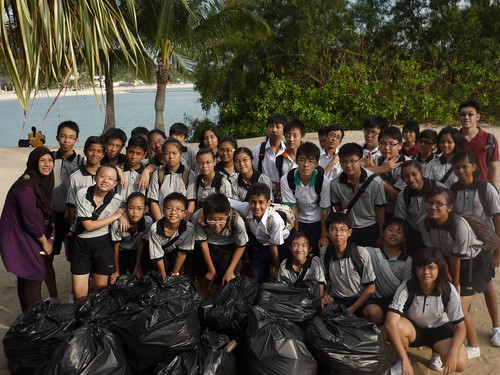
We were there for only a short while, but the bags were filling rapidly, and we soon ran out of trash bags. We only managed to clear the rubbish from a small portion of the shore, but I like to think that we did make a difference in helping to rid Tanjung Rimau of some of its marine trash. Every little bit counts.

Here we are with our haul:

P1310135
Well done, everyone! I'm really proud that the cadets were so willing to put in the effort. As far as I know, this is the very first cleanup session at Tanjung Rimau ever; hopefully there will be more to come.