We're almost a week into the new year, and while I'm not really the sort who likes to reflect on the past year and mull over my successes and failures, Crystal Riley from Crystal and Bryan in Singapore has tagged me to take part in the Seven Links Blog Project, where I repost links to seven of my posts from different categories. Although I was tagged last year, I only found out last night, and I guess it's still not too late for me to look back on 2011.
Showing posts with label letters to the press. Show all posts
Showing posts with label letters to the press. Show all posts
Saturday, January 7, 2012
Tuesday, October 18, 2011
Macaques, Conflict and Keyboard Warriors
(Photo by John 3000)
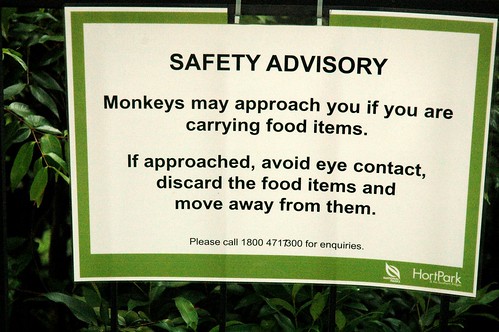
About a week ago, someone named Paul Chan wrote in to the Straits Times Forum, in response to reports of several long-tailed macaques attacking visitors to the Forest Walk along the Southern Ridges.

Long-tailed macaque (Macaca fascicularis);
(Photo by gamebit)
(The photos in this post feature several macaques that have been encountered by visitors to various parts of the Southern Ridges over the past few years)
Cull monkeys if over-population is the problem (Mirror)
I WAS shocked to read that a search was on for a monkey believed to have attacked three people over the past three weeks ("Attacks spark hunt for monkey"; last Friday).
I was also disappointed with the response of National Parks Board (NParks) officials that the monkey-feeding problem might have reached a tipping point and that sometimes, animals just go crazy. Did NParks do an extensive survey or study to arrive at such conclusions?
Despite many reports of rogue monkeys attacking people and foraging for food at bus stops and households, NParks prefers to pin the blame on human feeding or provocation.
The attack on Hort Park visitor Tang Mae Lynn was apparently due to the monkey pack invading her personal space at the Forest Walk; she carried no food or drink. The problem could be due to monkey over-population or lack of monitoring by NParks officials.
I disagree with NParks about not going after the monkeys because the creatures belong there as much as humans. Does that mean we should silently accept monkey attacks as normal?
It is the job of NParks to ensure monkeys behave where they co-exist with us. NParks has a duty to patrol and monitor the growth of the animal population within the forest boundaries. The animals should be culled if they encroach on human living space and disturb our peace. They should also be punished if they misbehave.
NParks could install closed-circuit television (CCTV) cameras along the Forest Walk and areas prone to monkey attacks to check on the culprits while initiating programmes to control such disturbances so that both animals and people can share the limited space on our island in peace.
Paul Chan

Friday, April 8, 2011
Dealing with urban wildlife: A response to Frederick Ow
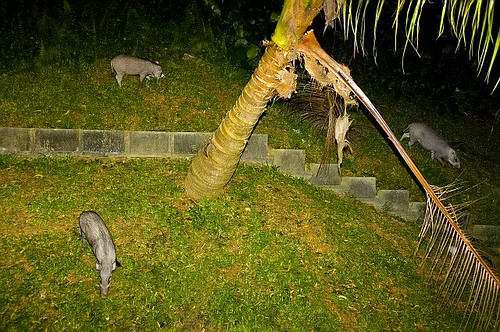
Wild boar (Sus scrofa), NTU campus;
(Photo by adam_zhang)
It's been a while since I last wrote in to the Straits Time Forum regarding wildlife conservation issues, so I was quite pleased to see that my reply to a letter was published.
The original letter that triggered my response is copied here in full:
Protect NTU students from roaming wildlife (Mirror)
TUESDAY'S article ('Drivers, beware that wild boar on NTU roads') mentioned sightings of wildlife such as snakes and pangolins at Nanyang Technological University (NTU).
NTU said signs were put up to warn drivers to be wary of animals crossing the street. However, I am more concerned about the safety of students who are staying in hostels located close to the forested areas. It can be dangerous if snakes or wild boars wander into the residential areas and attack them.
Frederick Ow
Despite its length, there was a lot I had to say about Frederick Ow's thoughts regarding this matter. While his concerns about the safety of people on campus are valid, he comes across as being somewhat paranoid and fearful of wildlife, when in fact the risks can be reasonably managed with appropriate behaviour on the part of the people.
My letter was edited for brevity, so here's the original that I submitted to the Straits Times:
Wildlife in NTU: let's not be paranoid about the risks
I refer to the letter by Mr. Frederick Ow last Thursday ("Protect NTU students from roaming wildlife").
Mr. Ow raised concerns about the risk of NTU students coming to harm as a result of encounters with wildlife from the nearby forest. While his fears are not unfounded, I feel that his opinions come across as somewhat excessive and borderline paranoid.
It is true that wild boar and venomous snakes may wander onto campus grounds and pose a threat to people. However, in most cases, encounters between people and wildlife are brief and usually result in the animal fleeing from humans. Even in the case of venomous snakes, it appears that a hasty retreat on the part of the snake is the norm rather than the exception.
A fence surrounding the entire NTU campus would not only be prohibitively expensive, but would not serve its purpose for very long; wild boars, with their bulk and rooting habits, would soon be able to create gaps in the mesh, and snakes are able to scale most fences anyway. The only surefire way to prevent animals from making the crossing would be to electrify the fence, a measure which would definitely be seen by most as an unnecessary use of energy. In the meantime, other creatures such as pangolins and leopard cats (both of which are critically endangered species in Singapore) would find their access to habitats across the road suddenly cut off, isolating them in patches of forest which might be unable to sustain all their needs.
Besides, where it comes to the many snake species that can be commonly found living close to human activity, only two species are potentially dangerous: the black spitting cobra and reticulated python. These snakes are not restricted to forest habitats, and in fact are quite commonly seen in urban areas, due to the abundance of their rodent prey. A fence will probably do very little to affect the numbers of snakes which are already living on campus, unseen by most people due to their cryptic habits.
Instead of building fences to protect wildlife from people (and vice versa), it would be far better to create an environment where tolerance and coexistence are emphasized. Instead of pandering to fear, a more desirable strategy would be to raise awareness on campus, such as having signboards or posters to inform people about the presence of these creatures, and dispelling some misconceptions by distributing leaflets to staff and students, telling them what to do and what not to do should one encounter a wild animal. It would also be important to highlight the phone numbers of various wildlife authorities in Singapore, such as the Wildlife Rescue hotline of the Animal Concerns Research & Education Society (ACRES), which has staff on standby 24 hours a day to assist members of the public in rescuing wildlife from urban areas. There may be times when lethal action is justified, but culling should only be used as a last resort if all other avenues have been exhausted.
To further minimize human-wildlife conflict, other key measures could include ensuring proper disposal of food waste, which will not only attract omnivorous scavengers such as wild boar and monkeys, but also rats, which in turn might lead to more snakes on campus. At the same time, it is essential to curb the unbridled enthusiasm of people who are so excited by wildlife sightings that they put themselves in harm's way. There would need to be a strong policy on preventing people from feeding the wildlife, which encourages wild animals to leave the forest and deliberately seek people out, with potentially dire consequences. Policies to enforce against approaching animals or harassing them should also be implemented, since such behavior not only causes unnecessary distress to the animals, but can lead to attacks on people. For example, people may be drawn by the sight of a family group of wild boar with piglets, and in their excitement and ignorance, get too close, but the adults will not hesitate to charge should they perceive that the young are being threatened.
A friend once said that one thing he missed about London was being able to look out the window of his dorm and see a fox passing by. Residents in and around other cities have to deal with a wide range of wildlife, some of which are much larger, even genuinely life-threatening. From deer, coyotes and bears in North America, to baboons in South Africa, to crocodiles in northern Australia, numerous species are proving themselves all too capable of living in our midst, and people find themselves having to discover ways to manage interactions and conflict between man and beast. Yet the general theme is that it will be impossible to completely prevent people from crossing paths with wildlife, and sharing the same places. Instead, a healthy dose of respect, awareness of the risks, and taking the necessary precautions are emphasized.
There will always be encounters between humans and wildlife, as long as we have not decided to systematically raze all our wild places and pave them over. Yes, it is essential to look out for the welfare of both humans and wildlife, and people still have to be stopped from getting too close to wild animals. The danger of serious injury due to an encounter can never be completely eliminated, but I believe that it is all about taking a pragmatic and realistic approach to the possible risks. I believe the optimal solution would be to accept the presence of these creatures, maintain a respectful distance, and take necessary measures to reduce conflict. Instead of fearing them, let's appreciate the occasional fleeting glimpses and reminders that we are not the only species to call Singapore home.
Singapore lies within a hotspot of biodiversity, and such encounters serve to highlight how much fragile natural heritage still survives here. The United Nations have designated the years 2011-2020 as the Decade of Biodiversity, and the Singapore Index on Cities' Biodiversity has been developed to help cities worldwide gauge their conservation of plant and animal species. It would be tragic if the city that suggested and helped develop this index in the first place opts to cut people off from its own natural treasures with fences and traps in the name of protecting human safety.
Ivan Kwan
Maybe I'm being idealistic or overly optimistic, but I believe that there are ways to manage human-wildlife conflict without having to cull animals all the time or putting people's lives at risk. It's a lot to do with managing behaviour on the part of both wildlife and humans.
I cited examples of urban wildlife in other countries to illustrate how the problems we face in Singapore often seem minor in comparison. For example, there is a lot of controversy regarding long-tailed macaques (Macaca fascicularis) in Singapore invading neighbourhoods and harassing residents. But with the proper infrastructure and changes to human behaviour, the nuisance and disturbance can be reduced greatly. If people don't feed the monkeys, the likelihood of them entering residential areas in search of food will be greatly reduced. Installing monkey-proof bins and window grilles to prevent monkeys from entering homes also helps mitigate some of the damage caused by these highly intelligent and curious primates. And yes, monkeys can seriously injure people, but one has to admit that monkeys are not as immediately life-threatening as say, a bear or big cat.
After all, we don't live in cities where cougars or leopards occasionally stalk and kill people, coyotes snatch house pets, or idiot neighbours feed black bears. We don't get thousands of traffic accidents involving deer and vehicles occurring every year. We don't have a situation in which you might wake up one morning to find a grizzly bear killing a moose in your driveway, or have an alligator in your swimming pool. In comparison, troops of wandering monkeys and the occasional snake in the house don't seem like such big problems after all.
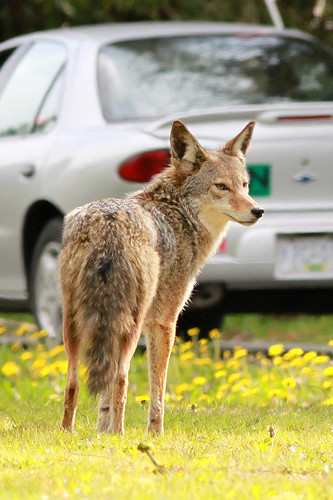
Coyote, Vancouver;
(Photo by frosty_white_raven)
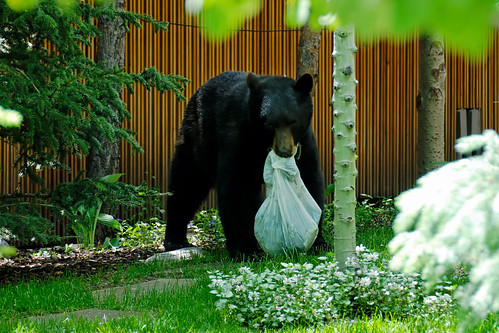
American black bear feeding on trash, Aspen;
(Photo by stationsquarecondo)
Even if one were to argue that snakes pose a real threat to human safety, comparisons can be made with other cities that deal with venomous snakes; for example, residents living in Australian cities and suburbs are familiar with many species of potentially deadly snakes. Yet by and large, there's a pragmatic acceptance of these snakes, and people take the necessary precautions to avoid confrontations.
Human-wildlife conflict is as much about changing human perceptions and behaviour, as it is about managing the wildlife and preventing animals from creating a nuisance. It is unrealistic to expect wild animals to keep to the forests and not come into contact with inhabited areas. This is especially the case with Singapore, where our network of park connectors, green belts, and other patches of vegetation provide corridors for wildlife.
There will be times when man and animal clash, and times when animals come too close for comfort and pose a genuine threat to public safety. Culling will be necessary in some cases, and so is wounding or killing a wild animal in self-defense. But I strongly feel that it is possible to coexist to some degree, and that humans and wildlife need not always be in conflict. It requires changes in behaviour and mindsets, and an understanding that it is impossible to completely eradicate the risks without wiping out entire species from our island.

Long-tailed macaque at window, Bukit Timah;
(Photo by IngeHG)
I am not advocating complacency and complete acceptance of wildlife; wildlife still needs to be excluded from busy public spaces, and steps must be taken to ensure that animals don't become so tame as to rely on humans for handouts, or take up permanent residence in our neighbourhoods and turn into public nuisances. It will not be easy, and a lot of compromises will have to be made. Funds will need to be spent on providing the necessary infrastructure and manpower to maintain human-wildlife conflict at a manageable level. But I believe that such efforts are necessary if we are to have viable populations of many of our threatened species.
Instead of going with the easy knee-jerk solution, which does not help in creating a more ecologically aware populace, I would rather that the time and effort be spent in getting people to accept and appreciate whatever biodiversity we have.
Wednesday, April 8, 2009
Why this bride is not having shark's fin soup at her wedding
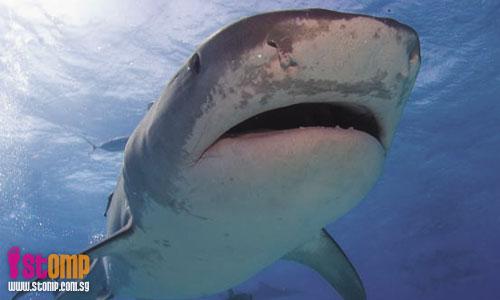
A STOMPer, who is about to get married, urges all couples to serving shark's fin soup at their wedding dinner, after learning of the ill effects of shark-killing, both on ecosystem and the economy.
She said:
"I am a bride to be in Jan 2010. Initially I am just concerned about my own wedding dinner for not having shark fin soup as an act of protecting sharks.
"But after reading forums, magazines, joining talks and fairs, I realised that there are many couples getting married these years.
"I feel that this message should be sent to them as an average of 30~40 tables per couple, the statistics of sharks going to sacrifice (which I do not know), but I am sure that this amount will be substantial."
The STOMPer says she has contacted an agency called Sharksavers and highlighted to them as well as suggested them to do something in Singapore.
She told STOMP:
"They are actually working out things on similar topic which is not having shark fins during Asian dinner and feel I am able to help.
"Currently I am working with sharksavers.org as a volunteer in Singapore on conveying the message of not having shark fins during wedding dinner.
"We found out that young couples are more in tune with current environmental issues and wish to do the right thing, but are under pressure from their parents and elders to 'keep up appearances' and maintain the culture.
"Unfortunately, the sharks cannot wait for our generation to become the elders of tomorrow; we all need to make the right and honorable choices now."
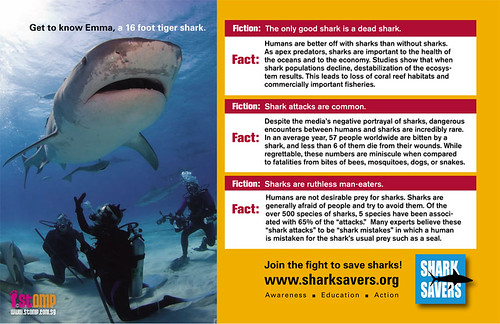
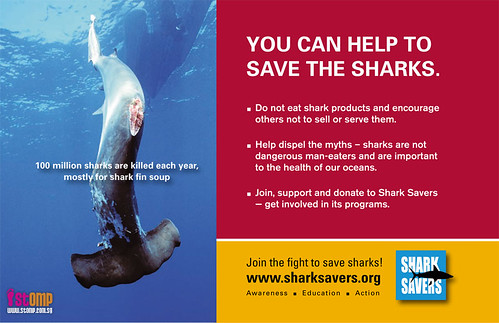
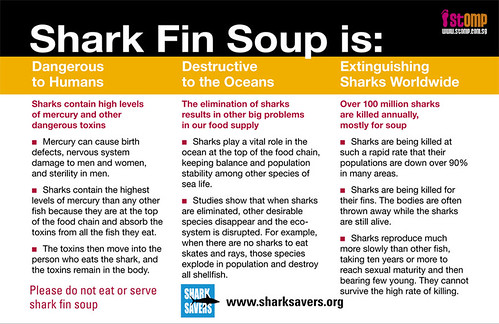
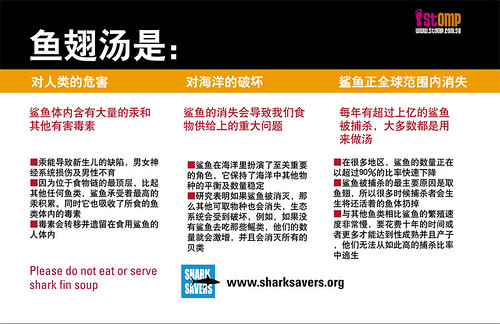
I applaud this person for taking action in trying to change deeply-entrenched mindsets; sadly, people who take such bold steps are likely to face criticism from many quarters.
If you're interested, here is the Shark Savers site. Other groups campaigning to increase protection for sharks and to alleviate the pressure on dwindling populations include The Shark Alliance and Iemanya Oceanica, while locally, there is lovesharks.sg.
The signs are encouraging; a recent article says that there is a growing trend to leave sharksfin off the menu at wedding banquets, when this article from May 2008 reported a huge spike in sharksfin consumption in 2007.
Honestly, I fail to see why sharksfin is still considered an essential dish for wedding dinners; all pretense of the dish being a symbol of prestige and wealth was chucked out the window when anybody could buy canned sharksfin at the supermarket, or buy bowls of sharksfin soup at the pasar malam.
We are all aware of the campaigns; we've all seen the gruesome images of sharks being dumped into the sea after having their fins hacked off. We have watched celebrity sportsmen like Yao Ming and Amanda Beard appear in advertisements by WildAid reminding us that "When the Buying Stops, the Killing Can Too". We have all heard about how shark populations are being depleted due to our demand for sharksfin. Maybe we even know about high mercury levels in sharksfin. Yet we seem loathe to change our habits. It's almost as if there's a form of cognitive dissonance going on here.
Perhaps, there is confusion due to the vocal naysayers, as evidenced by this letter to the Straits Times Forum yesterday.
While it is true that sharks are fished and consumed all over the world, and that the demand for sharksfin had nothing to do with the depletion of several shark fisheries in the past, it is at least quite likely that the seemingly insatiable demand for sharksfin for Chinese palates is currently the primary driving force behind the overexploitation of shark populations everywhere.
Dr. Giam Choo Hoo is no stranger to controversy; in fact, he has written about sharksfin several times over the years, advocating consumption and pooh-poohing claims from conservationists. One of his letters in 2006 invited a flurry of responses, including Bernard Harrison, Grant Pereira and Louis Ng.
I don't really have the time to analyse the data and arguments presented in his letter, but I think Dr. Giam fails to adequately explain the connections between Asian demand for sharksfin and shark fisheries elsewhere in the world. In essence, he is trying to hoodwink readers by cherry-picking statistics, throwing in random facts about shark consumption in other cultures, and trying to argue that the demand for sharksfin is not responsible for the depletion of European shark species.
Nice try, Dr. Giam, but we've seen this before.
Here's a blog post that was written about Dr. Giam's letter in 2006:
Sharkfin Response
Take note of this:
Dr Giam is cherry-picking statistics that provide only a partial representation of the views and consensus of the scientific and conservation communities on this issue. It's a crude, if effective, tactic to mislead people who are not particularly well informed about the issue, and more insidiously, it's intended to stir-up negative emotion to cloud the substance of the discussion.
Dr. Giam has previously tried to frame the issue as that of westerners trying to impose themselves upon Asian cultures and dictate what they should or should not eat, which to me is simply ludicrous. One does not need to identify as a westerner or Asian in order to be concerned about sustainability fisheries. And besides, a great number of activists are Asians themselves.
While Europe supplies a large amount of sharksfin, it is essential to note the growing importance of shark fisheries in Latin American countries such as Ecuador, Costa Rica and Mexico.
I would agree to a certain extent however that shark conservation does appear to be turning increasingly emotionally charged and overly sensationalised. Throw in groups like Sea Shepherd*, and things only get even more complicated.
*As an aside, there is a very interesting discussion over at Southern Fried Science about whether Sea Shepherd's actions are hurting or helping the cause.
The fact is that like whaling, the topic of shark fisheries is quickly becoming a very sensitive topic of discussion where it comes to marine conservation. I don't know for sure, but I won't be surprised if there is a fair bit of hyperbole and exaggeration, or that the campaigns and video clips present only one side of a multi-faceted issue.
Despite this concern of mine, I do have my own worries and concerns about the sustainability of the rate at which we are harvesting sharks from the oceans. One surely cannot discount observations of dwindling shark numbers from divers and scientists all over the world. And besides, even Dr. Giam himself concedes that shark populations in Europe are being overfished.
The groups listed above, and many other groups and individuals not mentioned are all attempting to change people's attitudes everywhere, and Sharkwater has become an iconic film in the marine conservation community. While progress is being made, I fear that it is too little, too late.
Personally, I am pessimistic about seeing the recovery of shark populations within my generation; given our long sad history of mismanagement of our natural resources, I think it is more likely that many species of sharks will be fished to the point of commercial collapse nearly globally, except in the seas around countries which have wisely decided to put a halt to the harvest. Given that sharks breed extremely slowly, it will then probably take at least several decades for populations to rise appreciably, provided we don't resume our persecution the minute the sharks show the slightest hint of recovery.
The more I think about it, the more I feel that there are many flaws in Dr. Giam's arguments. If only I had the time to look at the issues in greater detail and come up with a rebuttal...
Sunday, March 8, 2009
Shocking to find rat at Changi Airport's T3!
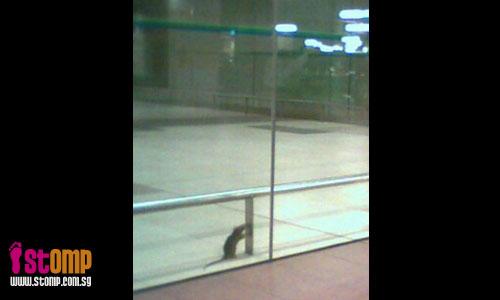
STOMPer Sammi was shocked to see this rat at Changi Airport's Terminal 3 at about 1am today (Mar 8).
She said:
"I went to Changi Airport T3 today morning at about 1am.
"While going back to the carpark at about 3am, we witnessed a rat running around one corner of T3.
"We were shocked to see a rat in such a clean airport.
"We even had time to take out our camera phone because the rat was buying time!"


While it is a little surprising to see a rat out in the open, I am not that shocked to find out that there are rats living in Changi Airport. It is usually next to impossible to prevent rats from moving into a new building. As long as there is food, the rodents will come. What's more important is ensuring that the rat population remains at a low and manageable level.
If I could hazard a guess, based on the size of the rat in the photos, it might be a brown rat (Rattus norvegicus), which is probably the most common urban rodent in Singapore.
Singapore's rats and mice belong to the Muridae, the largest mammal family, with over 600 known species distributed all over Eurasia, Africa and Australia.
Other rat species known to occur in Singapore include the Asian house rat (Rattus tanezumi) and the Polynesian rat (Rattus exulans). The Asian house rat used to be considered the same species as the black rat or house rat (Rattus rattus), but chromosome counts indicate that it is a different species altogether, and even in places where both species meet, very little hybridisation takes place. These 4 species are commensals of humans, and have greatly benefited from human activity. These species have followed humans all over the world, and have become established in places no rat could ever reach on its own, sometimes with profound and tragic ecological impacts.
Here in Singapore, the impacts of these non-native rodents on native wildlife is unknown. Given that Singapore does have quite a few species of native rodents, Singapore's terrestrial ecosystems are probably able to cope with these urban commensals. Urban rats also help to sustain populations of predators, from snakes and monitor lizards, to raptors and owls, to civets.
Besides the brown rat, Asian house rat, and Polynesian rat, Singapore has 2 other species of rat which are found in secondary vegetation, scrub, and abandoned plantations, the Annandale's rat (Rattus annandalei) and the Malaysian wood rat (Rattus tiomanicus). The forests of the Central Catchment Area are inhabited by the brown spiny rat (Maxomys rajah), while the red spiny rat (Maxomys surifer) might be locally extinct.
Singapore's final murid species is the house mouse (Mus musculus), yet another commensal of mankind that now has a near-global distribution.
It is interesting to me how conflicted we are about rodents. Many people find squirrels to be cute and harmless. Hamsters, guinea pigs, gerbils and chinchillas are extremely popular as pets. Fancy mice and rats are highly sought after as well. We anthropomorphise our rodents, and have over the years created a multitude of cartoon rats and mice to provide hours of entertainment. Yet people often regard the sight of a 'wild' rat or mouse with disgust and horror.
Maybe it's our old habit of associating these rodents with disease and death. Rats and mice do still spread a number of diseases, and in many cities, their numbers can explode. They cause significant losses of grain, and in some cases, will even prey on poultry, feeding on eggs and young chicks. In other words, we despise them for the fact that they have managed to survive so well and adapt to our presence, despite all our efforts to eradicate them.
Here in Singapore, rats and mice are more of a nuisance than anything else, although that does not stop us from trying to control their numbers. The burgeoning rat population in the Orchard Road area has made the news lately, although it is not surprising that the rodents should capitalise on littering and improper disposal of refuse. Recent control measures have taken their toll on the rodent population, although this has raised some ire over the cruelty of glue traps.
Ultimately, controlling rodent numbers means tackling human behaviour, and ensuring that food waste and refuse are disposed of properly. We can keep trapping and killing rats, but as long as the source of the problem is not tackled, we are only treating the symptoms.
Thursday, January 22, 2009
Thursday, August 7, 2008
I'm getting a sense of deja vu about this
Update: November has briefly written down her thoughts on this matter over at Pulau Ubin Stories.
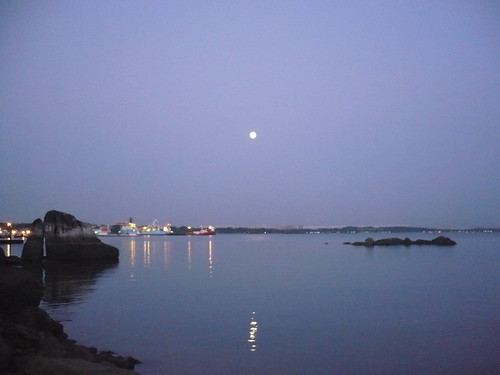
Changi, 22 March 2008
It's been a while since I've last blogged about letters to the press proposing poorly planned ideas that will profoundly impact our marine environment and waterways. I don't have an issue with stupid ideas, really; everyone comes up with crazy ideas once in a while, but these are meant to be worked on and improved until you are able to conceptualise and visualise something that is indeed feasible and realistic. It's when people come up with stupid ideas and then fail to take into account all the other costs and stakeholders before writing to the press that I get really riled up.
And there's something oddly familiar about this particular letter...
A near-identical idea was previously proposed, and rebutted, all just 4 months ago. The Public Utilities Board has already gone on record stating that "the waterway between Pulau Ubin, Pulau Tekong and the mainland is a major shipping lane and there are currently no plans to convert it into a reservoir".
Do people really forget so easily?
Currently, I'm a bit too occupied to be able to immediately work on drafting a response. Hopefully a fellow nature enthusiast or someone else in the Naked Hermit Crabs will be able to afford the time to send in a rebuttal. Honestly, I don't see the point of replying, since the points listed in my letter, which was published on April 22, are still applicable to this one. But I would say that it is still essential to address a lot of the suggestions raised in this latest letter, which once again indicates a lack of understanding and awareness of the costs involved and the potential economic, political, and ecological impacts that will ensue should such an idea be carried out.
Changi, 22 March 2008
It's been a while since I've last blogged about letters to the press proposing poorly planned ideas that will profoundly impact our marine environment and waterways. I don't have an issue with stupid ideas, really; everyone comes up with crazy ideas once in a while, but these are meant to be worked on and improved until you are able to conceptualise and visualise something that is indeed feasible and realistic. It's when people come up with stupid ideas and then fail to take into account all the other costs and stakeholders before writing to the press that I get really riled up.
And there's something oddly familiar about this particular letter...
Create reservoir between Pulau Ubin and Singapore (mirror)
COME 2012, we will have to be more self-reliant for our water supply.
I propose Pulau Ubin be linked to mainland Singapore to create a huge reservoir.
On the eastern end of Pulau Ubin, a two-tier road can be built so the lower deck allows cyclists to cycle between Singapore and Pulau Ubin. The upper deck will be another route for vehicles to go to and from Malaysia. Jetties can jut out from both sides of the link - the reservoir side for smaller boats such as kayaks, sailing and racing boats, and water scooters, while bigger boats can dock on the other side. Bicycle rental kiosks, souvenir shops and so on can be built at the starting point of the link at the Singapore end. Further reclamation at the Singapore end will allow immigration offices and multistorey carparks to be built.
On the link at the western end of Pulau Ubin, bicycle rental kiosks, food centres and souvenir shops with solar-panelled roofs can be built for cyclists to cycle between Singapore and Pulau Ubin.
Pavilions can also be extended from both links into the reservoir for relaxation, photography and fishing.
Pulau Ubin can be promoted extensively as a venue for camping, mountain biking, adventure, trekking, hiking, jogging, horse riding and prawn fishing (to meet strong demand for youngsters to rough it out and enjoy nature).
The proposed reservoir will mean less land use elsewhere - some of the existing reservoirs can be redefined as collection centres for rainwater and Newater, and their water channelled into Pulau Ubin reservoir. The surrounding land can then be freed for other use, such as residential development to house a growing population.
Feedstock for Pulau Ubin reservoir can also be had from excess water from the smaller reservoirs, from rainwater and Newater to be collected from the northern and eastern parts of Singapore and from more Newater that could be generated.
Big water pipes connected to both links at Pulau Ubin would help to drain seawater between Pulau Ubin and the Causeway and provide a change of seawater according to the tides. Energy-generating turbines can be incorporated into these seawater pipes.
Coney Island can be reclaimed further to become part of the mainland and pavilions can be extended from Coney Island into the reservoir.
The damming of the water between Pulau Ubin and Singapore to become a huge reservoir promises many possibilities for development, for meeting future water needs and for recreation.
I urge the authorities to look into these great benefits on our doorstep.
Chew Wai Soon
A near-identical idea was previously proposed, and rebutted, all just 4 months ago. The Public Utilities Board has already gone on record stating that "the waterway between Pulau Ubin, Pulau Tekong and the mainland is a major shipping lane and there are currently no plans to convert it into a reservoir".
Do people really forget so easily?
Currently, I'm a bit too occupied to be able to immediately work on drafting a response. Hopefully a fellow nature enthusiast or someone else in the Naked Hermit Crabs will be able to afford the time to send in a rebuttal. Honestly, I don't see the point of replying, since the points listed in my letter, which was published on April 22, are still applicable to this one. But I would say that it is still essential to address a lot of the suggestions raised in this latest letter, which once again indicates a lack of understanding and awareness of the costs involved and the potential economic, political, and ecological impacts that will ensue should such an idea be carried out.
Monday, May 12, 2008
Not again.
Update: Check out Ria's wildfilms blog, which illustrates the difficulties of implementing such a proposal. I like this part:
Guess who has yet another letter published in the Straits Times Forum today...
I have too many matters to attend to, and I'm seriously not going to bother responding to this one.
Indeed I wonder about the writer's seeming obsession with 'doing something' with the shores and water around Changi? These areas are NOT 'unused' or 'underutilised'. They are in fact used for critical elements of Singapore's national and economic needs.
The writer's continuing disregard for basic realities of the area is also rather puzzling. Particularly since these have been highlighted earlier.
Guess who has yet another letter published in the Straits Times Forum today...
Make Changi 4th runway float on the sea (mirror)
THREE years ago, many Singaporeans doubted a floating platform the size of a football field could ever be built and be safe to use. Three years later and thanks to Ministry of Defence approval, we have shown the world with the spectacular 2007 National Day Parade on the Marina Bay floating stadium, anything can be done when we put our hearts and minds to it.
It is time for us to take our industrial shipbuilding expertise on floating platforms and take it to a higher level. We should build the world's first 5km by 0.2km floating platform as the fourth runway at Changi Airport. The floating platform can be attached to the mainland and extend it out to sea.
A normal airport occupies a huge amount of land resource, but as one can see most of Changi Airport comprises grass fields. The terminal buildings, taxiways and runway occupy less than 40 per cent of the total land area. In land-scarce Singapore, we must find ingenious ways to use all our land resource to the fullest.
For Singapore to become the major aviation hub in Asia and South-east Asia, we need a massive amount of land to cater to the industry's growing needs. The Changi cargo and aircraft maintenance area is bursting at the seams. A limited land resource will seriously hinder our growth and potential. If we can push the fourth runway out to sea, we can also convert the first and second runways to sea-based form and free up land for other uses.
Many would have deemed this idea impossible. But the old Kai Tak Airport in Hong Kong used a single 3km runway that stretched out to sea. The United States has operated one of the largest aircraft carriers in the world for decades now, and the landing strip is less than 200m long and 60m wide. The largest super tanker in the world is more than 400m by 70m and these floating giants are made safer and stronger than is generally known. Figures will show that floating runways will be cheaper than using reclaimed land.
Syu Ying Kwok
I have too many matters to attend to, and I'm seriously not going to bother responding to this one.
Wednesday, April 30, 2008
I'm in the papers again
It took them a while, but my reply to Clinton Lim's suggestion to use ferries as public transport has finally been published.
2 letters published within the span of 9 days. I hope I don't have to keep doing this. I think I'll pass the job of writing the next rebuttal (whenever that may be) to someone else.
Commute by sea? It's a ferry tale (mirror)
I REFER to Mr Clinton Lim Eng Hiong's letter, 'Tired of jammed roads? Go to work by sea instead' (April 23). While ferries have proven to be an effective means of transport in many coastal cities, there are many complex challenges in Singapore's context which would make it difficult to effectively implement a similar system here.
Ferry transport works best when the distance between two points is shorter over water than if a detour has to be made over land. This is best seen in cities surrounding large bays like in the San Francisco Bay Area, or where cities are spread out over a cluster of islands, such as in Hong Kong.
Anybody with a map of Singapore can tell that the island is roughly shaped like a lozenge. In the north, the causeway linking Singapore to Johor Baru prevents sea transport via the Straits of Johor. Taking this into account, the distance covered over land is usually shorter than by sea. As an example, people intending to take a ferry from Punggol to Jurong would have to skirt the entire eastern and southern coastline of Singapore.
Although the seas might not appear to be as congested as our roads, there are laws and regulations for our busy port and shipping lanes which will affect the speed and routes taken by any ferry service, which means that taking the shortest direct route over water will not always be possible.
Sea-going vessels are usually unable to match land vehicles in terms of speed. Faster boats are available, but the wake produced by these boats can be large, which not only disrupts other boats nearby, but also accelerates coastal erosion. For this reason, it can be expected that such ferries will not be allowed to achieve top speed until they are some distance from other boats and shores that might be impacted. This adds further to the distance to be travelled, and time taken, since they will have to cruise along at low-wake speeds for portions of the route.
The large size of high-speed ferries necessitates deep water and proper jetties for safe transfer of passengers. Creation and maintenance of such areas requires regular dredging which will affect water quality and thus the coastal environment.
Clinton Lim might not be aware that Clifford Pier has been closed since 2006, due to construction of the Marina Barrage. And in the West Coast area, which is heavily congested, it is unlikely that deepwater access with good land links can be freed up easily.
The effects of bad weather are more obvious on maritime traffic than on land; storms can have a serious impact on the speed of boats, and it does not require very strong winds to create choppy waters that can make a ferry ride a very unpleasant affair for passengers. Small craft, such as the bumboats that ply the waters between Changi and Pulau Ubin, can be unstable, and I have seen how even that short 10-minute journey can be too much for some people to stomach.
Looking into all these factors, it appears that a system of ferry services will neither be very efficient nor cost-effective, when compared to travelling overland. At present, the only place where ferry services might be feasible is in the Singapore River and Kallang Basin, although the extensive road network and numerous bridges would render such a service redundant and practical only in certain areas. Any ferry service would probably be seen more as a slower, scenic pleasure cruise rather than as an effective complement to our existing road and rail infrastructure.
While I wholeheartedly support the need to tackle congestion on the roads, any proposed solution will need to take into account Singapore's geography, and the various issues involved that will affect the practicality and feasibility of such proposals.
Kwan Wei Ming Ivan
2 letters published within the span of 9 days. I hope I don't have to keep doing this. I think I'll pass the job of writing the next rebuttal (whenever that may be) to someone else.
Wednesday, April 23, 2008
Another day, another letter
I... I need to go lie down for a while.
Here's another letter to the press that ignores a lot of basic facts, though to be honest, the ideas aren't as ridiculous as those expressed by a certain other person.
ON SATURDAY, it was reported that there were 4.779 million train and rides a day in the first quarter, up 7 per cent over last year ('Buses, MRT see jump in ridership'). While the growth in public transport ridership is significant, it is not known if the rise has been at any real expense to car trips.
With more than 800,000 cars on the roads currently, the intention to increase the population to 6.5 million could well put another 250,000 or more vehicles on already congested roads.
The Land Transport Authority has taken action to manage traffic congestion in the city during peak hours by ensuring vehicular growth is met by a corresponding increase in the number of expressways, tunnels, MRT lines, electronic road pricing (ERP) gantries and charges.
After many years in service, I wonder if ERP is effective in alleviating traffic congestion or is it just 'rearranging furniture'.
In land-scarce Singapore, do we fully harness all resources available to meet public transport challenges? I think not. So far, we have looked only landwards. We need to take a more holistic, innovative approach - by looking to the sea.
Singapore is, after all, an island. Why not explore the idea of ferrying thousands to and from work daily via a Park 'n' Cruise scheme, to supplement the existing rail and road transport system?
This refreshing mode of transport will be guaranteed not to encounter traffic jams, be squeezed out of bus lanes or cause the motorist to be fined for not having a valid CashCard as he passes the ERP gantry.
With the Government providing the infrastructure - carparks and ferry terminals - the bus shuttle service and plying the route can be left to private enterprise.
I can already envisage Clifford Pier and the soon-to-be- made-over Singapore Cruise Centre at HarbourFront as two hubs of this ferry service, with terminals stretching from Woodlands to Punggol, Pasir Ris, Tampines, Bedok, Siglap, Marine Parade and West Coast, for a start.
I hope any feasibility study of this suggestion will be favourable, enabling at least part of our transport system to be left perpetually in 'cruise control'. This will also contribute to the Government's expectation that, by 2020, 70 per cent of trips in the morning peak period is by public transport.
Clinton Lim Eng Hiong
I guess he means well, even if he isn't quite aware of some of the basic facts.
Ria did another post on the wildfilms blog highlighting the problems that affect the feasibility of implementing a ferry transport system in Singapore.
I've sent in a reply:
Seriously, I wish more people would stop and think more about the feasibility of their ideas, and do a bit more research, before sending in their letters to the press.
Here's another letter to the press that ignores a lot of basic facts, though to be honest, the ideas aren't as ridiculous as those expressed by a certain other person.
Tired of jammed roads? Go to work by sea instead (mirror)
ON SATURDAY, it was reported that there were 4.779 million train and rides a day in the first quarter, up 7 per cent over last year ('Buses, MRT see jump in ridership'). While the growth in public transport ridership is significant, it is not known if the rise has been at any real expense to car trips.
With more than 800,000 cars on the roads currently, the intention to increase the population to 6.5 million could well put another 250,000 or more vehicles on already congested roads.
The Land Transport Authority has taken action to manage traffic congestion in the city during peak hours by ensuring vehicular growth is met by a corresponding increase in the number of expressways, tunnels, MRT lines, electronic road pricing (ERP) gantries and charges.
After many years in service, I wonder if ERP is effective in alleviating traffic congestion or is it just 'rearranging furniture'.
In land-scarce Singapore, do we fully harness all resources available to meet public transport challenges? I think not. So far, we have looked only landwards. We need to take a more holistic, innovative approach - by looking to the sea.
Singapore is, after all, an island. Why not explore the idea of ferrying thousands to and from work daily via a Park 'n' Cruise scheme, to supplement the existing rail and road transport system?
This refreshing mode of transport will be guaranteed not to encounter traffic jams, be squeezed out of bus lanes or cause the motorist to be fined for not having a valid CashCard as he passes the ERP gantry.
With the Government providing the infrastructure - carparks and ferry terminals - the bus shuttle service and plying the route can be left to private enterprise.
I can already envisage Clifford Pier and the soon-to-be- made-over Singapore Cruise Centre at HarbourFront as two hubs of this ferry service, with terminals stretching from Woodlands to Punggol, Pasir Ris, Tampines, Bedok, Siglap, Marine Parade and West Coast, for a start.
I hope any feasibility study of this suggestion will be favourable, enabling at least part of our transport system to be left perpetually in 'cruise control'. This will also contribute to the Government's expectation that, by 2020, 70 per cent of trips in the morning peak period is by public transport.
Clinton Lim Eng Hiong
I guess he means well, even if he isn't quite aware of some of the basic facts.
Ria did another post on the wildfilms blog highlighting the problems that affect the feasibility of implementing a ferry transport system in Singapore.
I've sent in a reply:
Public transport by sea? A Ferry-tale for Singapore
I refer to Clinton Lim Eng Hiong's letter on Wednesday, "Tired of jammed roads? Go to work by sea instead" (Straits Times, 23 April 2008). While ferries have proven to be effective means of transport in many coastal cities, there are many complex challenges in Singapore's context which would make it difficult to effectively implement a similar system here.
Ferry transport works best when the distance between two points is shorter over water than if a detour has to be made over land. This is best seen in cities surrounding large bays like in the San Francisco Bay Area, or where cities are spread out over a cluster of islands, such as in Hong Kong.
Anybody with a map of Singapore can tell that the island is roughly shaped like a lozenge. At the north, the causeway linking Singapore to Johor Bahru prevents sea transport via the Straits of Johor. Taking this into account, the distance covered over land is usually shorter than by sea. As an example, people intending to take a ferry from Punggol to Jurong would have to skirt the entire eastern and southern coastline of Singapore.
Although the seas might not appear to be as congested as our roads, there are laws and regulations for our busy port and shipping lanes which will affect the speed and routes taken by any ferry services, which means that taking the shortest direct route over water will not always be possible.
Sea-going vessels are usually unable to match land vehicles in terms of speed. Faster boats are available, but the wake produced by these boats can be large, which not only disrupts other boats nearby, but also accelerates coastal erosion. For this reason, it can be expected that such ferries will not be allowed to achieve top speed until they are some distance from other boats and shores that might be impacted. This adds further to the distance to be travelled, and time taken, since they will have to cruise along at low-wake speeds for portions of the route.
The large size of high-speed ferries necessitates deep water and proper jetties for safe transfer of passengers. Creation and maintenance of such areas requires regular dredging which will affect water quality and thus the coastal environment.
Clinton Lim might not be aware that Clifford Pier has been closed since 2006, due to construction of the Marina Barrage. And in the West Coast area, which is heavily congested, it is unlikely that deepwater access with good land links can be freed up easily.
The effects of bad weather are more obvious on maritime traffic than on land; storms can have a serious impact on the speed of boats, and it does not require very strong winds to create choppy waters that can make a ferry ride a very unpleasant affair for passengers. Small craft, such as the bumboats that ply the waters between Changi and Pulau Ubin, can be unstable, and I have seen how even that short 10-minute journey can be too much for some people to stomach.
Looking into all these factors, it appears that a system of ferry services will neither be very efficient nor cost-effective, when compared to travelling overland. At present, the only place where ferry services might be feasible is in the Singapore River and Kallang Basin, although the extensive road network and numerous bridges would render such a service redundant and practical only in certain areas. Any ferry service would probably be seen more as a slower, scenic pleasure cruise rather than as an effective complement to our existing road and rail infrastructure.
While I wholeheartedly support the need to tackle congestion on the roads, any proposed solution will need to take into account Singapore's geography, and the various issues involved that will affect the practicality and feasibility of such proposals.
Kwan Wei Ming Ivan
Seriously, I wish more people would stop and think more about the feasibility of their ideas, and do a bit more research, before sending in their letters to the press.
Tuesday, April 22, 2008
Dam(n) these silly ideas...
Syu Ying Kwok just doesn't get it, does he?
I was quite pleased to see that my reply to his letter proposing the creation of a giant freshwater reservoir by damming up the sea around Pulau Ubin, Pulau Tekong and Changi has been published.
However, to my chagrin, it did not take him long to reply to my letter, in the online comments. And his wordy reply simply shows that he still doesn't understand the realities of the situation.
I was quite pleased to see that my reply to his letter proposing the creation of a giant freshwater reservoir by damming up the sea around Pulau Ubin, Pulau Tekong and Changi has been published.
However, to my chagrin, it did not take him long to reply to my letter, in the online comments. And his wordy reply simply shows that he still doesn't understand the realities of the situation.
My letter has been published
Back from Pulau Semakau, and I've just discovered that my rebuttal to Syu Ying Kwok's letter has been published. Unfortunately, it was published online, which means that those who only read the print edition won't get to see why the original idea was simply rubbish.
Friday, April 18, 2008
Dam(n) ideas...

Sometimes, I read of downright silly, hare-brained schemes to put our nature areas to "better" use. Some people, still woefully ignorant of the ecological, recreational, and even spiritual value of our wild places, are capable of coming up with some ridiculous ideas. Race tracks on Pulau Ubin? Yes, the idea has been proposed before. Building Disneyland in Sungei Buloh? As ludicrous as it is, someone was actually dumb enough to suggest that.
But I was extremely appalled to read this in the Forum section of today's Straits Times:
Subscribe to:
Posts (Atom)