Monday, March 8, 2010

This park connector does not connect to anywhere

 This park connector does not connect to anywhere
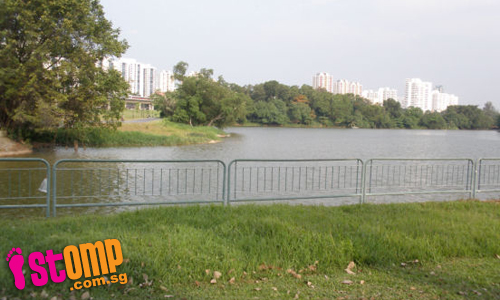
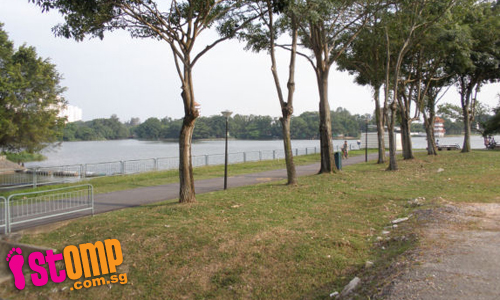
STOMPer Jogger wonders why the Jurong Park Connector does not connect to anywhere and ends at different locations.

Said the STOMPer:

"The Jurong PCN is a haven for joggers and cyclists.

"Recently, PUB, JTC and NParks have embarked on developing the surrounding areas and the vicinity of Jurong Lake.

"Part of the Jurong Park connector abruptly ends at Boon Lay Way without connecting Jurong Town Hall Rd and Yuan Ching Rd.

"The PCN can be continuous if a bridge was built to link point A to point B (in diagram), that is the area where the canal empties into Jurong Lake

"Why a disjointed park connector?"

 This park connector does not connect to anywhere
 This park connector does not connect to anywhere
 This park connector does not connect to anywhere
 This park connector does not connect to anywhere

As far as I know, based on the map for Jurong Park Connector, the 2 sides are indeed connected, so this person is just talking nonsense.

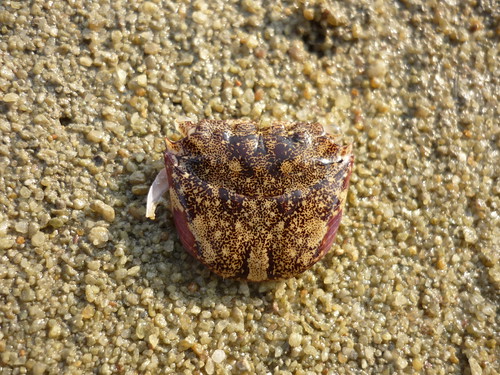
Monday Morgue: 8th March 2010

P1200613
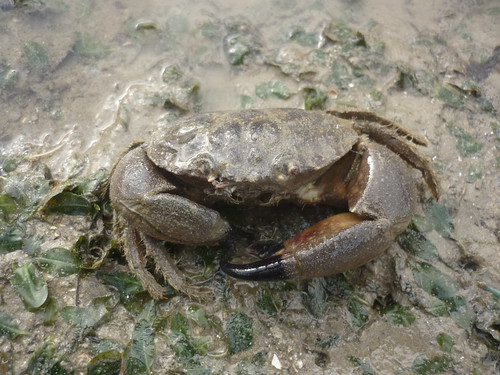
Purple climber crab (Metopograpsus sp.)
Sentosa, 30th May 2009

Wild Fact Sheets
A Guide to the Mangroves of Singapore
A Guide to Seashore Life

Sunday, March 7, 2010

Strange creature found dead on East Coast Beach

 Strange creature found dead on East Coast Beach
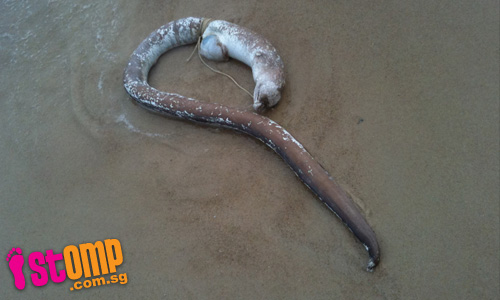
STOMPer Wei Wei found this weird looking creature washed up on East Coast Beach.

In an email to STOMP today (Mar 7), the STOMPer says:

"This unidentified creature was found dead at East Coast Park near barbeque pit 17c.

"It looks like a snake with no eye."

My suspicion is that it's some sort of eel. The little bulge at the front half of the body is probably the swim bladder or another internal organ which has become exposed through a tear in the body.

Likely candidates as to which species of eel this is include the burrowing snake eel (Pisodonophis cancrivorus) or estuarine moray (Gymnothorax tile), among several others. It's difficult to narrow it down further, since the person who submitted this to STOMP did not provide any details about the size of the carcass, nor were any close-ups taken.

At about this time last year, I did a series of blog posts on eels.

Part 1: Moray eels (Muraenidae)
Part 2: Snake eels (Ophichthidae)
Part 3: Conger eels (Congridae) and Pike conger eels (Muraenesocidae)
Part 4: Freshwater eels (Anguillidae)
Part 5: Spaghetti eels (Moringuidae) and false moray eels (Chlopsidae)
Part 6: Non-eels

This article reminds me so much of the silliness that often takes place when decomposed carcasses wash up on the beach, leading to rampant speculation by people who frankly don't know enough about animals to make any educated guesses. Take for example the Montauk Monster, which was encountered on Long Island in New York in 2008 and 2009. Based on the images, zoologist Darren Naish among others showed that the carcasses were most likely nothing more than ordinary raccoons (Procyon lotor) that had simply spent some time decomposing in the water.

I'm more intrigued by what looks like some sort of cord tied around the animal's body, and whether it had any part to play in the eel's death. Is this a possible case of death by entanglement in plastic debris?

Yet another raging bushfire at Tampines

 Yet another raging bushfire at Tampines
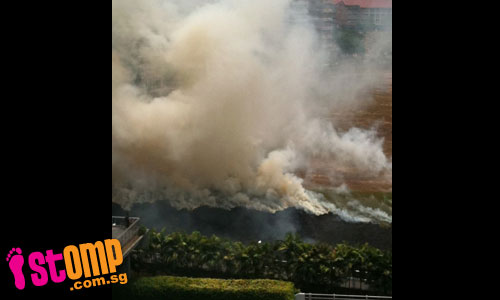
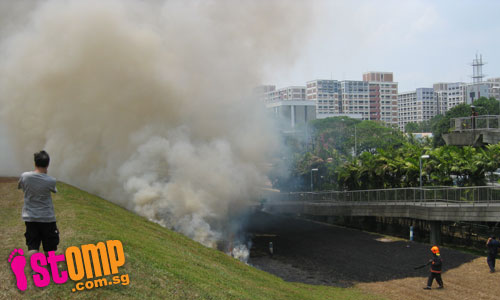
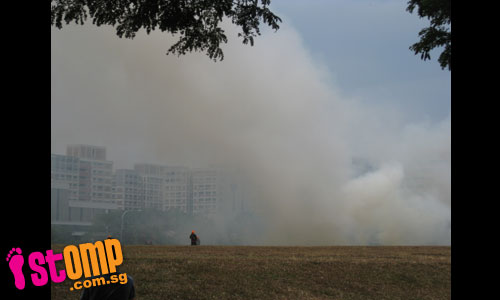
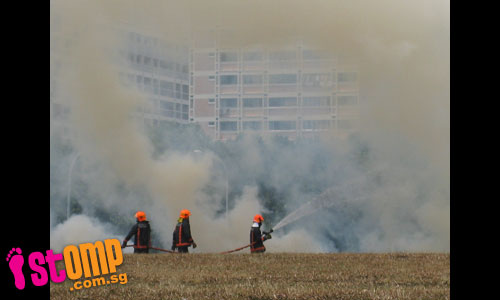
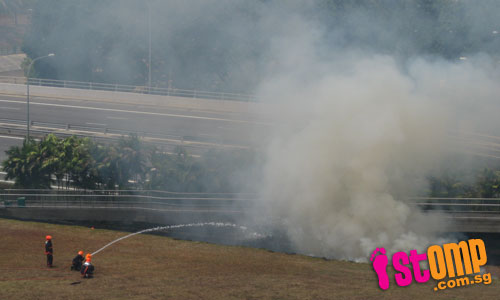
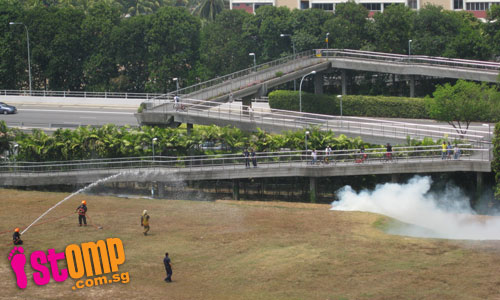
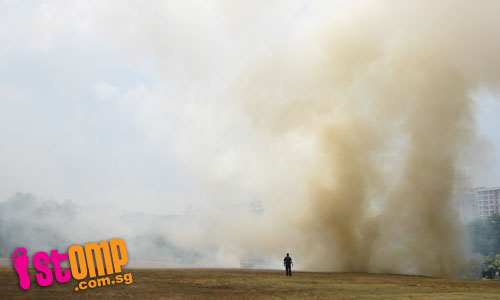
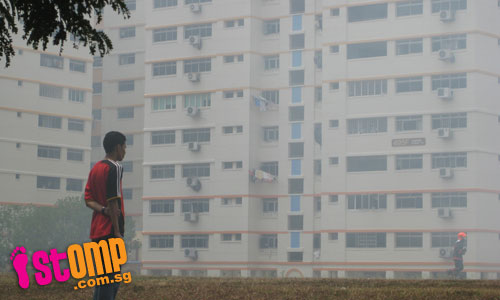
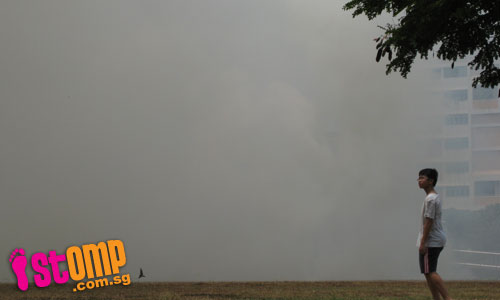
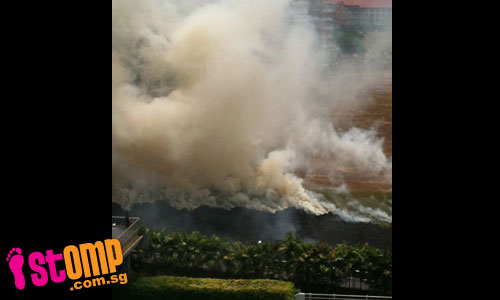
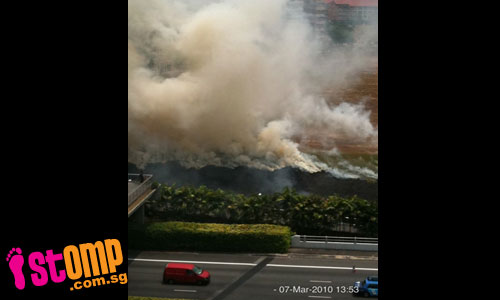
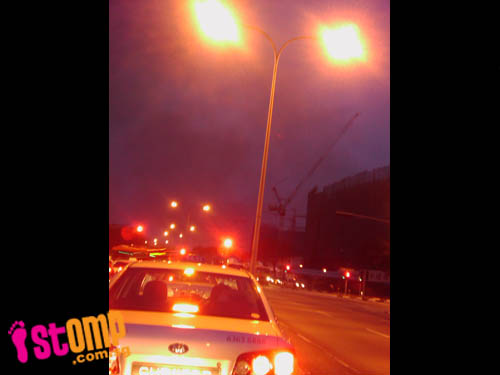
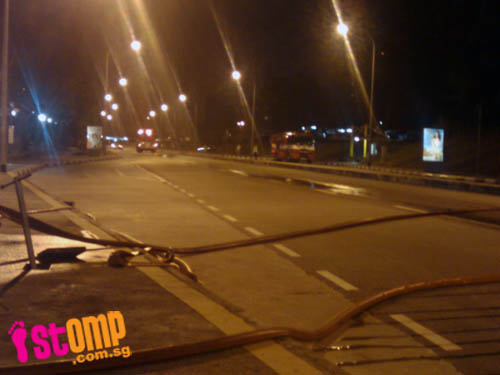
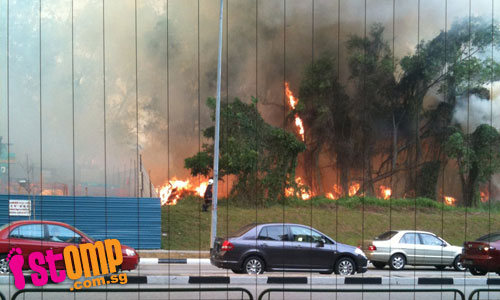
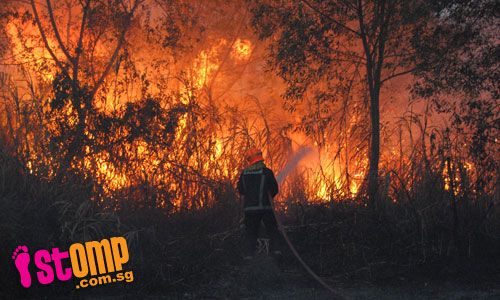
Two STOMPers witnessed the bushfire at the open field at Tampines St 45 today (Mar 7), and says the smoke engulfed the surrounding blocks, making breathing difficult.

Says STOMPer Putri:

"This open field near Tampines St 45 caught fire today (Mar 7), probably because it is so hot and dry.

"The picture was taken across the TPE."

Another STOMPer, Desmond, comments:

"This happened at about 1.45pm today, at the field next to my home.

"The sweltering hot weather must have dried up the vegetation and this resulted in a fire.

"The burning smoke engulfed the surrounding residential buildings, affecting resident's visibility. The smoke made breathing difficult as there was a bad smell and it was very dusty.

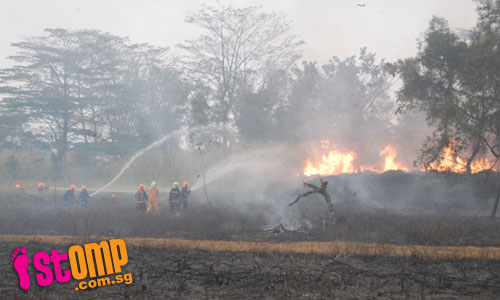
"Firefighters came in within a few minutes and started bringing out the hoses from the nearby blocks (which were at least a good 400m away from the fire).

"Policemen were everywhere, trying to get the public to stand back for their own safety.

"The fire was spreading quickly across the dried grass, and yellow smoke soon emerged from the thick haze as the fire grew.

"Fortunately, firefighters managed to slowly put out the blaze after their continuous effort in spraying water all over the blaze.

"I think it took about 30 minutes to extinguish the fire."

STOMP is trying to contact SCDF for more details, so do check back later.

 Yet another raging bushfire at Tampines
 Yet another raging bushfire at Tampines
 Yet another raging bushfire at Tampines
 Yet another raging bushfire at Tampines
 Yet another raging bushfire at Tampines
 Yet another raging bushfire at Tampines
 Yet another raging bushfire at Tampines
 Yet another raging bushfire at Tampines
 Yet another raging bushfire at Tampines
 Yet another raging bushfire at Tampines

Do check out the video posted on STOMP.

Related posts: More pictures from massive Tampines bushfire (4th March 2010)
Bushfire the size of a football field rages at Tampines (3rd March 2010)
Scorching sun turns Singapore from 'green' city into gold (3rd March 2010)
The haze is back at Pasir Ris (2nd March 2010)
Bush fire rages at Expo area (19th February 2010)

Related articles: Vegetation fire at Tampines took at least 4 hours to put out (4th March 2010) (Mirror)
Large fire at open field in Tampines (4th March 2010) (Mirror)
Sorry kid, it's going to stay hot and dry for a while (2nd March 2010) (Mirror)
Last month the driest Feb in 140 years (1st March 2010) (Mirror)
February 2010 is driest month for Singapore since records began in 1869 (2010) (Mirror)
Driest February ever recorded to date in Singapore (25th February 2010) (Mirror)
February's a dry, hot season in Singapore (19th February 2010) (Mirror)
Smoke in the air due to bush fires (18th February 2010) (Mirror)
71 bush fires in two weeks (18th February 2010) (Mirror)

I used to live in that neighbourhood! I do have fond memories of exploring that area of open land during my upper primary and secondary school days. Afternoons lost in my own little world, chasing after changeable lizards (Calotes versicolor), common Asian toads (Duttaphrynus melanostictus) and banded bullfrogs (Kaloula pulchra), trying not to get snagged in the thickets of giant mimosa (Mimosa pigra). Where I squatted in front of marshy ponds for hours, watching tadpoles and water snails. It was where I saw scaly-breasted munia (Lonchura punctulata), little heron (Butorides striatus) and white-breasted waterhen (Amaurornis phoenicurus). On many occasions, I saw people flying kites or playing around with remote-controlled helicopters.

If there's any consolation, this patch is just part of a large area of scrub and grassland found in many parts of Tampines and Pasir Ris. While the fauna and flora in this area are interesting in their own right, I don't think any species inhabiting this habitat is under any great risk of extinction. The vegetation will grow back eventually, what matters now is whether or not the original species will be able to recolonise the field from the surrounding patches of scrub, separated by barriers such as apartment buildings, roads and concretised drains and canals. I also hope that such fires don't become a regular occurrence, which would eventually lead to the growth of fire-climax vegetation, in which probably only a small proportion of common and hardy species would be able to survive in the long term.

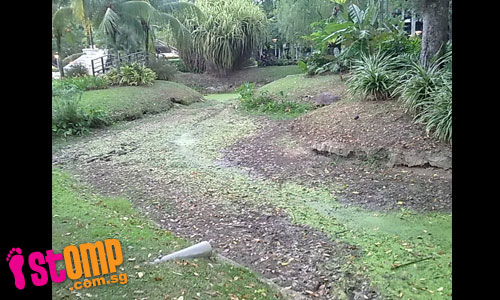
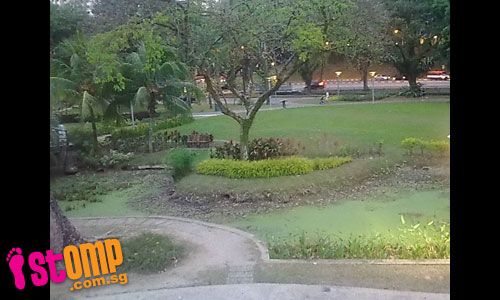
Pond at Tiong Bahru park completely dries up under hot weather

 Pond at Tiong Bahru park completely dries up under hot weather
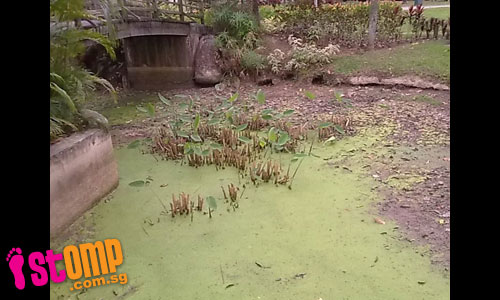
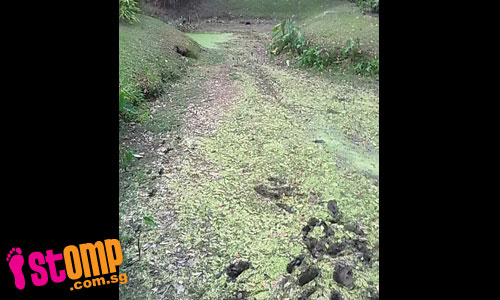
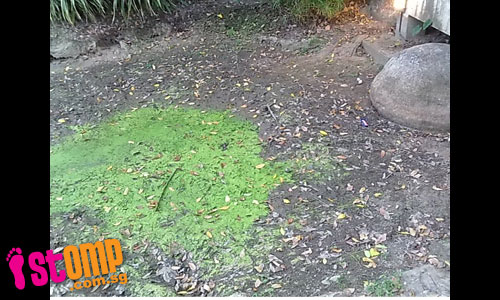
The recent dry spell and hot weather has left this pond at Tiong Bahru park completely dried up, observes Jogger@TBP. He says:

"This pond located at Tiong Bahru Park has dried up, killing the living organisms in it.

"As a frequent jogger and animal lover, it greatly pains me to see the pond in such a condition.

"Can't National Parks and Tanjong Pagar Town Council do something about this?"

 Pond at Tiong Bahru park completely dries up under hot weather
 Pond at Tiong Bahru park completely dries up under hot weather
 Pond at Tiong Bahru park completely dries up under hot weather
 Pond at Tiong Bahru park completely dries up under hot weather

Related posts: Scorching sun turns Singapore from 'green' city into gold (3rd March 2010)

Related articles: Fry Days (7th March 2010) (Mirror)
Sorry kid, it's going to stay hot and dry for a while (2nd March 2010) (Mirror)
Last month the driest Feb in 140 years (1st March 2010) (Mirror)
February 2010 is driest month for Singapore since records began in 1869 (2010) (Mirror)
Driest February ever recorded to date in Singapore (25th February 2010) (Mirror)
February's a dry, hot season in Singapore (19th February 2010) (Mirror)

I guess the fishes are pretty much screwed, but other aquatic animals are able to leave the pond in search of other ponds; whether they survive long enough to find another refuge is a different matter altogether. Birds, reptiles and flying insects should probably do quite well unless the drought becomes really severe, while frogs and snails might be more limited in terms of the distances they can travel.

Many other organisms, including insects, snails, and worms, are able to burrow into the mud and go into aestivation, where they lay dormant and await the arrival of rain. For other species, most or all may perish, but the species may still survive in the form of eggs, seeds, and underground roots and stems, also laying dormant until the water returns.

In fact, maybe not all the fish are doomed; many species of fish are able to survive the drying up of their ponds. By burrowing into the mud and laying dormant, many species are able to survive in this manner for some time.

The African lungfish (Protopterus sp.) are especially famous for such behaviour, while locally, species such as the common walking catfish (Clarias batrachus), swamp eel (Monopterus albus) and climbing perch (Anabas testudineus) are able to do the same, albeit to a more limited degree. These species are more famous for being able to leave the water and survive for some time on land, as they search for more hospitable bodies of water. While such behaviour may doom them if this drying pond is the only suitable habitat around, it could save their lives if they manage to survive traffic, pedestrians, predators such as dog, cats, and birds, and find a replacement canal or pond to their liking.

Thursday, March 4, 2010

More pictures from massive Tampines bushfire

 More pictures from massive Tampines bushfire
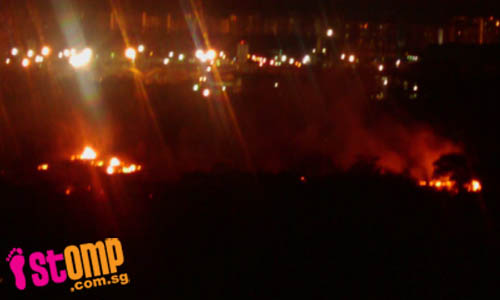
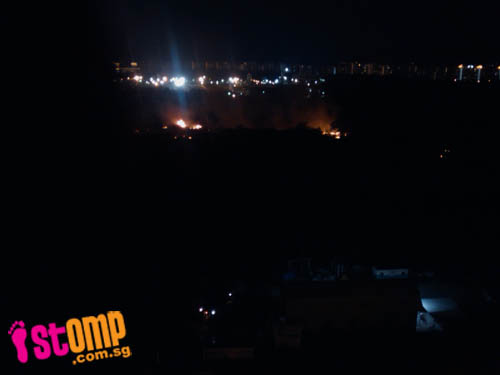
Jeremy sent in more pictures of the Tampines Avenue 9 bushfire, which show the fire raging into the night.

A massive bushfire had broken out at a grass field in front of Block 723, Tampines Street 72 yesterday (Mar 3). The blaze was estimated to cover an area the size of a football field.

In an email, Jeremy wrote:

"This is the second time in the recent memory that a bushfire occurred at an empty plot of land in Tampines Avenue 9. The first time it happened was on Jan 30, 2009 at about 6:00 pm.

"The most recent one happened at the same place, possibly around 6:00 pm as well. But the date is now Mar 3, 2010.

"The recent dry spell due to the El Nino effect is probably behind the bushfire.

"And this time my friend who stays in the Eunos area was not the one who woke me up from my afternoon slumber like last year for my original article on STOMP on Jan 31 2009. Instead I rang him up to ask him to look east again."

 More pictures from massive Tampines bushfire
 More pictures from massive Tampines bushfire
 More pictures from massive Tampines bushfire
 More pictures from massive Tampines bushfire

Related posts: Bushfire the size of a football field rages at Tampines (3rd March 2010)
Scorching sun turns Singapore from 'green' city into gold (3rd March 2010)
The haze is back at Pasir Ris (2nd March 2010)
Bush fire rages at Expo area (19th February 2010)

Related articles: Vegetation fire at Tampines took at least 4 hours to put out (4th March 2010) (Mirror)
Large fire at open field in Tampines (4th March 2010) (Mirror)
Sorry kid, it's going to stay hot and dry for a while (2nd March 2010) (Mirror)
Last month the driest Feb in 140 years (1st March 2010) (Mirror)
February 2010 is driest month for Singapore since records began in 1869 (2010) (Mirror)
Driest February ever recorded to date in Singapore (25th February 2010) (Mirror)
February's a dry, hot season in Singapore (19th February 2010) (Mirror)
Smoke in the air due to bush fires (18th February 2010) (Mirror)
71 bush fires in two weeks (18th February 2010) (Mirror)

Wednesday, March 3, 2010

Bushfire the size of a football field rages at Tampines

 Bushfire the size of a football field rages at Tampines
A massive bushfire broke out at a grass field in front of block 723, Tampines Street 72 today (March 3). The bushfire was apparently the size of a football field.

STOMPer Michelle, who witnessed the raging fire, says:

"The fire started at around 6pm.

"As at 8pm the fire hasn't been completely put off, but SCDF officers are at the scene and the fire is under control.

"There is a jam towards Tampines Interchange because of the fire.

"The smoke is quite thick and can be seen from the surrounding blocks.

"I heard that the fire spread to the nearby heavy vehicle carpark, but I do not know whether any vehicles were damaged."

STOMP has contacted SCDF for more information.

 Bushfire the size of a football field rages at Tampines
 Bushfire the size of a football field rages at Tampines
 Bushfire the size of a football field rages at Tampines

Related posts: Scorching sun turns Singapore from 'green' city into gold (3rd March 2010)
The haze is back at Pasir Ris (2nd March 2010)
Bush fire rages at Expo area (19th February 2010)

Related articles: Sorry kid, it's going to stay hot and dry for a while (2nd March 2010) (Mirror)
Last month the driest Feb in 140 years (1st March 2010) (Mirror)
February 2010 is driest month for Singapore since records began in 1869 (2010) (Mirror)
Driest February ever recorded to date in Singapore (25th February 2010) (Mirror)
February's a dry, hot season in Singapore (19th February 2010) (Mirror)
Smoke in the air due to bush fires (18th February 2010) (Mirror)
71 bush fires in two weeks (18th February 2010) (Mirror)

I was on the way home at about 6.30 pm when my bus passed through this stretch of Tampines. I was surprised to see such a large area on fire, and regretted that I was sitting on the other side of the bus, making it pointless to try and take any photos. And even though my bus was air-conditioned, I could still detect the burning smell.

This same area caught fire at the end of January last year.

So dangerous! Bee's nest hangs from traffic light at Penang Road

 So dangerous! Bee's nest hangs from traffic light at Penang Road
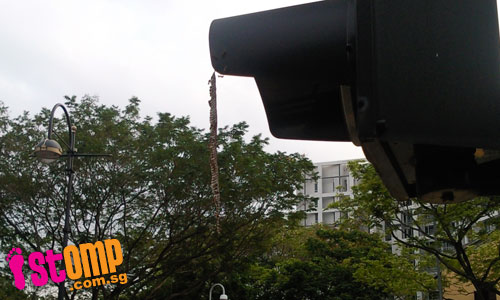
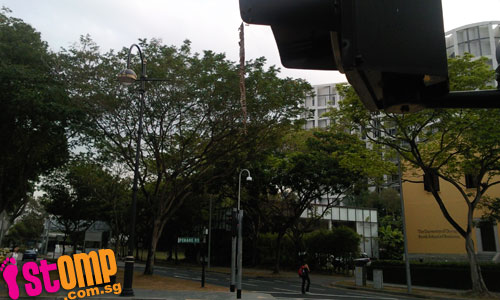
Passers-by should beware of this bee's nest which is hanging from the traffic light at Penang Road, says STOMPer Mano.

Relevant authorities should remove it immediately, says the STOMPer.

He adds:

"This was seen at Penang Road, when I was on the way to Dhoby Ghaut MRT Station.

"Some honey bees have built a nest on the traffic light.

"Please take the necessary action to make the path a safe one before it affects passers-by."

 So dangerous! Bee's nest hangs from traffic light at Penang Road

Scorching sun turns Singapore from 'green' city into gold

 Scorching sun turns Singapore from 'green' city into gold
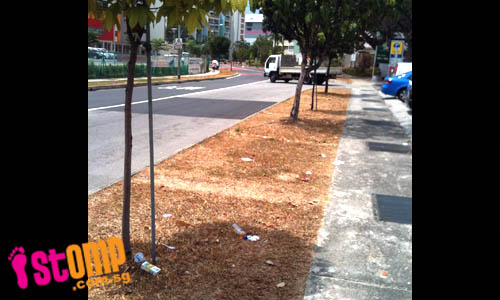
How sunny is Singapore exactly? Enough to scorch grass, says STOMPer Andrew. Weeks of hot weather have turned grass patches like this one in the Tampines area from healthy green to dead gold.

Here's what the STOMPer remarked:

"Singapore should no longer be called a 'green city', but a 'gold city' instead.

"Recently the weather has been very hot, and I see many dead grass patches, especially on the east side of the island.

"I work as a taxi driver so I've been all over Singapore.

"Nobody has been watering these grass patches but I suppose that's okay since water is so precious that we should save it for people and not grass.

"Also there seems to be quite a bit of trash littered in the area."

Related posts: The haze is back at Pasir Ris (2nd March 2010)
Bush fire rages at Expo area (19th February 2010)

Related articles: Sorry kid, it's going to stay hot and dry for a while (2nd March 2010) (Mirror)
Last month the driest Feb in 140 years (1st March 2010) (Mirror)
February 2010 is driest month for Singapore since records began in 1869 (2010) (Mirror)
Driest February ever recorded to date in Singapore (25th February 2010) (Mirror)
February's a dry, hot season in Singapore (19th February 2010) (Mirror)
Smoke in the air due to bush fires (18th February 2010) (Mirror)
71 bush fires in two weeks (18th February 2010) (Mirror)

Tuesday, March 2, 2010

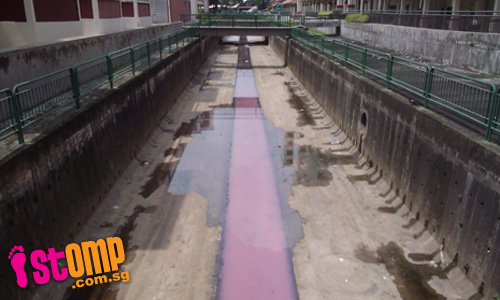
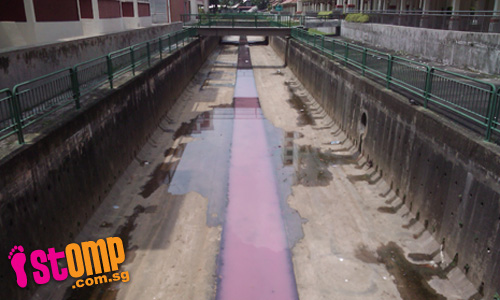
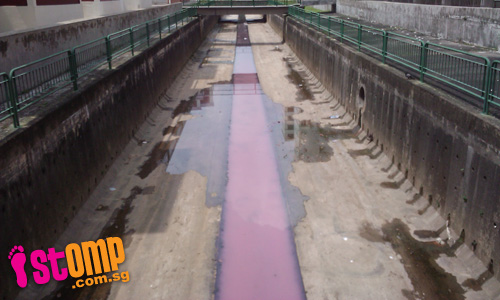
First blue, now pink. What’s with all the coloured water in canals nowadays?

 First blue, now pink. What’s with all the coloured water in canals nowadays?
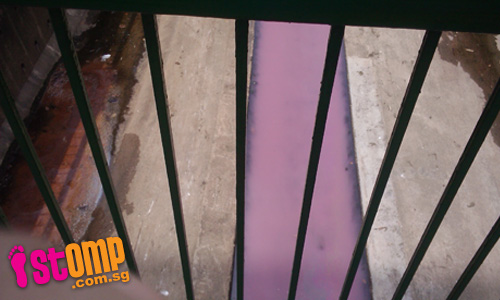
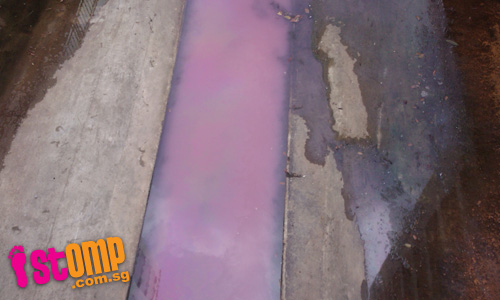
Just last week, STOMPers spotted blue water in canals at Jurong. Today (Mar 2), a STOMPer spotted pink water flowing down a canal at Serangoon. What's with all the pollution?

In an email to STOMP today (Mar 2), the STOMPer says:

"There was pink water in this drain at Serangoon Ave 2.

"The weird substance was flowing from Serangoon Ave 2 past Nanyang Polytechnic and Lorong Chuan."

 First blue, now pink. What’s with all the coloured water in canals nowadays?
 First blue, now pink. What’s with all the coloured water in canals nowadays?
 First blue, now pink. What’s with all the coloured water in canals nowadays?
 First blue, now pink. What’s with all the coloured water in canals nowadays?

Related posts: Water at Jurong Port canal turns blue because of pollution (26th February 2010)
Check out the blue water in this canal! (25th February 2010)

If my maps are accurate, the canals in this area should drain into the Kallang River itself, and any pollutants inside will eventually end up in the Marina Reservoir.

The haze is back at Pasir Ris

 The haze is back at Pasir Ris
STOMPer eastsider woke up to find the CBD skyline, which was normally visible from his balcony, obscured by the haze. There was also a distinct burning smell.

With less than normal rainfall, more hot days will be coming our way this March. This is a result of the El Nino weather effect, caused by interaction between the Pacific Ocean and the atmosphere.

In the STOMPer's iPhone contribution:

"I woke up this morning and smelled a burning smell in the air reminiscent of the haze.

"Looking out of my balcony, I saw the landscape enveloped in haze.

"The CBD skyline should normally be visible in the distance in this photo."

Related posts: Bush fire rages at Expo area (19th February 2010)

Related articles: Sorry kid, it's going to stay hot and dry for a while (2nd March 2010) (Mirror)
Last month the driest Feb in 140 years (1st March 2010) (Mirror)
February 2010 is driest month for Singapore since records began in 1869 (2010) (Mirror)
Driest February ever recorded to date in Singapore (25th February 2010) (Mirror)
February's a dry, hot season in Singapore (19th February 2010) (Mirror)
Smoke in the air due to bush fires (18th February 2010) (Mirror)
71 bush fires in two weeks (18th February 2010) (Mirror)

Indeed, it was especially hazy in Pasir Ris this morning. I guess the eastern side of Singapore, which is naturally somewhat drier and receives less rainfall than other parts of the island, is more prone to bush fires, given this current dry spell.

The latest 24-hour Pollution Standards Index (PSI) update, which was released only at 4 pm earlier on, shows a PSI of 36 for eastern Singapore. Although it indicates that the air quality is still considered Good, it is still quite a large jump from the previous day's readings, which gave a PSI of 21.

One potential problem I have with the way the PSI is being updated is that it covers a span of 24 hours. However, this might conceal large rises and falls in the PSI within that 24-hour range. For example, if a bush fire started, but was then eventually put out after a short while, the PSI reading might have crossed over into the Moderate range, except that this rise was cancelled out by the low PSI over the rest of the 24 hours. Would 3-hour updates or even hourly updates be preferable?

An example can be seen from this morning, where it was much hazier than usual in Pasir Ris. Yet despite the noticeable decline in air quality, the PSI (which had been obsolete by more than 12 hours) indicated that the air quality was supposed to be Good. For people with potential health problems, knowing the PSI at that point in time can help spare them from a lot of discomfort.

I just hope that they won't be burning any rainforests in Malaysia and Indonesia during these few months. That would only make things even worse.
Out-of-control birds invade Bedok and leave a mess

 Out-of-control birds invade Bedok and leave a mess
STOMPer Carpet Bomber is fed up with the bird population which the STOMPer claims has invaded the market area about Block 85 Bedok.

According to the STOMPer, nothing has been done, even after complaints to the East Coast Town Council.

"I have been living in Bedok for almost a decade, and the bird population is seriously getting out of control.

"They invade the block 85 market, the coffeeshops nearby, pavements, playgrounds, and the HDB area.

"No one cleans the faeces off the pavement.

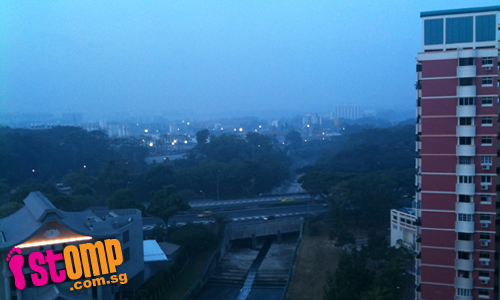
"There is always the bird waste smell around the neighbourhood, presumably due to the birds.

"I have complained to East Coast Town Council also no use.
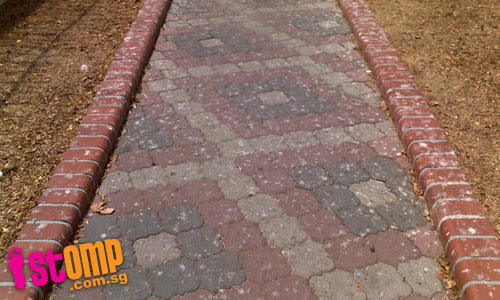
"Everyday from 5am - 7am and 5pm - 7pm, there will be a mass gathering of birds and faeces bombardment.
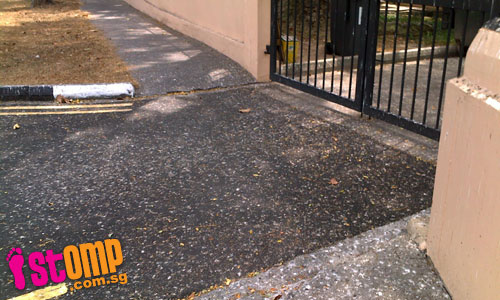
"The birds also pick on food left on table, floor. You name it, they'll eat it. Bedok 85 Market is the worse. They linger on top of stalls. Do their business inside the stalls and tables.

"They are always eyeing your food till you leave.

"The residents here pay conservancy charges every month but it does not seem to be put to good use.

"I really hope that with this posting, this annoying problem will be highlighted and some action will be taken."

 Out-of-control birds invade Bedok and leave a mess
 Out-of-control birds invade Bedok and leave a mess
 Out-of-control birds invade Bedok and leave a mess
 Out-of-control birds invade Bedok and leave a mess
 Out-of-control birds invade Bedok and leave a mess
 Out-of-control birds invade Bedok and leave a mess

Related article: Shocked by pigeon culling? Then stop feeding them (28th February 2010)

I personally adopt a live and let live attitude where it comes to coexisting with birds, even the non-native species such as house crows (Corvus splendens), Javan myna (Acridotheres javanicus) or feral pigeon (Columba livia), but I probably would also be at my wits' end if faced with a similar situation.


House crow;
(Photo by [ benny ])


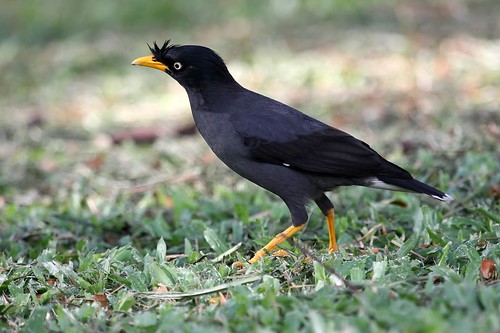
Javan myna;
(Photo by mjmyap)

Note that some of the problems cited in the post are exacerbated by human behaviours. Giving the birds opportunities to scavenge at food outlets does in a way contribute to the problem. And I would not be surprised if some well-meaning individuals actually deliberately feed the birds.


(Photo by StarvingFox)

Finding an optimal solution is not easy, and might drive the birds away only for them to become a problem again elsewhere. Culling is only a short-term solution, and does not do anything about the factors that enable the bird population to explode in the first place. Exclusion devices can work, but are not feasible everywhere. In order to achieve long term results, it may be best to adopt a variety of measures, that not only control the bird population, but restrict the birds' ability to access feeding, roosting and nesting sites. Public education and changing human behaviour and attitudes are often integral parts of the solution.


Feral pigeon;
(Photo by chauromano)

Culling is never a final solution, since it not only frees up resources for the survivors, enabling them to breed at a faster rate, but it also allows birds to just fly in from surrounding areas to take replace those that have been killed.


(Photo by xtemujin)

I'm not against culling as a control measure, but it should never be the only strategy adopted against controlling animals we perceive to be pests. Far better to adopt mitigating measures that will prevent the birds from undergoing a population boom in the first place, and where possible, non-lethal options should also be explored.