Showing posts with label Bishan. Show all posts
Showing posts with label Bishan. Show all posts
Monday, July 2, 2012
Tuesday, August 30, 2011
Saturday, July 30, 2011
Friday, July 22, 2011
Wednesday, July 6, 2011
Tuesday, June 21, 2011
Friday, June 17, 2011
Monday, December 14, 2009
These 'botak' trees could fall and injure passers-by
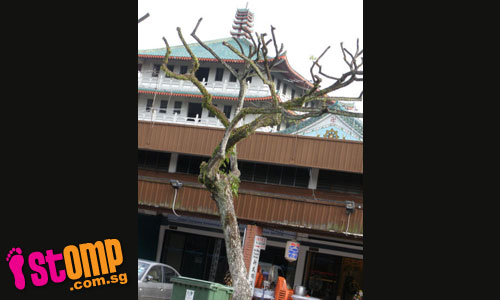
STOMPer arborist worries that these trees, which have lost all their leaves, are unstable and may fall and injure passers-by anytime.
This STOMPer says:
"These pictures were taken at Blk 37 Sin Ming Drive near a funeral parlour.
"The trees are completely "botak" and only some ferns (Pyrrosia piloselloides) could be seen growing on the trunk and branches.
"I fear that during a rainstorm the trees may come crashing down and the consequences could be disastrous.
"The trees, if toppled, could damage the shops or cause injury to passers-by."


Friday, July 31, 2009
$4,500 Golden parrot 'escapee' found and returned to owner
An honest STOMPer found this Golden Conure bird that costs S$4,500 in his garden and returned it to its grateful owners.
Philip told STOMP via email today (Jul 31):
"A Golden Conure parrot escaped from Shunfu Road flat a few days after I found it on Jul 17 in my beautiful garden with many fruits.
"It greeted me and I greeted it back. Its leg has a numbered tag.
"I lifted it up carefully and took it to the Wan Bao newspaper to tell the good news.
"A few hours later, it was at the Jurong Bird Park.
"The next day, Wan Bao newspapers appeared island wide regarding the find.
"A taxi-driver saw it and came to my house at midnight to enquire about the bird.
"The next day, I took him to the Bird Park.
"A few days later, it was returned to its rightful owner.
"He and his wife were very happy to be united with the parrot that was worth S$4,500."
Here's a story of a lost pet with a happy ending.
The golden conure (Guaruba guarouba) is a medium-sized parrot that is endemic to rainforests of northeastern Brazil, where deforestation and trapping for the pet trade have led to its endangered status.
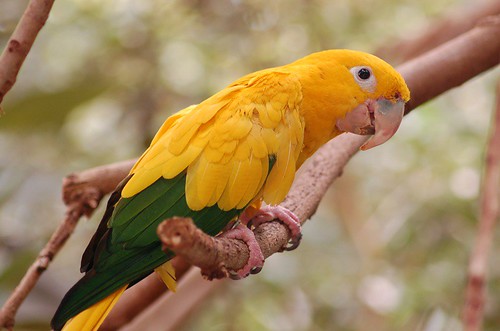
National Aviary;
(Photo by greybeh1979)
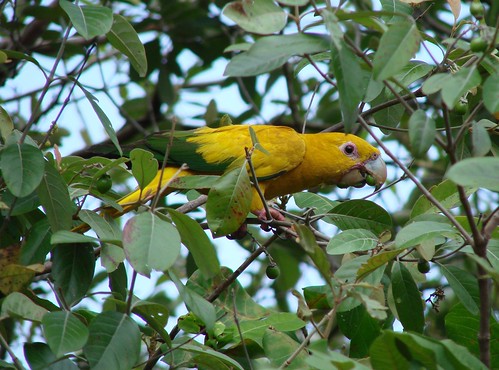
Pará state, Brazil;
(Photo by smdantas)

Paraíba state, Brazil;
(Photo by Alexandre Duarte)
The golden conure is on Appendix 1 of the Convention on International Trade in Endangered Species of Wild Fauna and Flora (CITES), which means that all international trade in this species requires both export and import permits. Trapping for the pet trade, combined with deforestation, mean that many parrot species are now under serious threat of extinction in the wild.
The trade in wild-caught parrots continues to be a severe problem in many parts of the world, despite the existence of laws which are meant to protect wild populations of parrots from further exploitation. Thanks to captive breeding, the pressure on wild populations has been relieved to some degree. A growing number of parrot species are now being bred in captivity, which does contribute greatly towards reducing the need to continue trapping wild birds for the trade. Furthermore, captive-bred birds are hardier, adapt easily to life in captivity, and are much better at forming bonds with their human owners. Compare this with a wild-caught parrot, which has probably been through a lot of trauma and stress, weakened by the often inhumane conditions that wild-caught birds have to suffer during transportation, is terrified of close contact with humans, and in all likelihood, carries its own load of parasites and germs.
However, a lot more still needs to be done to stamp out the unsustainable trade in wild-caught parrots.
If this golden conure had not been retrieved, and if it had managed to survive for some time in the wild, it might have ended up as a new entry in our local bird checklists. Many species of exotic parrots are already on the list, and while most of these consist of scattered sightings of escapees, some of them have managed to establish breeding populations. Which does raise a lot of questions about the possible impacts on native birds, especially our 3 native species of parrot.
Saturday, June 13, 2009
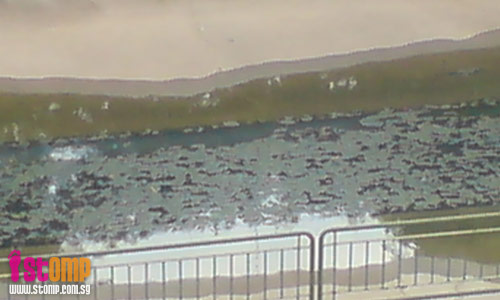
Bishan canal left dirty and choked since clean-up more than a year ago
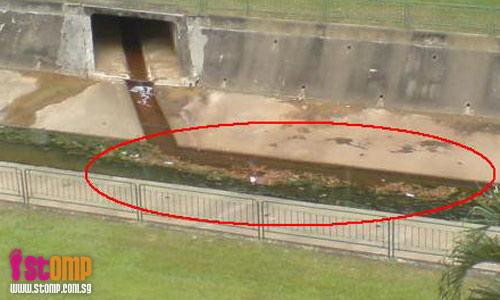
STOMPer Still Agitated Singaporean is disappointed that this canal at Bishan Park, which was cleared up once more than a year ago, is choked again today.
The same STOMPer highlighted how dirty it was more than a year ago and the problem was promptly solved.
Much to his dismay, the canal is now choked again.
Says STOMPer Still Agitated Singaporean in an email dated June 13:
"I have once sent a message through STOMP to have the authority work on this.
"Now the canal is back in a sorry state.
"This is a photo taken a few minutes ago. I presume all the resources are now being drawn into cleaning up hawker centres."
A picture of the canal taken a year ago
Related stories:
Bishan Park canal could be haven for Aedes mosquitoes
Bishan Park canal cleared less than two days after STOMP posting
Saturday, May 16, 2009
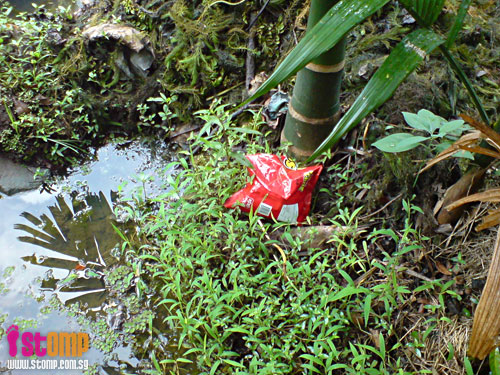
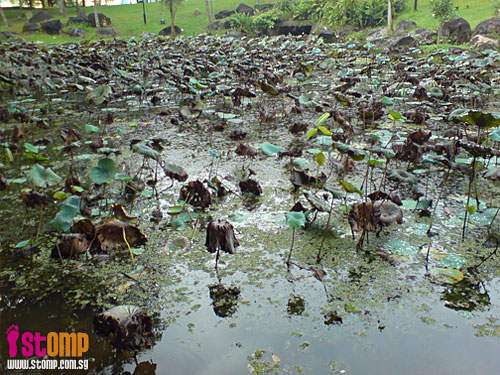
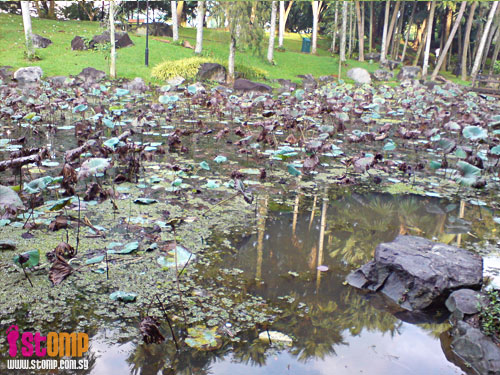
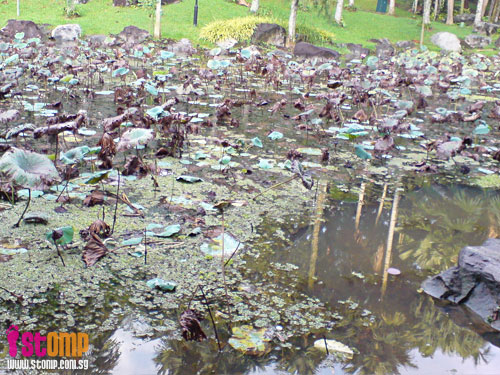
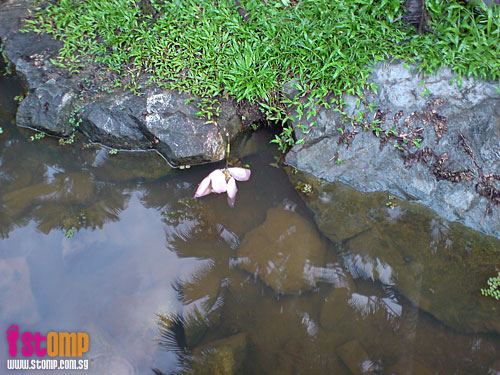
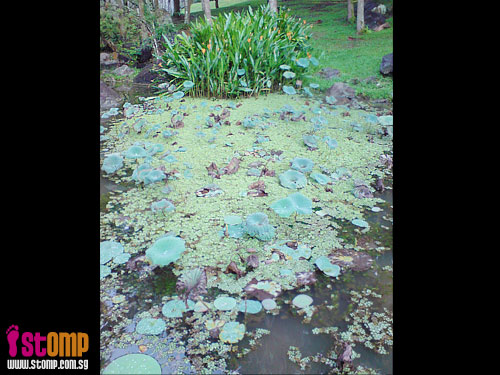
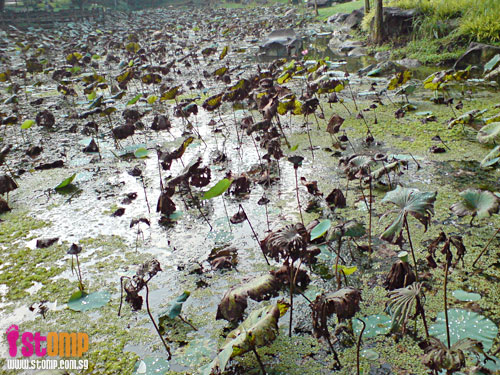
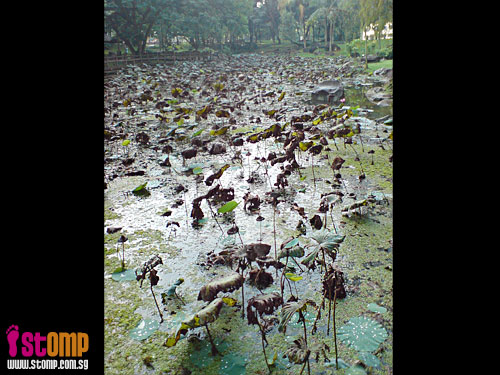
So depressing to look at this Bishan Park lotus pond
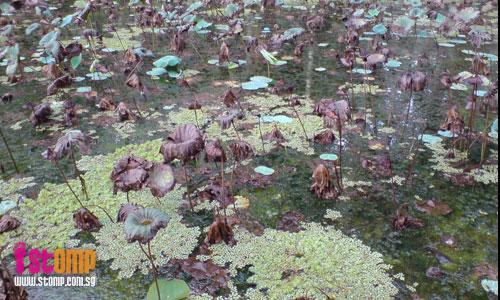
This sight of this lotus pond in Bishan Park is so depressing and it does not help that people throw rubbish in there, says STOMPer Vivian.
In an email to STOMP today (May 16), the STOMPer wrote:
"I would like to share some depressing photographs of the lotus pond at Bishan park.
"Why do we have a lotus pond if nobody bothers to maintain it?
"It doesn't help that people throw rubbish into the park. Where is the cleanliness and greenery?
"I don’t see it."


Thursday, April 23, 2009
Storm winds whip S'pore: Just look at the damage caused
Singaporeans woke up this morning in the wake of a violent storm that started late last night and lasted till the wee hours of this morning (Apr 23).
STOMPers from all over Singapore sent in pictures of the damage wrought by the huge winds.
Munish, a longtime resident of Dover Road had this to say of the storm winds:
"I stay at Block 31 Dover Road.
"Last night's wind uprooted these trees. I've been staying here over 30 yrs and this is the very first time this thing has happened."
STOMPer Astonished also reported winds strong enough to fell trees:
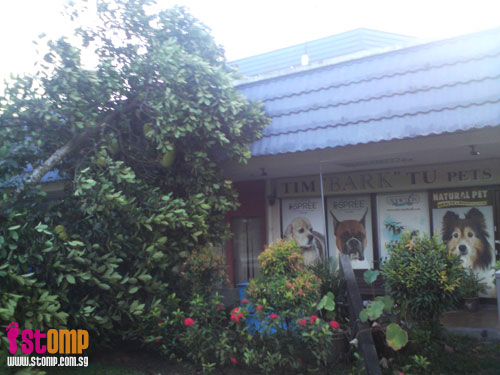
"Lightning and strong winds hit the trees at Hong Leong Gardens Shopping Centre, causing a tree to be uprooted.
"The tree hit the roof of the shop houses there."
He added:
"I think it should be a precaution for Nparks and area management to beware of how you plant the trees in areas near shops, buildings and houses."
Awed by the force of the winds that felled trees in Ang Mo Kio, another STOMPer wrote:
"These felled trees are the after effects of a 'mini-typhoon' at Ang Mo Kio Street 21.
"There are many more along Yio Chu Kang Road."
Elsewhere, STOMPer Cam reported damage to the blinds at her home caused by the storm:
"I can't believe the wind was that strong! We had to go cut it down in case it fell and hurt someone. The whole balcony is a big mess."
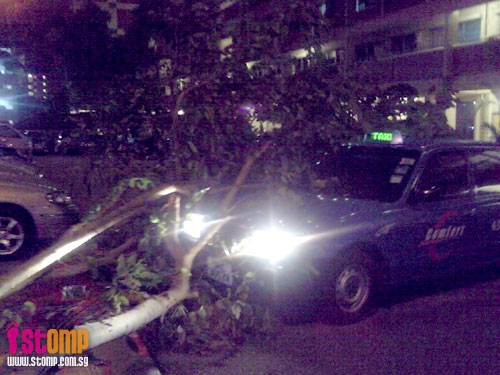
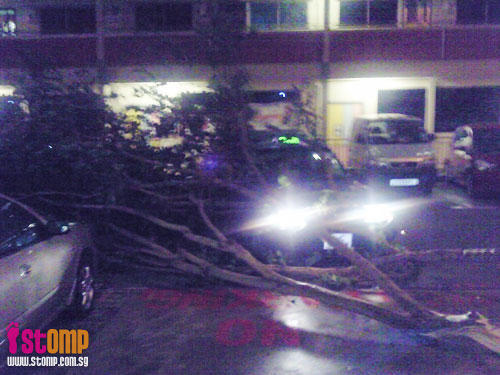
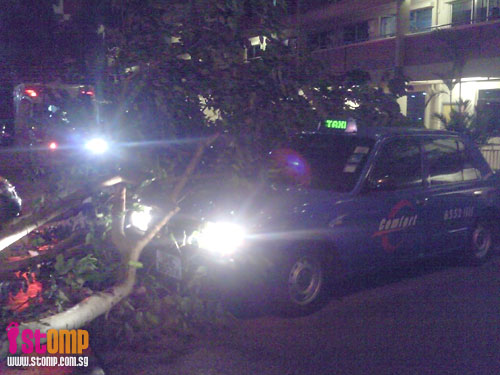
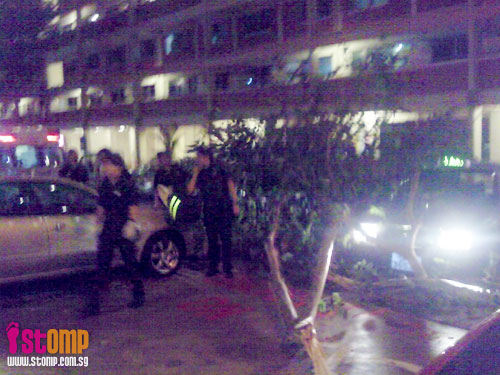
Further north in Bishan, winds tore down branches from a tree that landed on a taxi, damaging the bonnet of the vehicle.
Said the STOMPer of damage:
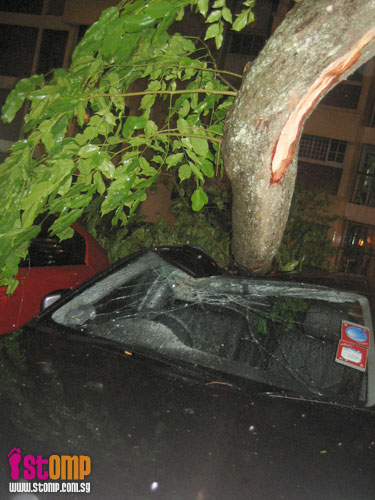
"On April 22 at about 11.30 pm, part of this tree broke and fell onto a taxi which had just dropped a passenger at the carpark of Bishan Street 22, at Block 229."
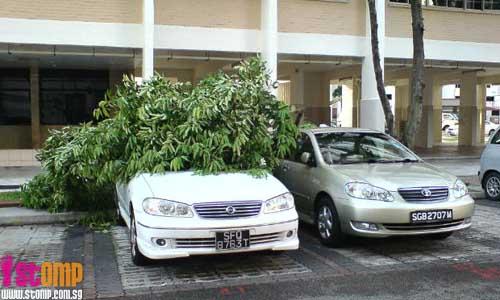
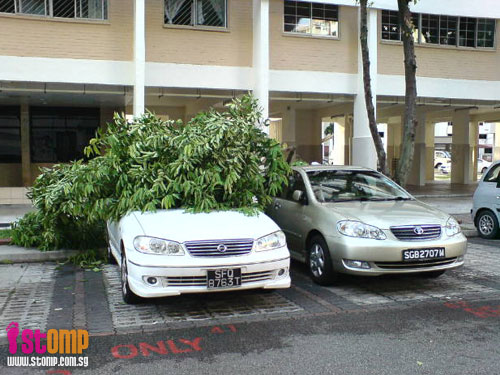
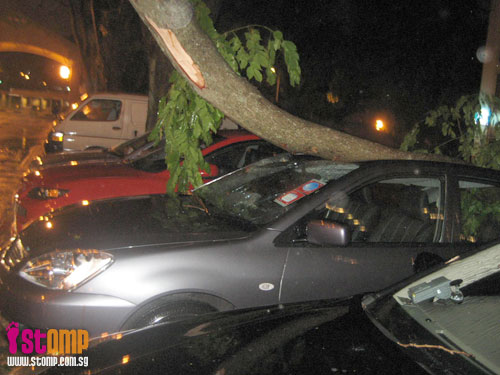
At St George road in the Serangoon area, branches also fell on these two cars at a carpark.
In her MMS, STOMPer Fen said:
"At about 11:00 pm last night, I heard branches cracking.
"In the morning I saw that some branches had broken off completely and landed on these two cars parked at a nearby carpark.
"Both rear windshields had shattered and the car directly under the branch had a badly dented roof.
"One of the car owners had posted a note on his windscreen requesting the other owner contact him, so they could work together to clear the branches."
Another unfortunate car owner suffered at the hands of the storm, as STOMPer Faith reports:
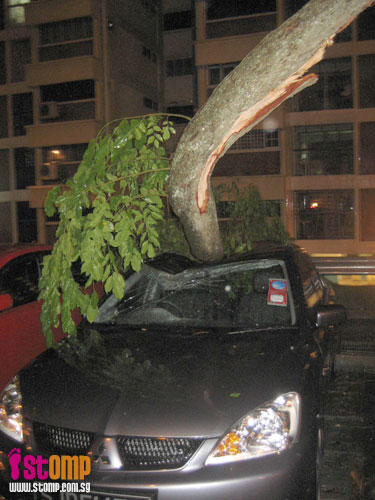
"This happened at the carpark of Block 140, Jalan Bukit Merah, right in front of the famous Thai temple.
"A series of strong winds swept central Singapore at about 11.10pm resulting in a huge branch landing on a Mitsubishi Lancer.
"Loud crashing noises from fallen households ornaments were heard throughout the whole block. It must have been one of the strongest winds Singapore had experienced so far.
"No car siren was heard and owner was still unaware at time of my sending this email."
According to another STOMPer, winds in Singapore were strong enough to move heavy objects:
"The wind blew soo hard hard it moved road blocks and distrupted traffic."
STOMP has contacted the NEA for more details on the storm.







UPDATE:
A spokesperson for the NEA had the following comments:
"A 'Sumatra' squall is a line of eastward moving intense thunderstorms accompanied by gusty winds that usually occurs between April and September.
"An average of 2-3 'Sumatra' squalls occur in a month during this period. It normally develops overnight in Sumatra and the Straits of Malacca, and affects Singapore between midnight and 9am.
"Maximum wind gusts of up to 90 km per hour from a 'Sumatra' squall have been recorded in the past.
"The strong winds that affected Singapore last night between 11 pm (22 Apr 09) and 12:30 am (23 Apr 09) were caused by an intense fast-moving 'Sumatra' squall.
"Mean wind speeds ranging from 33 to 54 km per hour were recorded across the island. The highest recorded wind gust was 83 km per hour in the western areas.
"A wind gust is a sudden brief increase in the speed of the wind.
"Short duration showers fell over most parts of the island but were heavy in only a few areas. The highest rainfall of 7.0 mm was recorded around Sembawang.
"A wind gust of similar strength was last recorded on Jun 20 2000.
"For the rest of the month, we can expect another one or two 'Sumatra' squalls but they are unlikely to be as severe as the one last night."
Related articles:
Tropical storm behind strongest winds to hit Singapore in 9 years (24th April 2009) (mirror)
Wild wind wreaks havoc (24th April 2009) (mirror)
Gusty winds and rain wreak havoc (24th April 2009) (mirror)
Gusty winds wreak havoc (24th April 2009)
Freak storm wreaks havoc (23rd April 2009)
Related post: Tree uprooted and crashes into construction site during storm in Changi Village (23rd April 2009)

A Sumatra Squall approaching eastern Singapore on 4 July 2005
(All images in this section taken from the NEA's WEATHERWise Singapore)
From the NEA's Meteorological Service FAQs:
What are Sumatras?
Sumatras are lines of thunderstorms which usually occur between March and November each year. These squalls (lines of thunderstorms) develop at night over Sumatra or the Malacca Straits and move east towards Singapore and Peninsular Malaysia usually during the pre-dawn and early morning. They are often characterised by sudden onset of strong gusty surface winds and heavy rain lasting from 1 to 2 hours as they move across the island. Maximum gusts of up to 50 knots have been recorded during the passage of a Sumatra squall (Gusts are temporary rise in wind speed).

A satellite image showing a Sumatra Squall affecting Singapore and southern Peninsular Malaysia
And from WEATHERWise Singapore:
An isolated thunderstorm cell has a short lifespan, usually less than an hour. Sometimes, a number of units or cells of thunderstorms may be organized by wind pattern or by terrain into a line. A thunderstorm line, also known as a squall line (or squall) moves and behaves collectively and can have a longer lifespan.
A Sumatra Squall is such an organised thunderstorm line that develops over Sumatra Island in Indonesia or the Straits of Malacca, often overnight, and then moves eastward to affect Peninsular Malaysia and Singapore. In a typical case, the squall line can bring about one to two hours of thundery showers. Often this happens in the predawn hours or morning. Some Sumatra Squalls are also accompanied by wind gusts of 40 to 80 km/h. Gusts are short-duration bursts of wind. Occasionally, such gusts are strong enough to uproot trees.
Sumatra Squalls can develop at any time of the year, but are uncommon during the Northeast Monsoon Season. Convergence of air streams at low levels (height of less than 1 km) over a large area is a pre-requisite for the development of a Sumatra Squall. Additionally, a general westerly wind above (between 2 to 4 km) blowing from Sumatra Island towards Singapore is needed to steer the squall line forward.


Radar images showing the passage of a Sumatra Squall.
As Kok Sheng mentioned, how apt that this spectacular show of nature's power should take place on Earth Day. It would do us well to remember that although we have the capability to drastically change the environment to suit our needs, to tame mighty rivers and level towering mountains, and even possess the ability to alter the climate, at the end of the day, we are just like any other species, at the complete mercy of the forces of nature.
Tuesday, March 24, 2009
Disturbing to see crows feast on roadkill
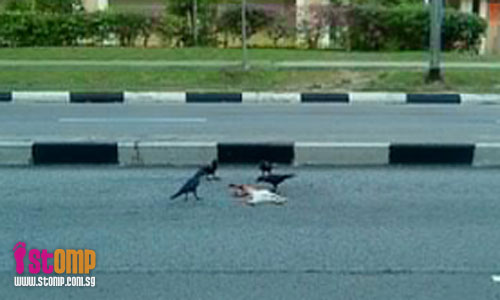
STOMPer Wong spotted this group of crows feasting on the carcass of a dead cat this morning and told STOMP that the sight was disturbing.
The 20-year-old sent an MMS to STOMP just minutes after he snapped the picture at 7:45am today (Mar 24).
"This took along Bishan Street 13 and I paused to take a look because it was unusual, but at the same time, very disturbing."
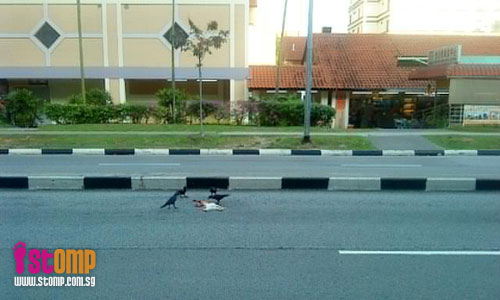
Well, that's what crows do; roadkill is just another source of carrion for many scavengers, and many species of crow and raven (Corvus spp.) have learnt to forage along roads in search of food. In other countries, other scavenging birds like yellow-billed kites (Milvus aegyptius) in Africa, wedge-tailed eagles (Aquila audax) in Australia, and turkey vultures (Cathartes aura) in North America will exploit this resource, although these birds must stay alert to the dangers, so as not to become roadkill themselves.
Subscribe to:
Posts (Atom)