Showing posts with label Lim Chu Kang. Show all posts

Monday, July 6, 2009

Durian paradise uncovered in Lim Chu Kang

Durian paradise uncovered in Lim Chu Kang
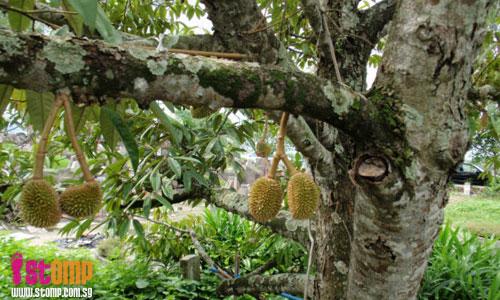
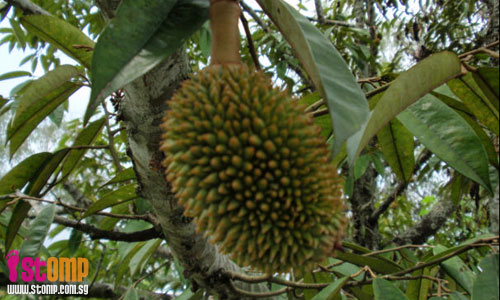
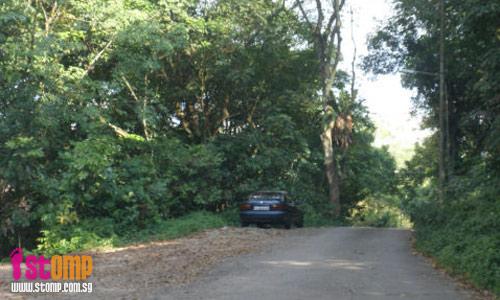
Deep in the greenery of Lim Chu Kang lies a hidden treasure cove for durian lovers, says STOMPer Durian Lover.

The area is always ransacked by durian enthusiasts during June and July every year.

The king of fruits grows on the trees left behind by farmers who used to occupy the land.

Every year, those in the know come to this forested area in Lim Chu Kang to get their hands on some free durian.

STOMPer Durian Lover says:

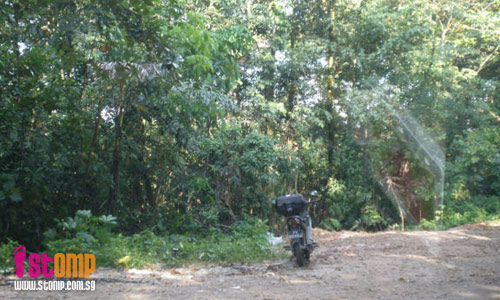
"These pictures were taken near the end of Lim Chu Kang Road.

"This stretch of Lim Chu Kang Road from Ama Keng Road to the sea was formerly farmland where farmers used to rear poultry and plant fruit trees.

"The land was acquired by the government and the erstwhile farms became uninhabited for many years.

"However these farmers left behind their banana, rambutan and durian trees.

"Come June and July every year, you will see motorcycles, cars and pickups making a beeline for this area as these durian hunters make their annual pilgrimage to Lim Chu Kang in search of their favourite -- the king of fruits.

"They come early in the morning and also in the evening and on weekends they camp overnight to wait for the ripe durians to fall.

"There are no paths in the forests but during the fruit season, you can see several beaten paths created by the pounding of hundreds of human feet.

"These durian lovers would brave all odds, the inclement weather, the attack by snakes, bees and hornets.

"Their love for durians has overpowered their fear of snakes and tarantulas.

"The spiky fruit will always draw a crowd of durian addicts who feel that free durians picked from the forest taste better than those you can buy in the marketplace."
Durian paradise uncovered in Lim Chu Kang

Related articles: All for the love of Durian (29th June 2009) (Mirror)
Durian warning and happy pickings at park (2nd May 2009) (Mirror)
Free durians for the picking (20th July 2008) (Mirror)

Related posts: Psst! Here's the secret of where to get durians in S'pore -- FREE (3rd July 2009)
Blue net at Pulau Ubin can save your life (4th June 2009)
Durian trees grow in Lim Chu Kang cemetery (8th April 2009)

Sunday, June 28, 2009

"Clean up Lim Chu Kang beach before it turns into marine graveyard"

"Clean up Lim Chu Kang beach before it turns into marine graveyard"
STOMPer Aesthetician feels that the beach at Lim Chu Kang should be cleaned up so that more people will head there to soak in its rugged beauty. He says:

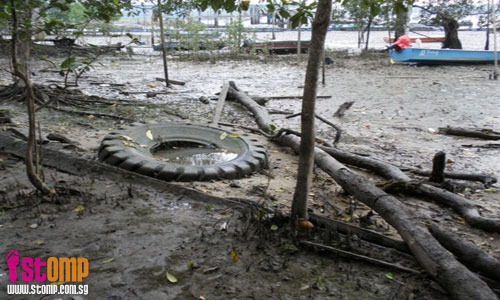
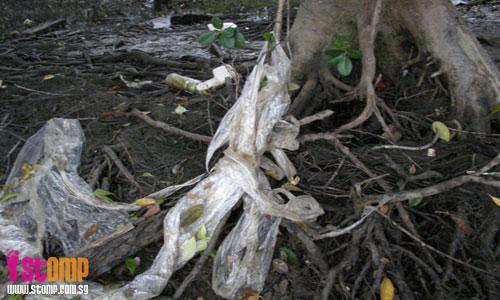
"These pictures were taken during low tide at the beach near the end of Lim Chu Kang Road.

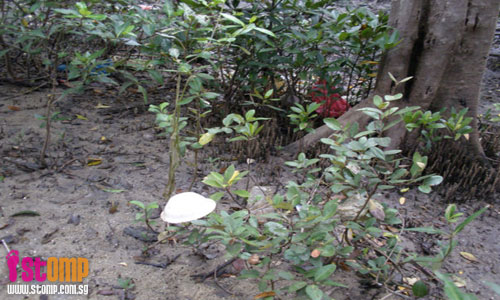
"On the beach you can see old tyres, plastic sheets, plastic bags and polystyrene boxes.

"The beach looks filthy and muddy.

"I hope this part of Singapore can be cleaned up and perhaps NParks could build some boardwalks so that the public can get to enjoy the sea and appreciate the mangrove swamps with its rich flora and fauna.

"The beach is worth saving before the pollution turns this into a marine graveyard."

"Clean up Lim Chu Kang beach before it turns into marine graveyard"

This stretch of coast at Lim Chu Kang is another area that's monitored every year as part of the International Coastal Cleanup Singapore (ICCS).

Siva has a gallery of photos from his recce trip in June last year, and it shows the appalling amount of trash that has accumulated in the mangroves.

This led to a cleanup session in July 2008, where various volunteers as well as Miss Earth Singapore 2008 contestants cleared more than 250 kilograms of man-made rubbish. The photos from that cleanup session can be viewed in this Flickr set, while Marcus has also blogged about the session over here.

A second cleanup session was held in September, where 435 kilograms of trash was cleared.

You can view the Flickr set containing photos from last year's cleanup session, and here are the results from the 2 groups who participated, Coca Cola and Republic Polytechnic.

It might seem impossible to stop the stream of garbage that washes up on our coastline every day, but we do what we can. I can only hope that in time to come, we will be more aware and more sensitive of the impact of our actions, and play a more active role in maintaining the cleanliness and health of our shores.

Wild buah langsat at Jalan Murai a treat for foreign workers

Wild buah langsat at Jalan Murai a treat for foreign workers
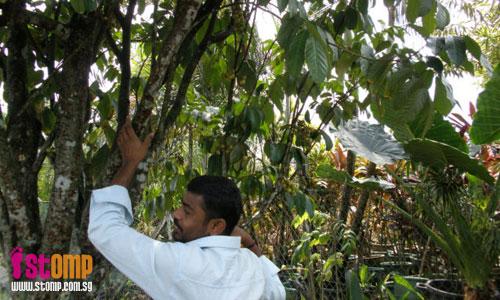
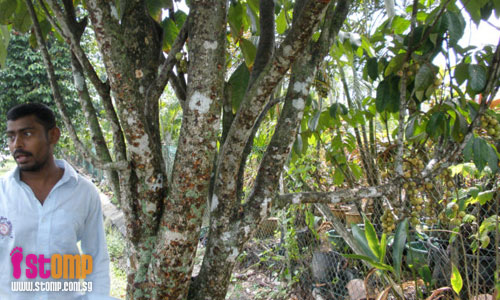
After a hard day's work, this foreign worker enjoys the simple pleasure of eating wild buah langsat growing along Jalan Murai.

STOMPer Langsat Addict, who struck up a conversation with the worker, said:

"I was driving along Jalan Murai when I saw a group of foreign workers climbing up some trees to pick the fruits.

"Being curious, I stopped my car and politely asked them what they were picking.

"One foreign worker showed me a bunch of ripened 'buah langsat' and asked me to try one.

"I popped one into my mouth and found that it was very sweet as it tasted like 'buah duku' the larger species.

"It was in the evening and the workers had finished their daily work. So they went around to look for fruits which grew in the wild.

"This friendly worker, in his 20s, told me that on weekends his friends and he would go to a vacant piece of land next to the Chinese cemetery in Choa Chu Kang to look for free durians and rambutans.

"As June is the fruit season they get to enjoy our tropical fruits.

"Since the trees grow in the wild these workers need not pay to harvest them.

"This worker told me that he enjoyed our langsat more than the mangoes he used to eat in India."

Wild buah langsat at Jalan Murai a treat for foreign workers

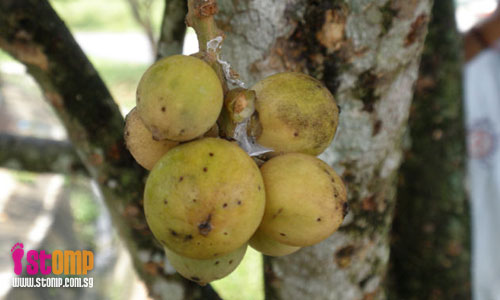
Langsat is the Malay name for Lansium domesticum, a fruit-bearing tree native to the region. Here is a link for more information on this species.


Langsat fruits, Kundasang;
(Photo by jdream mx)


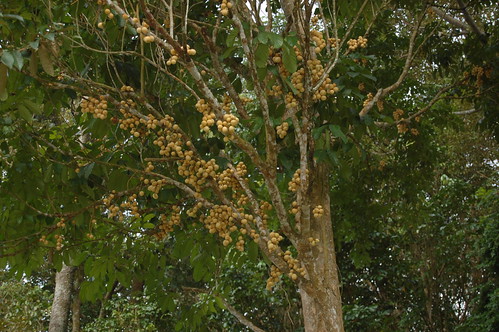
Langsat tree with fruits;
(Photo by Pretty Lady 241)

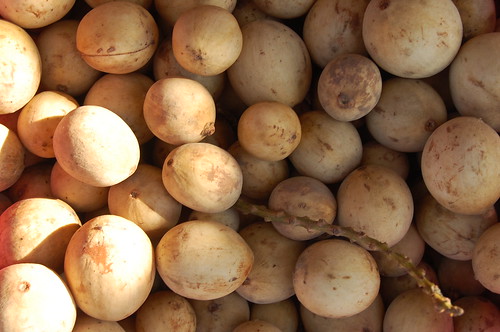
Apparently, the fruit we know as duku is a variety of langsat as well.


Duku fruit;
(Photo by kangdekry)

Saturday, June 27, 2009

Weaver bird nests spotted at Lim Chu Kang fish farm

Weaver bird nests spotted at Lim Chu Kang fish farm
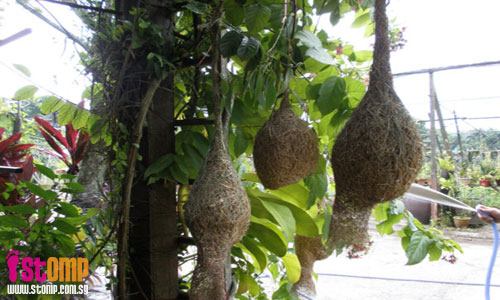
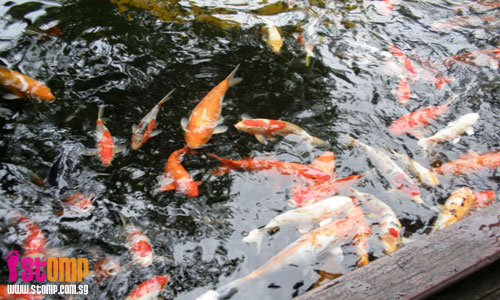
STOMPer Ornithologist went to the fish farm at Lim Chu Kang and saw several weaver bird nests and a school of Japanese carp.

Sharing his findings, he says:

"These pictures were taken at a fish farm at Lim Chu Kang Lane 6.

"At the entrance of the farm I noticed several weaver bird nests on a tree.

"The weaver birds are gregarious birds which breed colonially. The birds build their nests together, and usually the male birds weave the nests and use them as a form of display to lure the females.

"I also saw a school of kois in a pond. The koi is also known as the Japanese carp.

"Kois have no stomachs. What they do have are expandable small intestines and they function as a pseudo stomach.

"They have small teeth in the back of the throat that they use to crush any crustaceans they may ingest.

"Kois are 'pigs' of the water because they love and eat anything they can find. They can consume up to 2% of its body in a day."

Weaver bird nests spotted at Lim Chu Kang fish farm

More nests of the baya weaver (Ploceus philippinus), I see. I wonder if they are still in use.

I was surprised to learn that common carp (Cyprinus carpio) actually lack a proper stomach. Instead, the oesophagus opens up into the lower intestine.

According to this link on digestion in teleost fishes:
Carp lack a stomach, but have a long intestine which winds extensively throughout the visceral cavity. The gall bladder rests on the dorsal surface of the anterior midgut and the bile duet opens into the intestine just anterior to the gall bladder. In addition, the liver has no specific shape, but seems to serve as packing material around the intestine. Food seems to be ingested in small particles in a relatively steady stream instead of intermittently in large units, so the storage function of a stomach probably is not missed. With the liver filling all the available visceral space, there would be no room for accommodating the stomach expansion of a large meal anyway.

By the way, koi is both singular and plural. There is no such word as 'kois'.

Monday, June 22, 2009

Monday Morgue: 22nd June 2009

P1150765
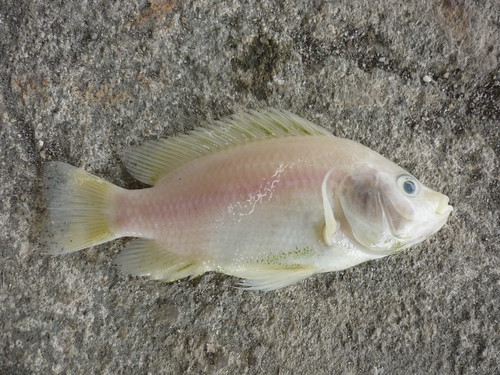
Tilapia (Oreochromis sp.)
Lim Chu Kang, 30th December 2008

This probable hybrid tilapia was found floating in a concrete tank full of its live counterparts at Jurong Frog Farm.

Global Invasive Species Database

The tilapia species commonly encountered in our ponds, rivers and canals, and even in our mangroves and estuaries is likely to be the Mozambique tilapia (Oreochromis mossambicus).

A Guide to the Freshwater Fishes of Singapore
A Guide to Common Marine Fishes of Singapore
A Guide to the Mangroves of Singapore
FishBase
Global Invasive Species Database

However, many tilapia raised for aquaculture in Singapore are hybrids between the Mozambique tilapia, blue tilapia (Oreochromis aureus) and Nile tilapia (Oreochromis niloticus). Consequently, it is probable that many tilapia populations found in the wild also contain the latter 2 species, as well as captive-bred hybrids (such as the 'red tilapia').

Blue tilapia (Oreochromis aureus)
FishBase
Global Invasive Species Database

Nile tilapia (Oreochromis niloticus)
FishBase
Global Invasive Species Database

Monday, June 15, 2009

Monday Morgue: 15th June 2009

P1130363
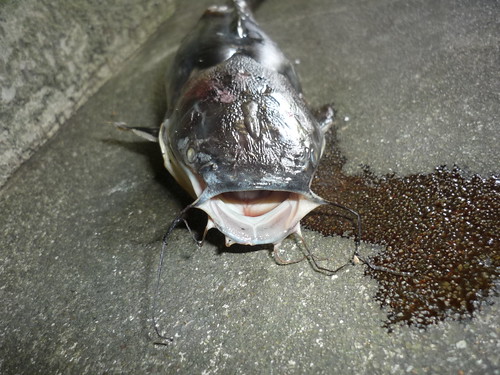
African walking catfish (Clarias gariepinus)
Khai Seng Trading & Fish Farm, 20th December 2008

At this fish farm, there are several concrete tanks where these catfish are raised. Every once in a while, a catfish jumps a little too high, and promptly finds itself on the dry concrete walkway. Although walking catfish are able to survive out of water for some time, they will eventually perish if they are unable to remain sufficiently moist. This was one unfortunate individual that wasn't retrieved by a farm worker in time.

FishBase
PlanetCatfish
Animal Diversity Web
Artificial Reproduction and Pond Rearing of the African Catfish Clarias gariepinus in Sub-Saharan Africa - A Handbook

Wednesday, April 8, 2009

Durian trees grow in Lim Chu Kang cemetery

Durian trees grow in Lim Chu Kang cemetery
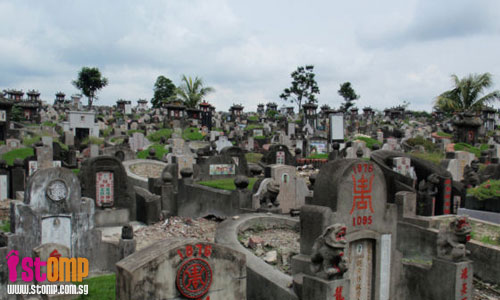
How unusual to see durians growing here, says a STOMPer, who snapped this picture of durian trees seen growing in the Chinese cemetery at Lim Chu Kang.

This STOMPer says:

"This picture was taken at the Chinese Cemetery Path 17 off Lim Chu Kang Road.

"The durian tree grows among the tombs.

"The famous naturalist, Alfred Russel Wallace, described the durian as such, 'It is like a buttery custard flavoured with almonds, intermingled with wafts of flavour that call to mind cream-cheese, onion sauce, brown sherry and other incongruities.'

"Even Wallace ran out of words to describe the king of tropical fruits."

Related story:
Fruit trees galore at Lim Chu Kang cemetery

Related post: Fruit trees galore at Lim Chu Kang cemetery (7th April 2009)
Tuesday, April 7, 2009

Fruit trees galore at Lim Chu Kang cemetery

Fruit trees galore at Lim Chu Kang cemetery
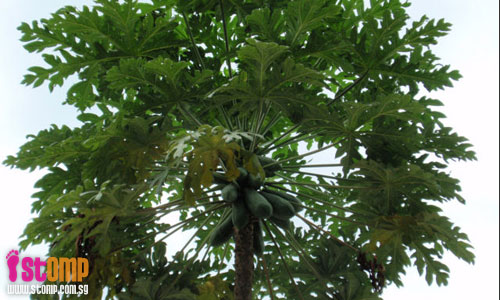
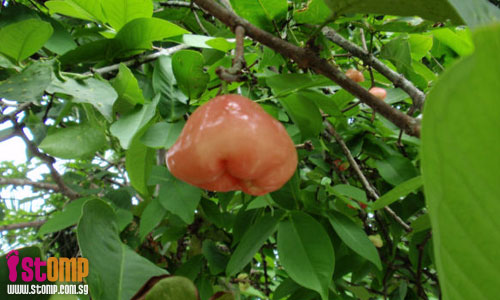
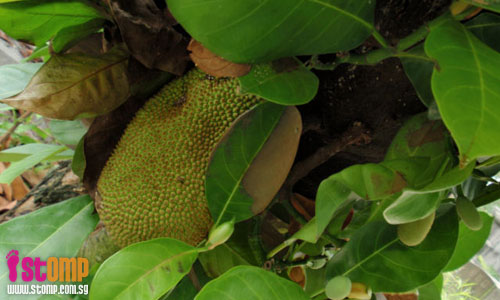
Jackfruit, durian, jambu and papaya trees. These were the varieties of fruit trees that a STOMPer saw at Lim Chu Kang Chinese cemetery, much to his surprise. He says:

"These pictures were taken at the Chinese cemetery, path 14 at Lim Chu Kang.

"What surprised me was the variety of local fruits that could be found here.

"It was during the Qing Ming festival and I noticed that many cars and taxis made their way to the Chinese cemetery.

"You can see the newly painted epitaph at the tombstone which was repainted in red colour. The next of kin of the deceased came here to burn joss papers and some brought a priest to chant over the graves. It was the time for the living to pay their respects to the dead.

"This durian (Durio zibethinus) tree grows well and was bearing many fruits. The thorny fruits have been described by ang mohs as 'smelling like heaven and taste like hell'.

"The jackfruit (Artocarpus heterophyllus) is the largest fruit in the world. The fruit has a yellow pulp and a brown seed. You can steam the seed till it is cooked and it tastes excellent.

"The papaya (Carica papaya) is rich in vitamins A and C and the fruit tastes good if you add a pinch of lime juice to it.

"The 'jambu' (Syzygium aqueum) is pink in colour and the pulp is juicy and sweet. The tree was so overladen that some fruits fell to the ground."

Fruit trees galore at Lim Chu Kang cemetery

Wednesday, April 1, 2009

Rickety Lim Chu Kang pier needs a makeover

Rickety Lim Chu Kang pier needs a makeover
Although beautiful in scenery, this STOMPer feels that the wooden jetty at Lim Chu Kang Road needs a makeover to attract more visitors.

He suggests that more trees and flowers to be planted around the area to make it more attractive.

In an email to STOMP, he says:

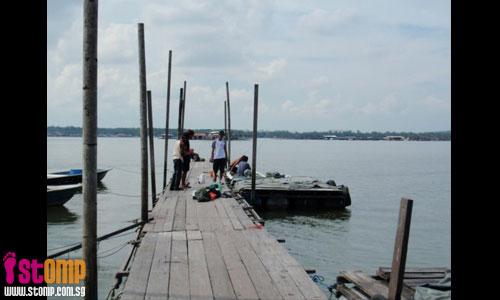
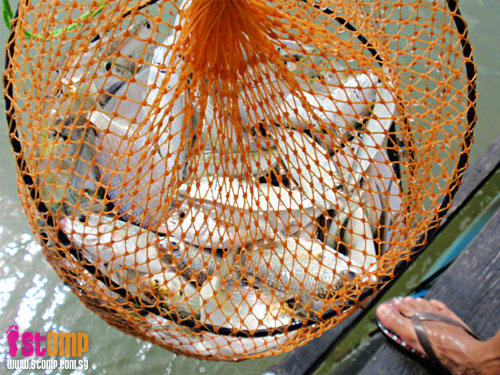
"At the end of Lim Chu Kang Road is a wooden jetty which is about 50 m long.

"The beach is strewn with flotsam and jetsam and some cleaning is long overdue.

"Perhaps NParks should take over this area, clean up the beach and build some boardwalks to attract more visitors.

"More trees and flowers need to be planted to make the area more attractive.

"The old Lim Chu Kang jetty is worn out and a new jetty should be built. The rickety planks are rotting.

"You can see some anglers fishing at the end of the jetty. They managed to catch some fish and crabs."

Rickety Lim Chu Kang pier needs a makeover

Thursday, February 19, 2009

Through the fire and the flames: A collection of news articles and Seen on STOMP posts on bushfires and haze in Singapore

This post will serve as a repository for all news articles and Seen on STOMP posts regarding the current spate of bushfires and hazy conditions in Singapore. Instead of having to manually update and re-publish every fire-related post every time I have a new article, I've decided that it would be much more efficient for me to just update this single post, and link all the relevant posts to this one.

News articles: In case of fire, land buffer can save lives (12th March 2009) (Mirror)
Clear and present danger (24th February 2009) (Mirror)
95% of vegetation fires to date caused by human-related activities (24th February 2009) (Mirror)
Carelessness behind 95% of bush fires (24th February 2009) (Mirror)
Carelessness caused fires (24th February 2009)
Big forest fire in Tampines (22nd February 2009) (Mirror)
3 bush fires in a day (22nd February 2009)
Singapore not affected by haze in Sumatra (22nd February 2009) (Mirror)
Blazing Again (19th February 2009) (Mirror)
Bush fire watch (19th February 2009)
Bukit Batok bush fires keep firemen busy (1st Mirror, 2nd Mirror) (18th February 2009)
S'pore fires hit decade high (18th February 2009)
Haze is back, but blame it on fires in Singapore (17th February 2009) (Mirror)
Record high of vegetation fires in Singapore (17th February 2009) (Mirror)
Dry spell causes bush fires to surge to record numbers (16th February 2009) (Mirror)
S'pore bush fires hit record high (16th February 2009) (Mirror)
Lazy winds, hazy days (16th February 2009)
Smoke's in the air (14th February 2009) (Mirror)
Slight haze in Singapore, but PSI reading within good range (13th February 2009) (Mirror)
Fire razes forested area in Sengkang (10th February 2009) (Mirror)
Dry spell to carry on in Singapore (6th February 2009) (Mirror)
Bush fire at Tampines (31st January 2009)
Singapore: Driest January in 10 years (31st January 2009) (Mirror)
SCDF put out 146 bush fires this month (29th January 2009) (Mirror)

Seen on STOMP: S'poreans should know that Bukit Batok forest fires not easy to put out
Reddish sun in S'pore: Could haze and bush-fires be the cause? (18th February 2009)
Second fire at Bukit Batok captured on video (18th February 2009)
Fire so large that SCDF firemen take turns having dinner on-site (18th February 2009)
Yet another bush-fire at Bukit Batok (17th February 2009)
S'porean concern about Aussie-type fire disaster here (17th February 2009)
Bushfire starts despite earlier rain (17th February 2009)
Bukit Batok bushfire a surreal experience for fire safety engineer (17th February 2009)
"Terrifying to see huge balls of fire in S'pore" (17th February 2009)
Firemen battle hilltop bush-fire in Bukit Batok (16th February 2009)
Haze back in S'pore? Healthy PSI reading, but can still see and smell smoke in air (15th February 2009)
Look at the damage wreaked by S'pore's own bush-fire in Sengkang (12th February 2009)
Tampines bush fire so huge, it can be seen from Eunos (31st January 2009)
Trees on fire at Sungei Tengah (24th January 2009)