Showing posts with label fruits. Show all posts

Sunday, June 17, 2012

Chek Jawa in June with the Naked Hermit Crabs

DSC_4669
(Photo by Kok Sheng)

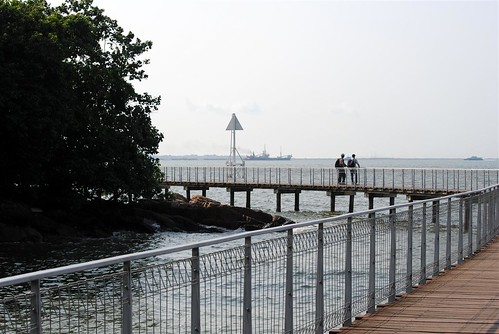
With it being the June holidays, the Naked Hermit Crabs received an overwhelming response for our monthly guided tour on the Chek Jawa boardwalk. And so 5 guides showed up on Saturday morning, ready to take on the crowds and share the sights and sounds of this very special place.

Thursday, January 26, 2012

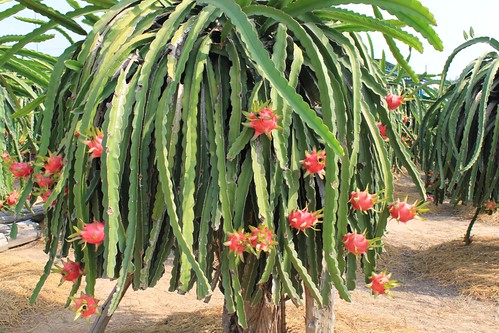
Year of the Dragon: Dragon fruit

Dragon fruit
(Photo by daria_weber)

Moving away from animals for a while, this post will look at a plant that is familiar to most of us, and is linked to dragons by name.
Sunday, May 30, 2010

Mango stealers caught knocking the fruit off this tree

 Mango stealers caught knocking the fruit off this tree
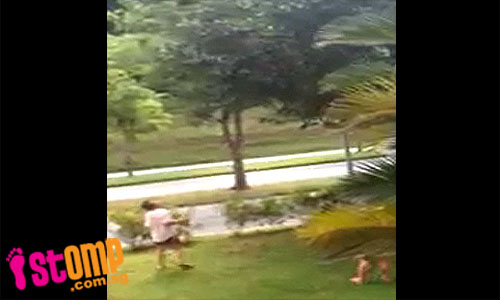
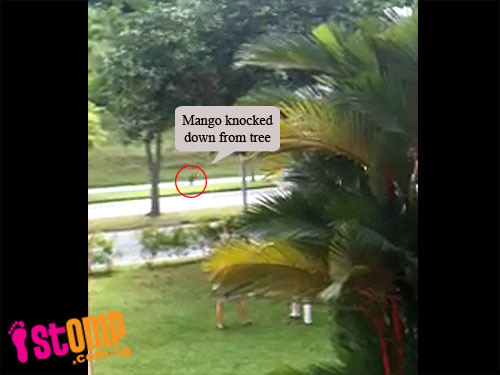
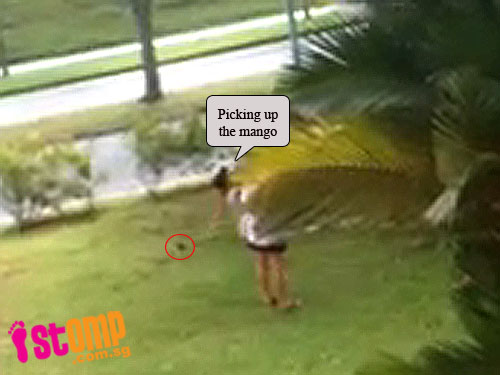
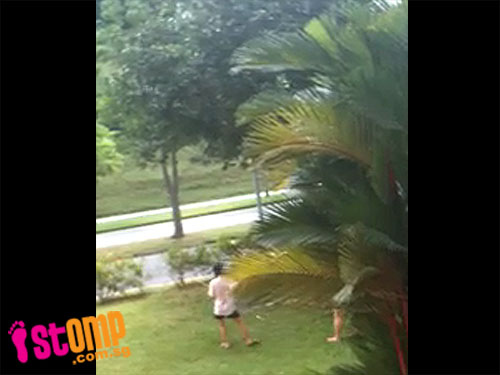
STOMPer khalif caught these people stealing the mangoes from this tree this morning in Pasir Ris. One of them uses a long stick to knock the mangoes off while the other picks them up and put them in a plastic bag.
He said:

"I saw them at Block 714 in Pasir Ris.

"I was speechless when I saw what they were doing.

"They were using a long stick to knock the mangoes off the tree!

"I don't think they should have been done that because the tree is considered the government's property.

"The town council should take action and not let people do this again."

 Mango stealers caught knocking the fruit off this tree
 Mango stealers caught knocking the fruit off this tree
 Mango stealers caught knocking the fruit off this tree
 Mango stealers caught knocking the fruit off this tree
 Mango stealers caught knocking the fruit off this tree
 Mango stealers caught knocking the fruit off this tree

Related posts: People caught plucking mangoes claim they are RC members (1st May 2009)

Do check out the video posted on STOMP.

Tuesday, July 14, 2009

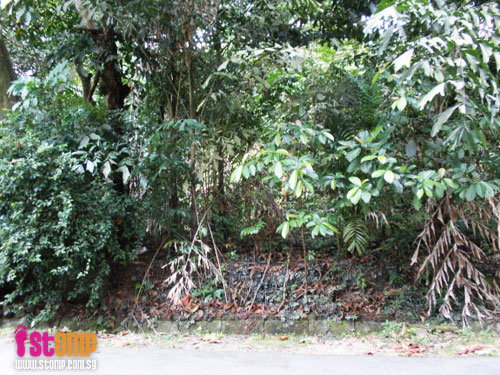
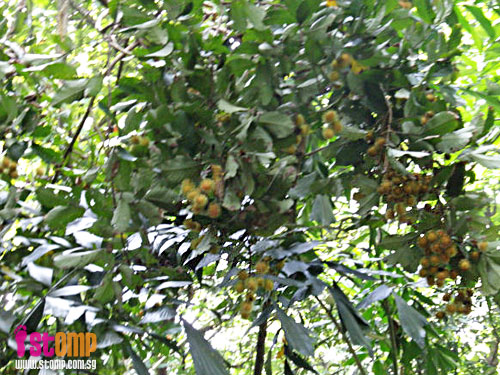
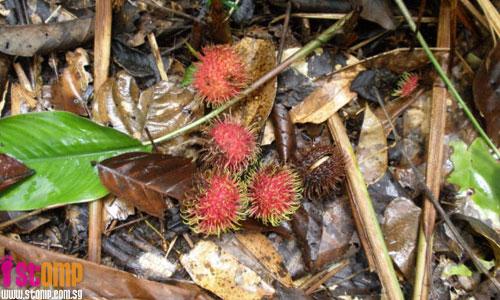
Psst! Not just FREE durians here, there are FREE rambutans too

Psst! Not just FREE durians here, there are FREE rambutans too
One STOMPer had previously told us about the free durians at the wooded area around Bukit Batok. Now, another STOMPer, Durian Addict, has found a spot where one can get free durians and rambutans.

He said:

"These pictures were taken at a forest at Jalan Mempurong in Sembawang.

"These forests abound with rambutans and durians.

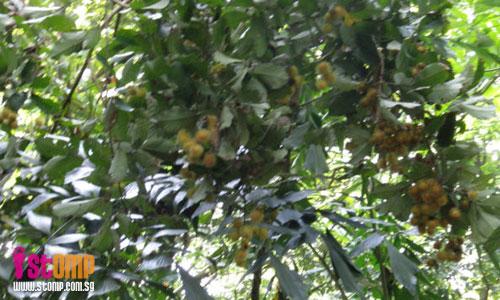
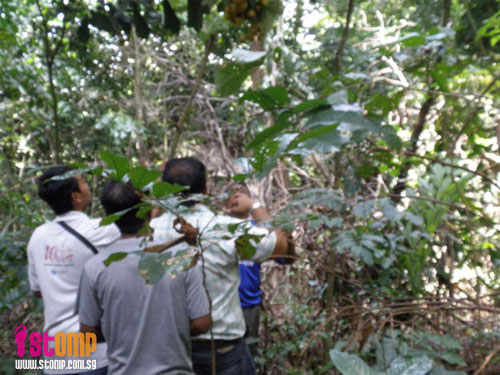
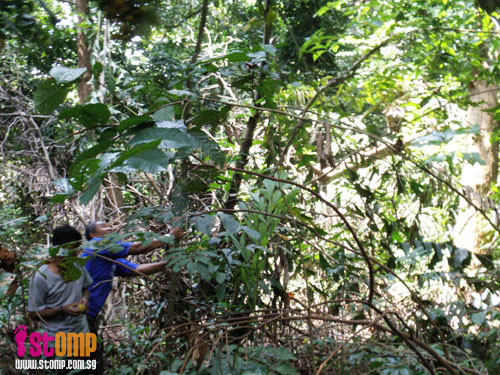
"During lunch time as I drove past this road I saw many workers busily picking free rambutans.

"They used bamboo sticks, stones and even iron rods to induce the rambutans to drop.

"One of them offered me some yellow rambutans which tasted very sweet.

"I was told that on Sundays legions of foreign workers usually came to pick durians and rambutans and enjoyed themselves by going to the nearby beach to swim."

Psst! Not just FREE durians here, there are FREE rambutans too

Related posts: Free fruits in Bukit Timah Nature Reserve (7th July 2009)
All night vigil for free durians at Jln Kampong Chantek (6th July 2009)
Durian paradise uncovered in Lim Chu Kang (6th July 2009)
Psst! Here's the secret of where to get durians in S'pore -- FREE (3rd July 2009)
Wild buah langsat at Jalan Murai a treat for foreign workers (28th June 2009)

Monday, July 13, 2009

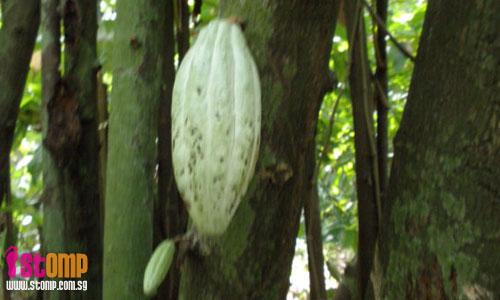
Ex-squatter settlement now a forest with rare cacao trees

Ex-squatter settlement now a forest with rare cacao trees
This forest, located in Jurong, used to be a bustling area occupied by squatters. Today, it has become a nature trek, says STOMPer Nature Lover, who spotted a cacoa tree there.

The cacao tree bears cacao beans that are used to make chocolate.

In an email, STOMPer Nature Lover says:

"These pictures were taken at the forest near Track 22, Jurong Road.

"This area was once inhabited by squatters who are now settled in the HDB estates at Jurong East and Jurong West.

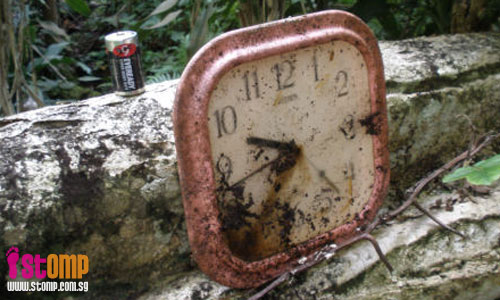
"As I was walking through the forest I saw this old clock on a tree trunk and this was probably left behind by the previous squatters.

"I also saw a yellow-brown insect that lives in the secondary forest.

"There was also a cacao tree (Theobroma cacao) which grows to a height of 8 metres. Its seeds are used to make cocoa and chocolate.

"Cacao flowers are pollinated by tiny flies. The fruit is ovoid, ripening to yellow and weighs about 500 g.

"The pod contains many seeds, usually called beans, embedded in a white pulp. Each seed contains fat and theobromine, a compound similar to caffeine."

Ex-squatter settlement now a forest with rare cacao trees

Tuesday, July 7, 2009

Free fruits in Bukit Timah Nature Reserve

Free fruits in Bukit Timah Nature Reserve
A STOMPer was in Bukit Timah Nature Reserve when he realized that people has been plucking fruits off the trees in the forest. Through these pictures he told a story of the forest and its free fruits.

Arborist told STOMP via email today (Jul 7):

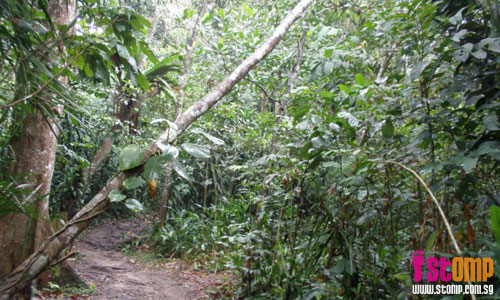
"These pictures were taken at Rifle Range Road near the forest at Bukit Timah Nature Reserve.
Free fruits in Bukit Timah Nature Reserve
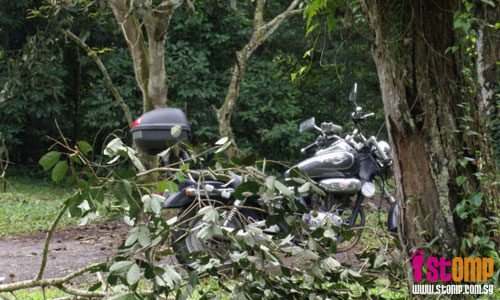
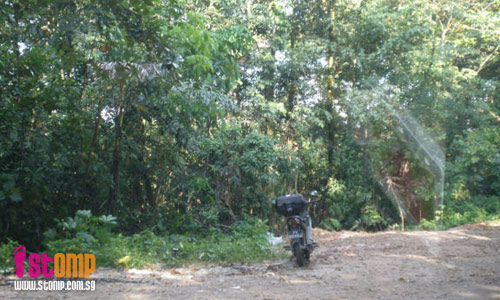
"A motor-cyclist came early in the morning to pick rambutans and durians growing on state land.

"Anyway these are free as there is no notice put up to tell visitors that picking of fruits is prohibited.

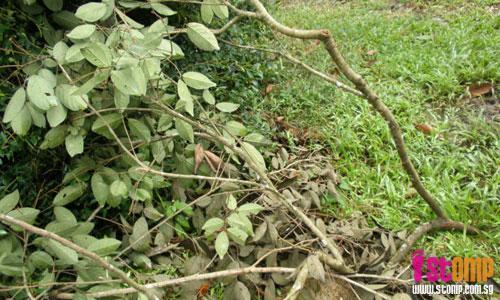
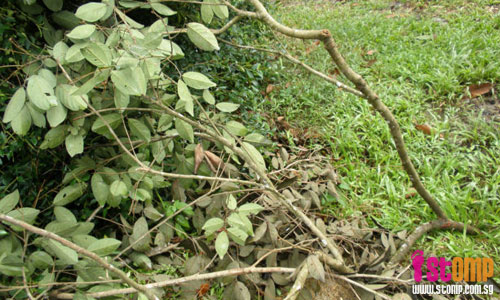
"The problem is that when the fruit hunters left, they left behind broken branches from the denuded rambutan tree.
Free fruits in Bukit Timah Nature Reserve
"Many rambutan trees became bare after the raid by these fruit hunters and they left behind the broken branches as evidence of their trespass.
Free fruits in Bukit Timah Nature Reserve
"At times three or four foreign workers would climb up a tall rambutan tree and the stem became slanted as the tree could not take the combined weight of the fruit hunters.
Free fruits in Bukit Timah Nature Reserve
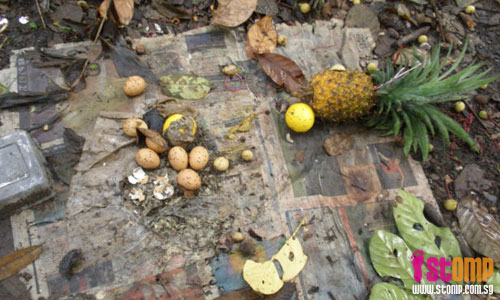
"The more religious workers brought along items for praying as they kept a vigil for the durians.

"They brought newspapers, eggs, oranges and pineapples to pray to the spirits of the forest so that they would not be harassed by the spirits and also to appease them.

"However, when the workers left, the monkeys came down from the trees to enjoy the free eggs on the forest floor.

"Soon the squirrels would come to feast on the free pineapples provided by the human visitors."

Related posts: All night vigil for free durians at Jln Kampong Chantek (6th July 2009)
Durian paradise uncovered in Lim Chu Kang (6th July 2009)
Psst! Here's the secret of where to get durians in S'pore -- FREE (3rd July 2009)
Wild buah langsat at Jalan Murai a treat for foreign workers (28th June 2009)

Monday, July 6, 2009

Squirrels jump from tree to tree at Bukit Timah Nature Reserve

Squirrels jump from tree to tree at Bukit Timah Nature Reserve
STOMPer Jungle Man would like to share these pictures he took of the interesting wildlife at Bukit Timah Nature Reserve with fellow STOMPers.

In an email to STOMP today (Jul 6), the STOMPer says:

"These pictures were taken at the Rifle Range Trail of the Bukit Timah Nature Reserve.

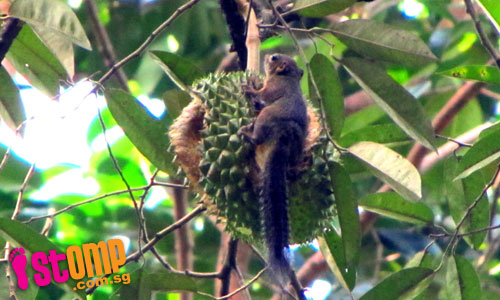
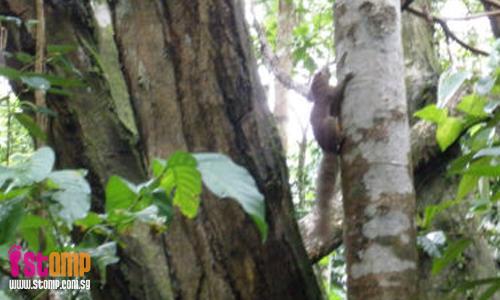
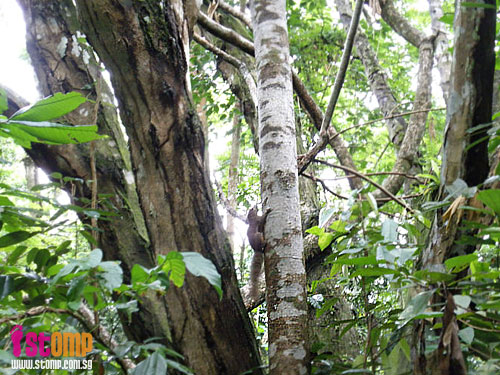
"The squirrel is a small furry animal that jumps from tree to tree. Last Sunday I saw this squirrel clambering up a rambutan tree and a durian tree.

"It plucked a rambutan and then sat down on a branch with its hind paws grappling the branch.

"With the front paws holding the fruit, it bites into the skin and eats the juicy pulp effortlessly.

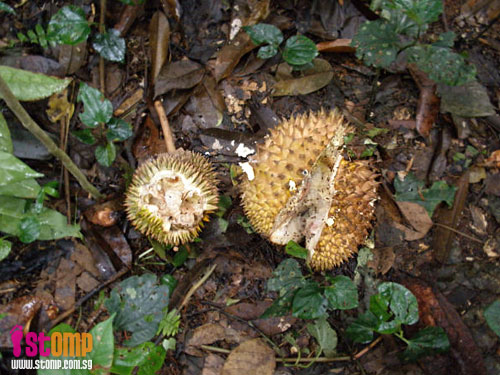
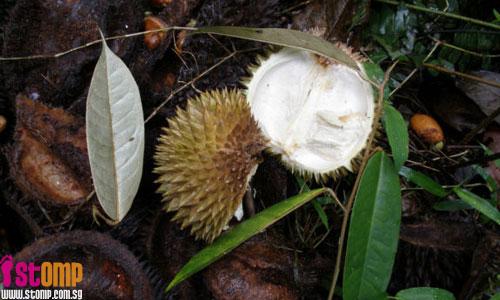
"In another picture, you’ll see a half-eaten durian lying on the forest floor. This provided a good meal for the ants.

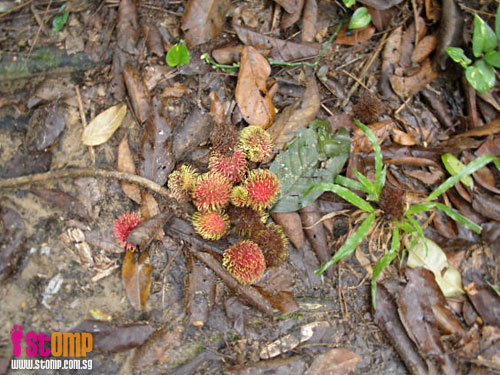
"Some ripened rambutans dropped onto the forest floor after a shower of rain.

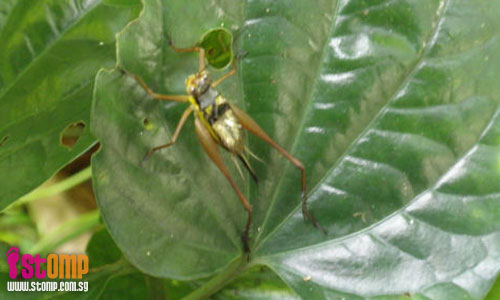
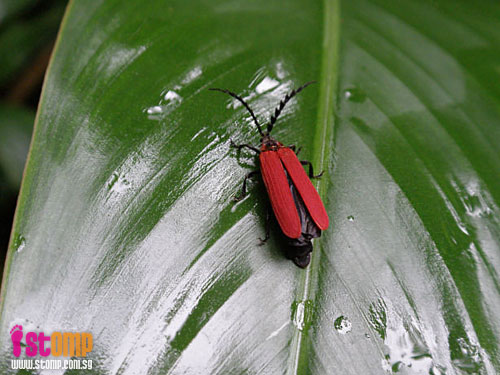
"In another picture is an insect with a black body. Its crimson wings have two saw-tooth antennae.

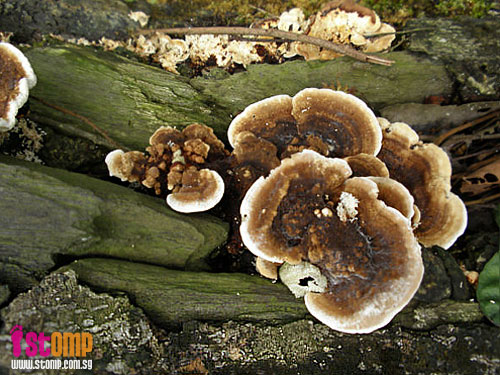
"The last picture shows a white and brown bracket fungus growing well on dead tree trunks."

Squirrels jump from tree to tree at Bukit Timah Nature Reserve

The squirrel in the photo is the plantain squirrel (Callosciurus notatus), which is the species most likely to be encountered here in Singapore. It's widespread and common, even in urban housing estates. The stripes on the flanks and the reddish belly distinguish it from all the other squirrel species in Singapore.


Plantain squirrel, Singapore Botanic Gardens;
(Photo by mjmyap)

Another squirrel species that is quite commonly encountered is the little slender squirrel (Sundasciurus tenuis), around half the size of the plantain squirrel. This species is restricted in its distribution, being found largely in the forested areas of the Central Nature Reserves and Singapore Botanic Gardens.


Slender squirrel, Upper Peirce;
(Photo by hiker1974)

A relative of the plantain squirrel, the variable squirrel (Callosciurus finlaysoni) is not a native of Singapore, being found in south Vietnam, Cambodia, Laos, Thailand and eastern Myanmar. True to its common name, there is a great deal of geographic variation within this single species; depending on the subspecies and the location, the colours can range from entirely black to reddish-brown to grey to white. Since the early 1990s, a population belonging to the subspecies bocourti from central Thailand has become established in Singapore, largely in the Woodleigh area. It's not known what possible ecological impacts might occur as a result, especially if the squirrel manages to spread to more parts of Singapore.


Variable squirrel, Bidadari Cemetery;
(Photo by hiker1974)

Singapore's other squirrel species are much more elusive, and rarely if ever spotted. The shrew-faced ground squirrel (Rhinosciurus laticaudatus) is restricted to the forests of the Central Nature Reserves, as are the red-cheeked flying squirrel (Hylopetes spadiceus) and Horsfield's flying squirrel (Iomys horsfieldii). The red-cheeked flying squirrel, known only from Bukit Timah Nature Reserve, was first recorded locally only in 1996.

Unfortunately, the three-striped ground squirrel (Lariscus insignis) is thought to be extinct in Singapore, while the fate of our 2 giants of the squirrel world looks bleak.

The story of the cream-coloured giant squirrel (Ratufa affinis) is especially tragic, considering that the species was first described by Sir Stamford Raffles, and was once quite common throughout Singapore. In fact, it was often caught as a pet or for food up to the late 1960s. Deforestation seems to have been the main cause of the squirrel's decline; it appears that it was eventually restricted to the forests of Bukit Timah and the Central Catchment Area. With a frightfully small population (estimates of the total population in Singapore range from a mere 2 to 10 individuals), it's clear that even if the squirrel hasn't already gone extinct in Singapore (it was last sighted in 1995), it's just about nearly so.

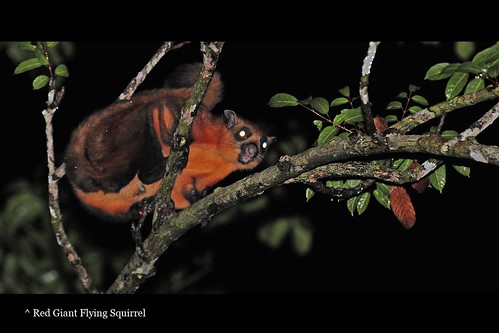
Less is known about the red giant flying squirrel (Petaurista petaurista) in Singapore. This species was last recorded in 1986, so it's possibly already extinct. However, its nocturnal nature and shy habits mean that there is a chance that it still survives in our forests.


Red giant flying squirrel, Langkawi;
(Photo by kwokwai76)

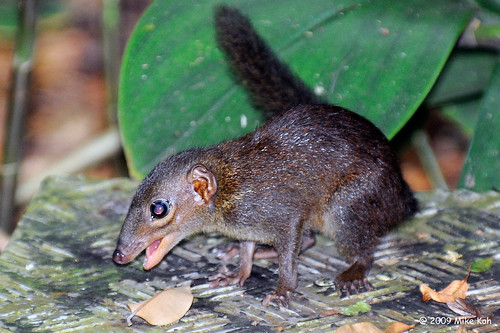
Not to be mistaken for a squirrel is the common treeshrew (Tupaia glis), a mammal that's actually much more closely related to primates than rodents.


Common treeshrew, Singapore Botanic Gardens;
(Photo by astro08)

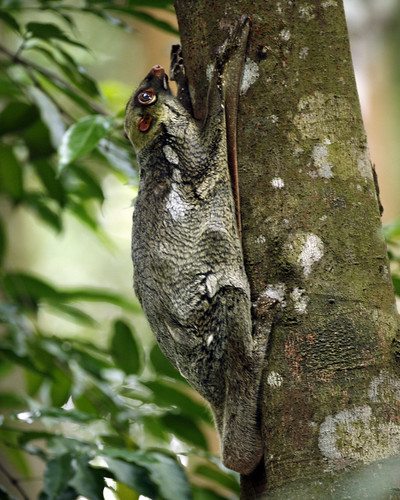
Similarly, the Malayan colugo (Galeopterus variegatus), another distant primate relative, is not to be mistaken for a flying squirrel.


Malayan colugo, Central Catchment Area;
(Photo by Lip Kee)

In a completely unrelated vein, the insect pictured above is a net-winged beetle. Net-winged beetles belong to the family Lycidae, and many species feed on nectar as adults. Most species are brightly coloured in hues of red or orange, signaling that they are toxic and distasteful. They're related to fireflies, among many other beetle families.

Here's a picture of the long-nosed lycid beetle (Porrostoma rhipidius), an Australian species, for comparison.


Long-nosed lycid beetle, Victoria;
(Photo by Wimm/WL)

Tropical fruits galore at Bukit Timah Nature Reserve's mountain biking trail

Tropical fruits galore at Bukit Timah Nature Reserve's mountain biking trail
STOMPer mountain biker was astounded by the array of tropical fruits he saw along the mountain biking trail at Bukit Timah Nature Reserve.

This STOMPer says:

"These pictures were taken at the mountain biking trail at the Bt Timah Nature Reserve.

"While cycling along this jungle trail I stopped several times to look at the fruit trees along the way and snapped these pictures.

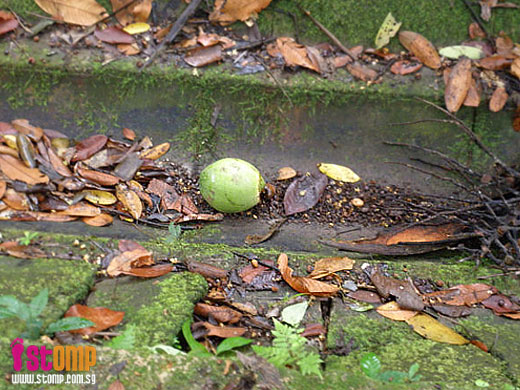
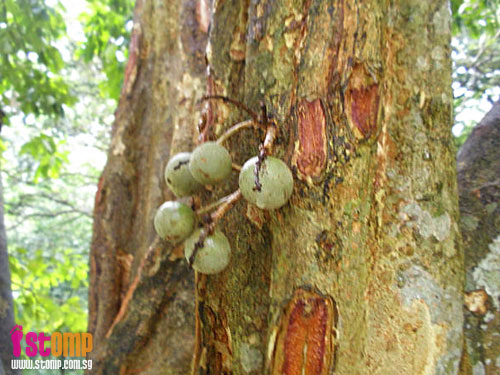
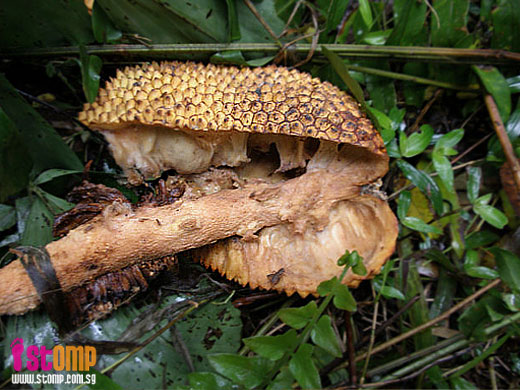
"This half-eaten cempedak (Artocarpus champedan) was found on the forest floor. This fruit is native to Malaysia and Thailand.

"The tree grows up to 20m and the fruits are seasonal and barrel-shaped. It is smaller than the jackfruit and when cut, the fruit secretes a sticky latex.

"The outer rind consists of fleshy spines and in each fruit are about 30 seeds which are surrounded with yellow edible flesh.

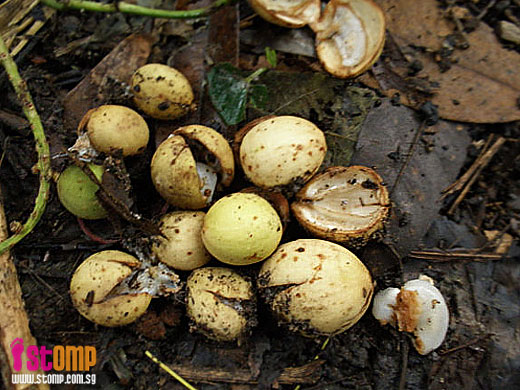
"The langsat is a small fruit which is green, slowly ripening to a light brown colour. Inside the langsat are 5 segments of juicy white flesh, the flavour being a combination of citrus and sweet. The bark of the tree is used to treat dysentery and scorpion stings.

"The coconut tree grows to a height of 30 m and when ripe the fruit drops to the ground. The unripe fruit is full of sweet water which makes a refreshing drink.

"The rambutans (Nephelium lappaceum) are green slowly turning red when ripe. Rambutans are rich in vitamin C.

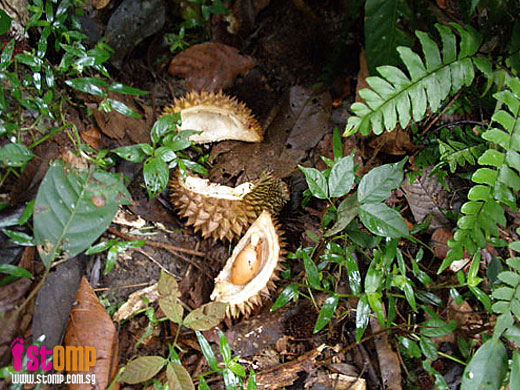
"The durian is a popular fruit in Singapore. The animals in the jungle have a constant supply of fruits throughout the year."

Tropical fruits galore at Bukit Timah Nature Reserve's mountain biking trail

Related posts: Durian Loop better than Botanic Gardens (14th April 2009)
Fruit trees galore at Lim Chu Kang cemetery (7th April 2009)

All night vigil for free durians at Jln Kampong Chantek

All night vigil for free durians at Jln Kampong Chantek
Foreign workers keep an all night vigil at Jalan Kampong Chantek in order to get free durians, says STOMPer curiousman.

This STOMPer says:

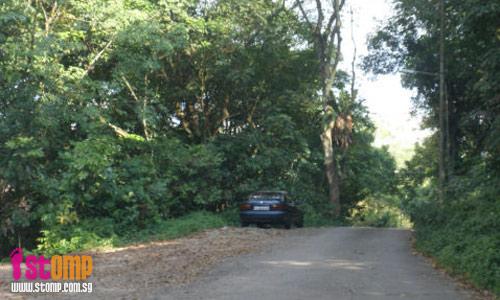
"These pictures were taken at the Durian Loop, off Jln Kampong Chantek.

"June and July is the season when durians ripen and fall.

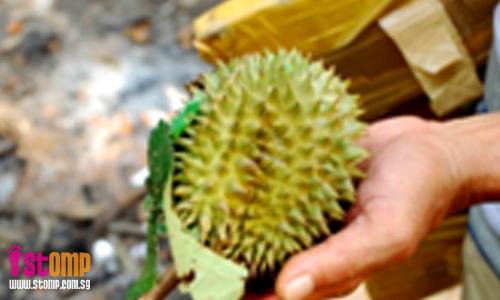
"Last week as I was trudging through the Durian Loop, I came across some foreign workers who were leaving the forest laden with bags of durians picked from the jungle.

"They had kept a constant vigil by the side of the durian trees during the night and they were amply rewarded with a bountiful harvest of the spiky fruit.

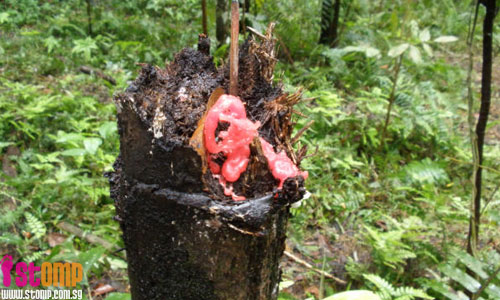
"They came equipped with the necessary gear to stay awake throughout the night. They lit joss sticks and candles to keep the mosquitoes away while they were waiting for the durians to fall.

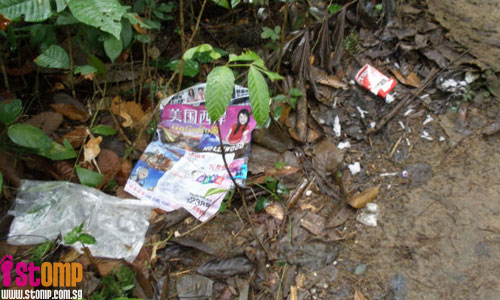
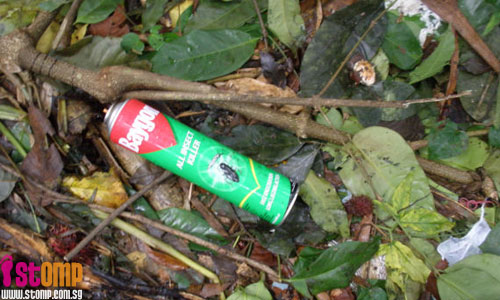
"To protect themselves from the ferocious mosquitoes they sprayed themselves with insecticide and the can was discarded after use.

"They came laden with newspapers, cigarettes, food, drinks and bottles of beer as they were there waiting for many hours.

"The reward came in the early morning when they harvested the durians which were free."

All night vigil for free durians at Jln Kampong Chantek

Related articles: All for the love of Durian (29th June 2009) (Mirror)
Durian warning and happy pickings at park (2nd May 2009) (Mirror)
Free durians for the picking (20th July 2008) (Mirror)

Related posts: Psst! Here's the secret of where to get durians in S'pore -- FREE (3rd July 2009)
Blue net at Pulau Ubin can save your life (4th June 2009)
Durian Loop better than Botanic Gardens (14th April 2009)
Durian trees grow in Lim Chu Kang cemetery (8th April 2009)

I don't mind people entering our forested areas in search of durian and other fruits, but I do wish they would be more responsible and conscientious and not spoil the place with their garbage.

Durian paradise uncovered in Lim Chu Kang

Durian paradise uncovered in Lim Chu Kang
Deep in the greenery of Lim Chu Kang lies a hidden treasure cove for durian lovers, says STOMPer Durian Lover.

The area is always ransacked by durian enthusiasts during June and July every year.

The king of fruits grows on the trees left behind by farmers who used to occupy the land.

Every year, those in the know come to this forested area in Lim Chu Kang to get their hands on some free durian.

STOMPer Durian Lover says:

"These pictures were taken near the end of Lim Chu Kang Road.

"This stretch of Lim Chu Kang Road from Ama Keng Road to the sea was formerly farmland where farmers used to rear poultry and plant fruit trees.

"The land was acquired by the government and the erstwhile farms became uninhabited for many years.

"However these farmers left behind their banana, rambutan and durian trees.

"Come June and July every year, you will see motorcycles, cars and pickups making a beeline for this area as these durian hunters make their annual pilgrimage to Lim Chu Kang in search of their favourite -- the king of fruits.

"They come early in the morning and also in the evening and on weekends they camp overnight to wait for the ripe durians to fall.

"There are no paths in the forests but during the fruit season, you can see several beaten paths created by the pounding of hundreds of human feet.

"These durian lovers would brave all odds, the inclement weather, the attack by snakes, bees and hornets.

"Their love for durians has overpowered their fear of snakes and tarantulas.

"The spiky fruit will always draw a crowd of durian addicts who feel that free durians picked from the forest taste better than those you can buy in the marketplace."

Durian paradise uncovered in Lim Chu Kang

Related articles: All for the love of Durian (29th June 2009) (Mirror)
Durian warning and happy pickings at park (2nd May 2009) (Mirror)
Free durians for the picking (20th July 2008) (Mirror)

Related posts: Psst! Here's the secret of where to get durians in S'pore -- FREE (3rd July 2009)
Blue net at Pulau Ubin can save your life (4th June 2009)
Durian trees grow in Lim Chu Kang cemetery (8th April 2009)

Sunday, June 28, 2009

Wild buah langsat at Jalan Murai a treat for foreign workers

Wild buah langsat at Jalan Murai a treat for foreign workers
After a hard day's work, this foreign worker enjoys the simple pleasure of eating wild buah langsat growing along Jalan Murai.

STOMPer Langsat Addict, who struck up a conversation with the worker, said:

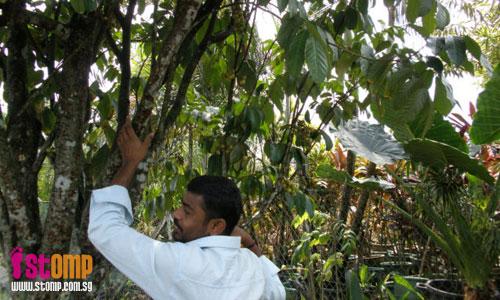
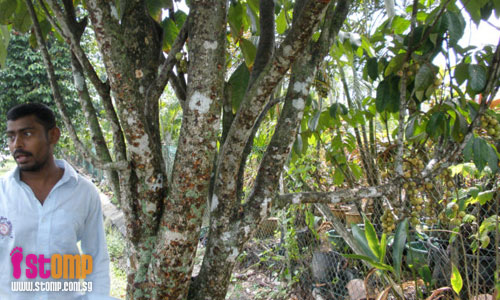
"I was driving along Jalan Murai when I saw a group of foreign workers climbing up some trees to pick the fruits.

"Being curious, I stopped my car and politely asked them what they were picking.

"One foreign worker showed me a bunch of ripened 'buah langsat' and asked me to try one.

"I popped one into my mouth and found that it was very sweet as it tasted like 'buah duku' the larger species.

"It was in the evening and the workers had finished their daily work. So they went around to look for fruits which grew in the wild.

"This friendly worker, in his 20s, told me that on weekends his friends and he would go to a vacant piece of land next to the Chinese cemetery in Choa Chu Kang to look for free durians and rambutans.

"As June is the fruit season they get to enjoy our tropical fruits.

"Since the trees grow in the wild these workers need not pay to harvest them.

"This worker told me that he enjoyed our langsat more than the mangoes he used to eat in India."

Wild buah langsat at Jalan Murai a treat for foreign workers

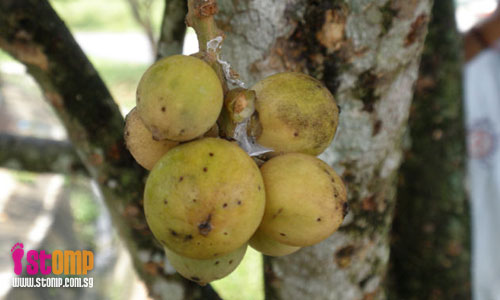
Langsat is the Malay name for Lansium domesticum, a fruit-bearing tree native to the region. Here is a link for more information on this species.


Langsat fruits, Kundasang;
(Photo by jdream mx)


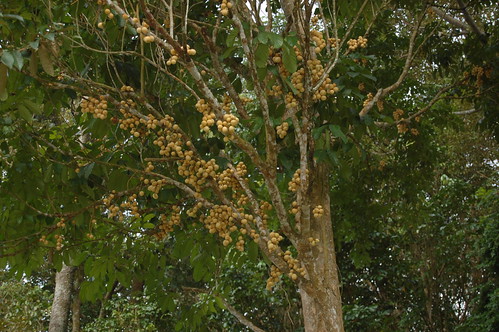
Langsat tree with fruits;
(Photo by Pretty Lady 241)

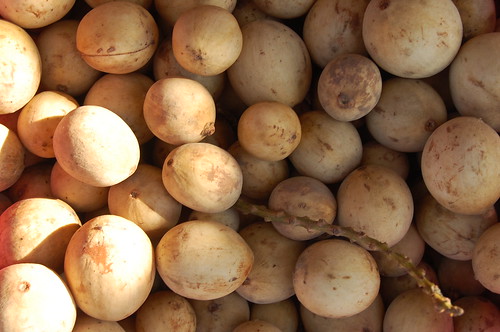
Apparently, the fruit we know as duku is a variety of langsat as well.


Duku fruit;
(Photo by kangdekry)