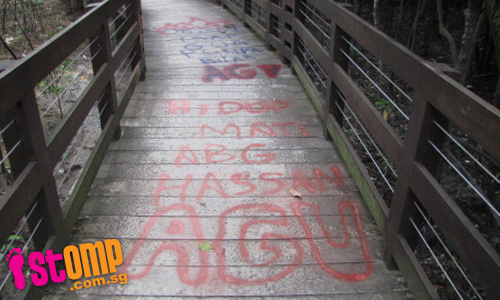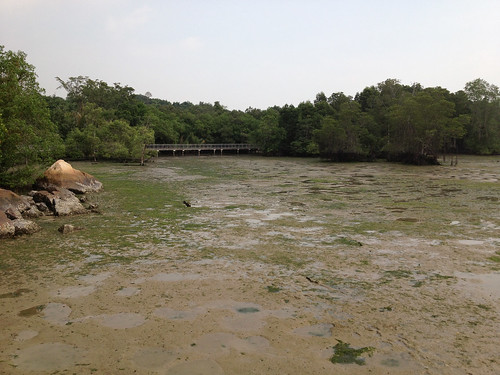
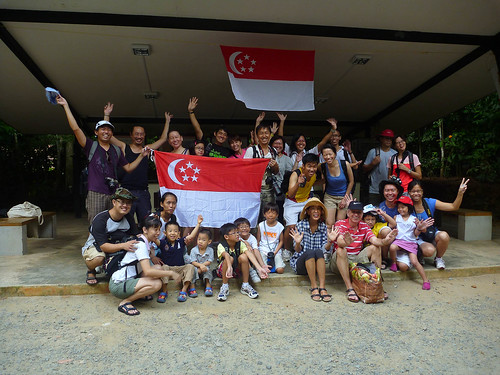
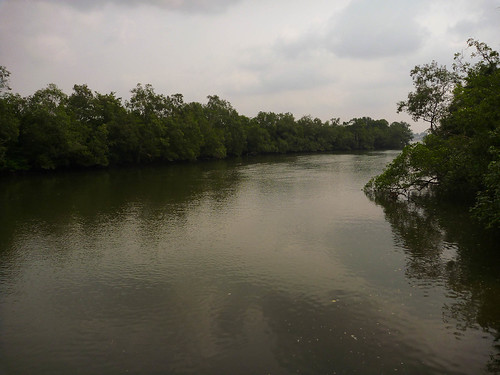
The Naked Hermit Crabs spent an enjoyable Friday morning with some special guests on the Chek Jawa Boardwalk.


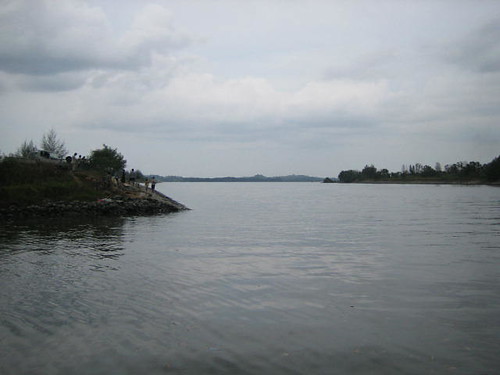


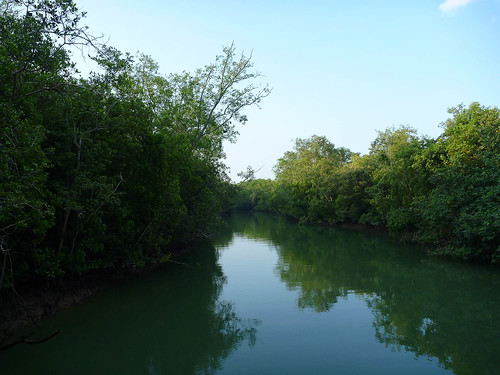
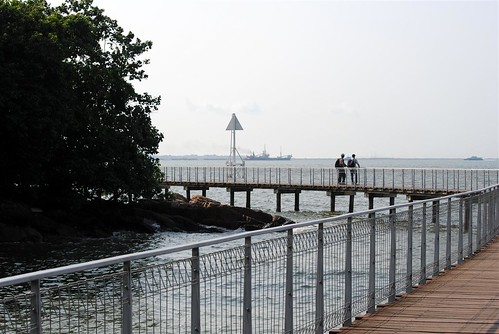
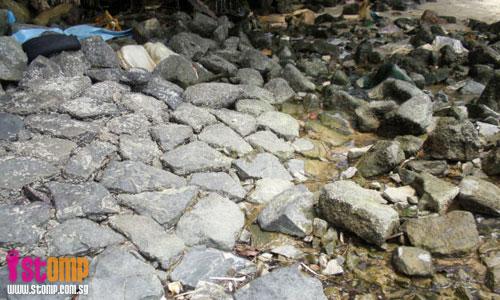
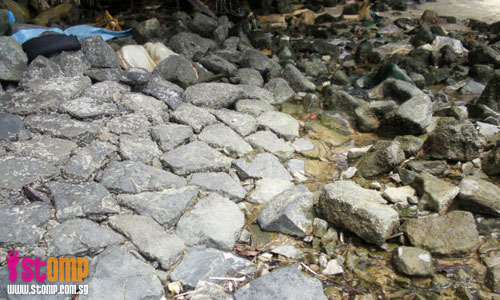
A STOMPer hopes that the damaged breakwaters in Sembawang's beach will be repaired soon as swimmers have a high risk of getting injured by the dislodged stones.
He also hopes that after repairing them, coastal erosion will be reduced too. Save our coastline before it's too late, says the STOMPer.
Marine engineer told STOMP via email today (Jul 15):
"These pictures were taken at the beach at the end of Sembawang Road near the former Wak Hassan kampung.
"The breakwater was built some years back to protect the shoreline but now holes have appeared owing to the daily pounding of the waves from the Johor Straits.
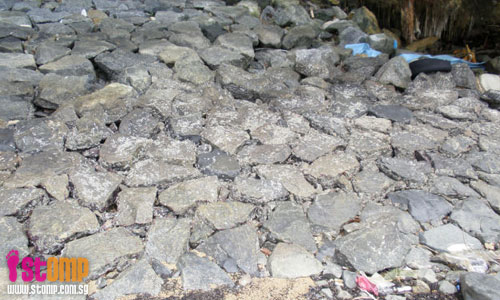
"Parts of the breakwater had been damaged and the stones were dislodged and strewn all over the beach.
"Some are now covered with barnacles and these are hazardous to swimmers.
"The ground above the tide level has green grass but because of soil erosion the grass and soil have disappeared. The sandy beach is now nearer to the shore line.
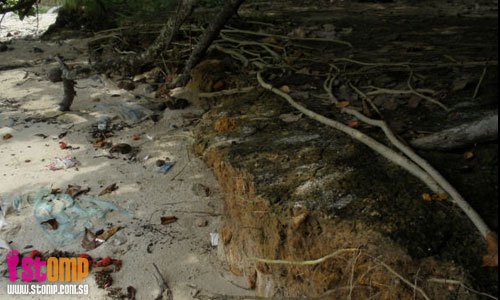
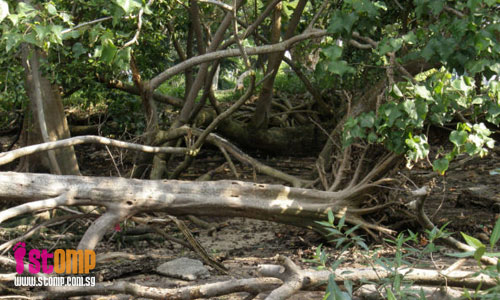
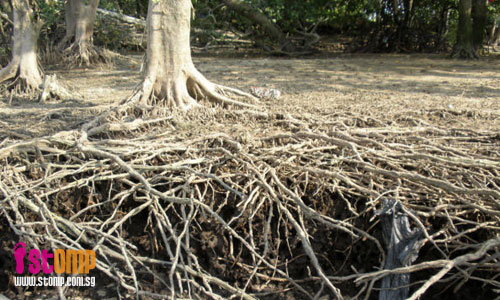
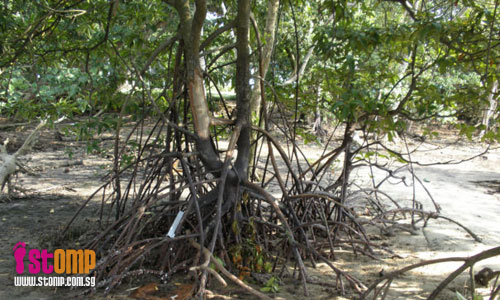
"Some mangrove trees have exposed roots and in time to come they will fall and perish in a watery grave.
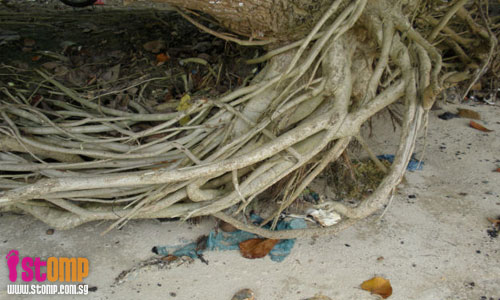
"I hope the breakwater can be repaired and something can be done to save our mangrove trees and the soil before the waves make more inroads into our coastline.
"Since NParks has been maintaining the Sembawang Park nearby, why not build some boardwalks here so that the public can have a place to relax during the weekends."
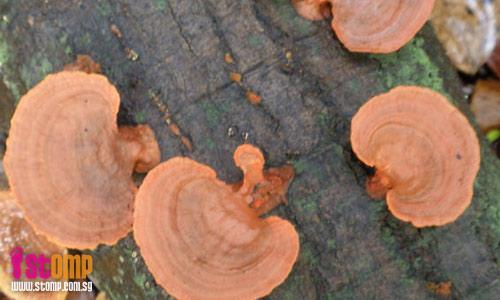
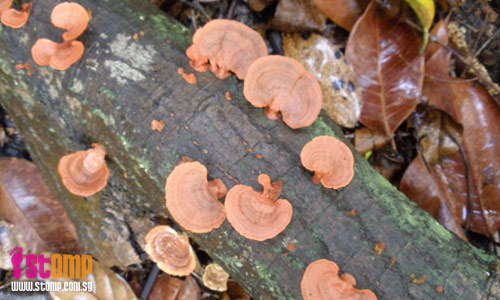
The fungi seen in these pictures are known as polypores, says STOMPer Mangrove Man, who wishes to highlight the wood-degrading species to all nature enthusiasts.
The polyporus fungus grows on tree trunks and is commonly spotted on fallen tree trunks.
In an email, STOMPer Mangrove Man says:
"These pictures were taken at Admiralty Park.
"This fungus called the polyporus fungus is leathery, hard and woody. It has no stripes and grows bracket-like on tree trunks.
"The orange polypores are common on fallen tree trunks because of their ability to degrade wood.
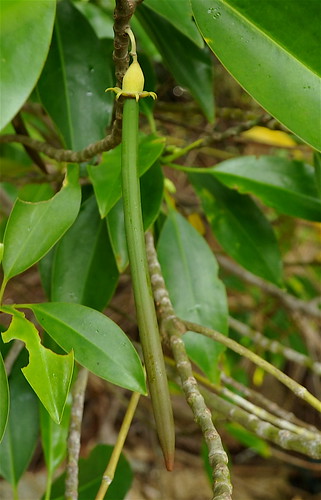
"This mangrove tree (Bruguiera cylindrica) can reach a height of 20 m and has buttress roots. The hypocotyl is about 15 cm long, like a green cigarette and slightly curved.
"The trunk of the tree is used for firewood and timber."

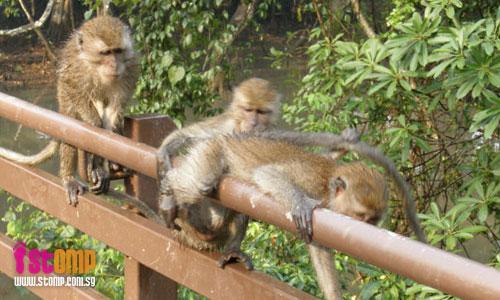
STOMPer Engineer was at Admiralty Park and noticed that monkeys were moving freely in the area.
In an email to STOMP today (June 29), the STOMPer wrote:
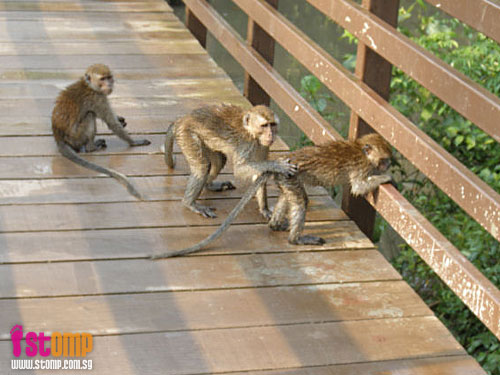
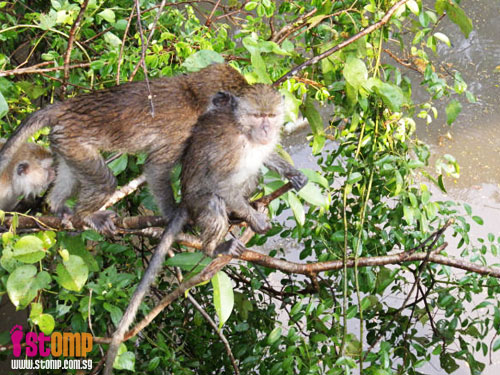
"These long-tailed macaques were frolicking on a mangrove tree.
"The mother monkey was swinging the branch to gain momentum and after a short while, it jumped onto the pillar supporting the bridge.
"It then climbed up to reach the railing of the bridge. The baby monkey followed suit and soon the whole troupe was on the bridge.
"The monkeys climbed up the railings and jumped over each other. However, it was risky for if it missed a step it could end up in the river below which meant a fall of 5m.
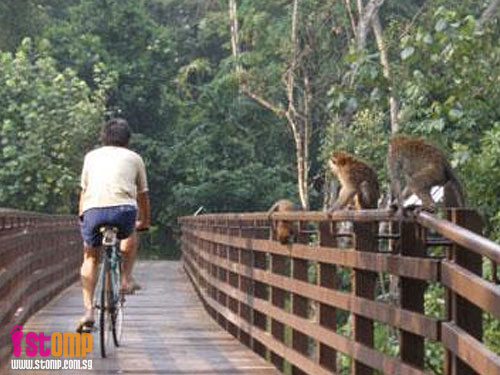
"The monkeys were observing a cyclist, who was cycling past the bridge.
"These macaques live in primary and secondary forest, mangroves and the outskirts of towns and villages.
"They travel in troupes of up to 30. In Singapore it is the most common primate.
"They feed on buds, fruits, insects, crustaceans, spiders and cereals. Their most feared predator is the deadly python."


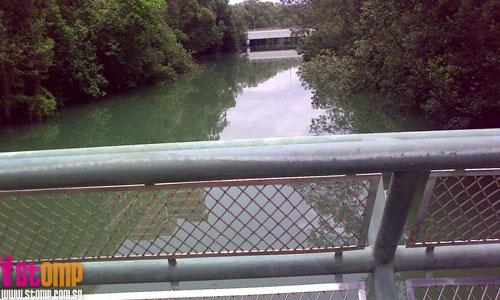
STOMPer Ong is sad that the Api Api River, which used to be clean and clear and good for fishing, is now polluted with dirty water.
He hopes that something can be done to stop this.
Says this STOMPer:
"Last time this Api Api River near the HDB, was clean and clear and the residents could still fish.
"Now, we can't fish anymore, look at the water, it's so dirty."
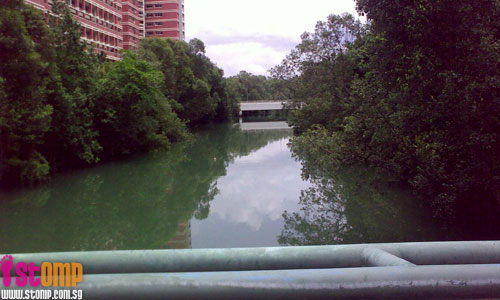
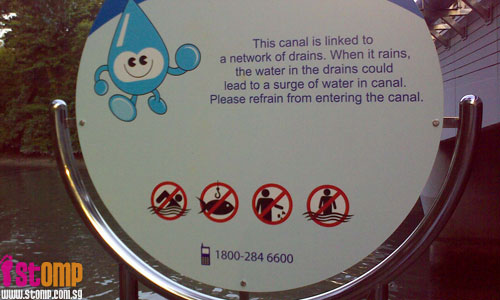
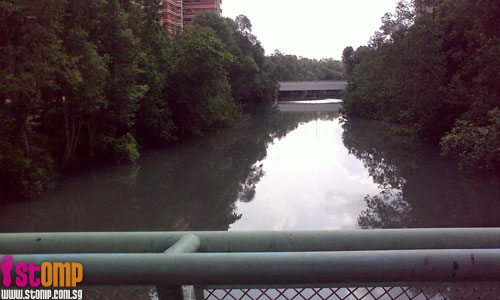
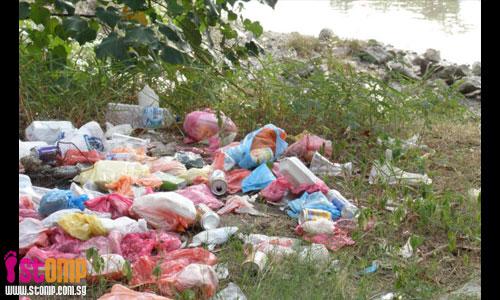
STOMPer Boatman was upset when he spotted, what he called 'serious pollution', at Sungei Pandan at Jalan Buroh.
Says this STOMPer:
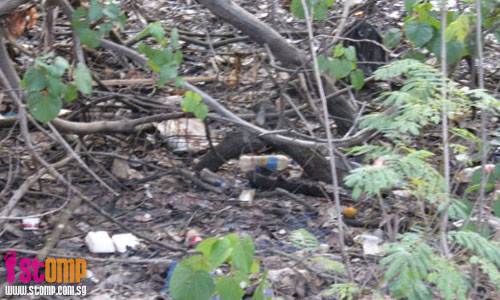
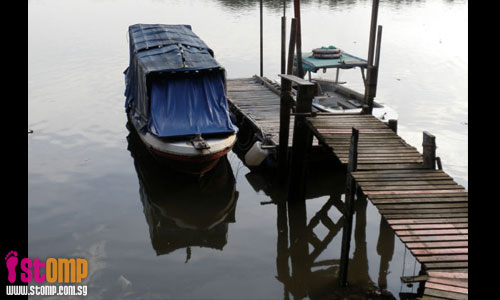
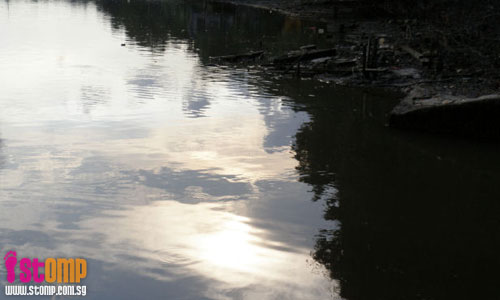
"These pictures were taken beneath the bridge that crosses the Sungei Pandan at Jalan Buroh.
"You can easily estimate the extent of environmental pollution of our precious waterways.
"There were lots of drink cans, plastic bags, polystyrene boxes and the area was infested with mosquitoes.
"A wooden rickety pier that was probably put up by the fishermen who came to unload their daily catch. You can see a boat moored by the side.
"The image of the setting sun was reflected in the water of the river. The day was coming to an end and the birds were returning to their homes. It was very peaceful at the bank of the river and the crickets in the bushes began their nocturnal chorus to usher in another night."
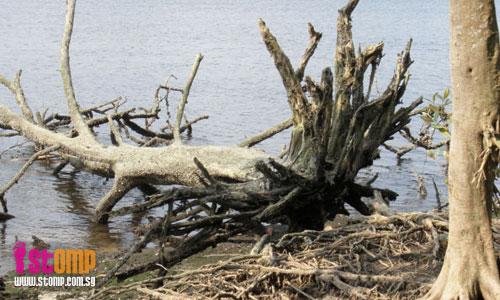
STOMPer Arborist is upset that this magnificent tree at Kranji Reservoir Park beach has been uprooted.
In his email to STOMP today (June 20), the STOMPer wrote:
"These pictures were taken at the Kranji Reservoir Park beach which faces the Strait of Johor.
"You can see a tall, healthy, giant tree with its stilt roots magnificently displayed. However, its days are numbered.
"The pounding of the waves against the base of the tree has taken its toll and most of the roots are now exposed. It lies precariously on the edge of the water.
"The strength and holding power of the roots are no match for the pounding of the waves which continue relentlessly day and night.
"Now the giant has fallen and we see the end of its glory and majesty.
"Only the skeleton of the giant remains to this day.
"On its roots and trunk are thousands of tiny barnacles which have chosen to make this corpse of the dead hero their permanent homes."