Sunday, June 17, 2012
Thursday, June 14, 2012


Wednesday, June 13, 2012

Tuesday, June 12, 2012
A word of thanks
I'm really pleased to see the support that Monday Morgue has received from many people, especially in the Singapore Blog Awards 2012. Although I did not have high hopes at first, I'm now able to count myself as one of the top three currently leading in votes for my category.

Saturday, June 9, 2012
World Oceans Day @ Tanah Merah

Yesterday was World Oceans Day, and in recognition of this day in which we are supposed to "celebrate and honour the body of water which links us all, for what it provides humans and what it represents", the International Coastal Cleanup Singapore (ICCS) team conducted cleanups of 2 stretches of coastline. I had signed up for Tanah Merah Site 7, the same place I had volunteered for earlier in April as part of a series of year-round coastal cleanup efforts. I have visited this shore infrequently every year, and it really is gratifying to see how the efforts of small groups of individuals have truly helped make a difference in reducing the amount of trash accumulating here.
Tuesday, June 5, 2012
Earthkeepers 101
Timberland Singapore is organising a blogging contest, in conjunction with their upcoming involvement in Rhythm with Nature as the Official Apparel Sponsor.

(Click to enlarge)

(Click to enlarge)
Monday, June 4, 2012
The fun of Storify
On 23rd May, I attended U@live Louis Ng: Speaking Up for the Voiceless. Featuring Louis Ng, Founder and Executive Director of the Animal Concerns Research & Education Society (ACRES), it was an interesting insight into the motivations and personal journey of one of Singapore's foremost champions of animal welfare.
Friday, June 1, 2012
Catching up with the Festival of Biodiversity
If you missed the Festival of Biodiversity, you can get a glimpse of the fun and festivities through the many blog posts and photo albums that have been uploaded so far. Jocelyne has helpfully compiled them all over here on the Festival of Biodiversity blog.
Storify is turning out to be an excellent tool to collate information from many different online platforms, and Gladys and I worked together to create this Storify of the entire Festival of Biodiversity:
Storify is turning out to be an excellent tool to collate information from many different online platforms, and Gladys and I worked together to create this Storify of the entire Festival of Biodiversity:
Monday, May 28, 2012
Vote Monday Morgue!

Me in my element: Guiding as a volunteer with the Raffles Museum Toddycats!.
(Photo by Boh Zuze)
It's been such a fun and fulfilling weekend at the Singapore Botanic Gardens, sharing interesting stories about Singapore's wildlife and wild places with members of the public. And I'm really pleased that my talk about the importance of documenting dead animals was very well-received. I'll write about my weekend soon enough, but now that the fun and festivities from the Festival of Biodiversity are over, it's time for Monday Morgue to focus on another significant event: the Singapore Blog Awards. If you recall, I'm currently a finalist in the Sold.sg Best What-the-Hell Blog category.
Voting opened on Monday, and everyone can cast one vote per category every day until 30th June. I hope that I'll be able get more support, not just from friends who are familiar with this blog, but also with new readers. A big thanks to Crystal and Jerome, who are finalists in other categories, and who have shown their support for Monday Morgue!
In the meantime, while I prepare a nice blog post to show you all about what happened at the Festival of Biodiversity, here's a short interview for the Singapore Blog Awards:
Friday, May 25, 2012
It's Showtime!
The Festival of Biodiversity begins tomorrow!

Many of us are busy making preparations for the weekend, with a wide range of activities for the whole family to enjoy. Besides doing booth duty as a volunteer guide with the Marine Exhibtion and the Raffles Museum Toddycats!, I also plan to participate in some of the film screenings, symposiums, and of course, not to forget my talk on Sunday.
Many of us are busy making preparations for the weekend, with a wide range of activities for the whole family to enjoy. Besides doing booth duty as a volunteer guide with the Marine Exhibtion and the Raffles Museum Toddycats!, I also plan to participate in some of the film screenings, symposiums, and of course, not to forget my talk on Sunday.
Monday, May 21, 2012
Yet more shameless self-promotion
Monday Morgue is a finalist in the Singapore Blog Awards 2012!
Yes, my spin-off from this blog is currently a contender in the Sold.SG Best What-the-Hell Blog category:

(No offence intended to fellow finalists in the same category)
Yes, my spin-off from this blog is currently a contender in the Sold.SG Best What-the-Hell Blog category:
(No offence intended to fellow finalists in the same category)
Shameless Self-promotion
If you're free this coming weekend, do take part in the Festival of Biodiversity, happening at the Botany Centre in the Singapore Botanic Gardens!
Saturday, May 19, 2012

Friday, May 11, 2012

Saturday, May 5, 2012
Prickly Porcupines
There are porcupines on Pulau Ubin!
Robert Teo from the National Parks Board (NParks) shared this video showing a wild Malayan porcupine (Hystrix brachyura) being released, after it had been caught and kept as a pet by one of the villagers.
Robert Teo from the National Parks Board (NParks) shared this video showing a wild Malayan porcupine (Hystrix brachyura) being released, after it had been caught and kept as a pet by one of the villagers.
Wednesday, May 2, 2012
The growth of Monday Morgue

Wild boar (Sus scrofa vittatus) skull, Pulau Ubin
31st May 2009
Monday Morgue had a humble start. It began as a weekly feature over here on The Lazy Lizard's Tales, a way to provide filler material when I didn't have the time or energy to write proper blog posts, while giving me the chance to share random photos I'd taken of dead animals I encountered while outdoors.
Last year, I decided to split it off and have Monday Morgue hosted on its own dedicated site. At first, I toyed with Tumblr, but eventually settled on Posterous.
For some reason, Monday Morgue seems to have become quite a hit with many people.
Saturday, April 28, 2012
Earth Day Coastal Cleanup @ Tanah Merah
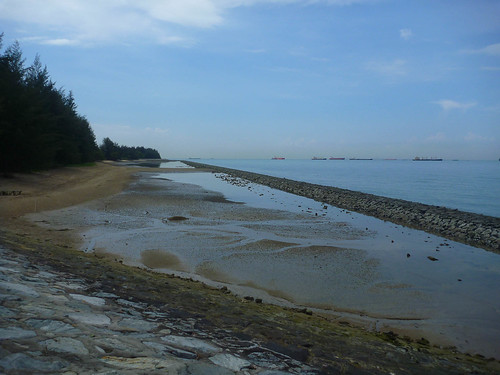
For those of us who visit and explore the shores of Singapore to document the marine life that can be found on our coasts, Tanah Merah stands out as a unique and special place. Although the original shore here is long gone due to land reclamation, a rich community of marine organisms has managed to colonise and reestablish itself. We find habitats as diverse as rocky shores, seagrass beds, sandy beaches, coastal forests, and even a coral reef on the outer edge of the seawall.

(Photo by Ria)
Unfortunately, this shore, despite its beauty and diversity, suffers from pollution. Much of the marine life is slowly recovering from the devastation of the oil spill that struck 2 years ago, although some crude oil still lingers in the environment. Another insidious threat comes from the vast quantities of garbage that wash up and get trapped behind the seawall. Because this area is not under the purview of the armies of cleaners that work tirelessly every morning to remove litter and other trash from our public beaches, the rubbish simply accumulates, forming massive piles of plastic, broken glass, and other debris.

Litter on Tanah Merah shore, July 2011;
(Photo by Ria)
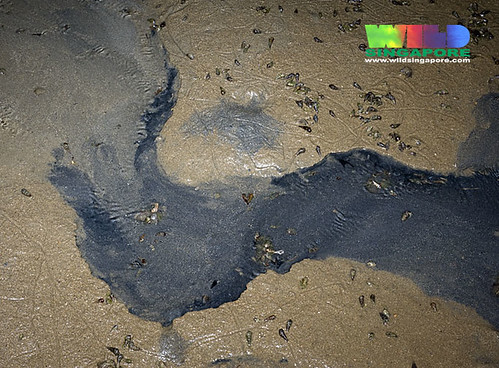
Dig deep enough, and you'll find out where much of the oil has gone, April 2012;
(Photo by Ria)
In response, the International Coastal Cleanup Singapore (ICCS) team has decided to conduct a series of year-round cleanups on this shore.

And so, keen to do my part on a shore that I am personally very fond of, I signed up for the latest session, which was held on the morning of 28th April.
Friday, April 27, 2012
First time playing with Storify
Earlier this week, I attended the U@live session featuring Professor Leo Tan. As usual, I live-tweeted the event, and decided to use Storify as a medium to curate and organise my tweets. The result is this.
Thursday, April 12, 2012
Tuesday, April 10, 2012

Monday, April 9, 2012

Tuesday, April 3, 2012

Monday, April 2, 2012

Sunday, April 1, 2012

Red-eared rescue
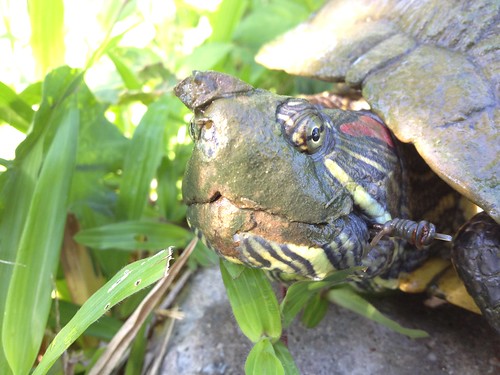
If there's one thing I can't stand, it's seeing debris left behind by careless or irresponsible anglers. On too many occasions, I find rubbish that has been left on the shore after a fishing session, whether it's unused bait, discarded catch, lightsticks, or tangles of fishing line. I do wish that more anglers would take the effort to dispose of their trash properly, especially because of the risks of wildlife being harmed by hooks and fishing line.
There have been examples of local wildlife being needlessly injured or killed by fishing gear, from birds such as Oriental pied hornbill (Anthracoceros albirostris) and barn owl (Tyto alba), to reptiles like estuarine crocodile (Crocodylus porosus), dog-faced water snake (Cerberus rynchops), and Malayan water monitor (Varanus salvator). Even wild boar (Sus scrofa vittatus) have not been spared!
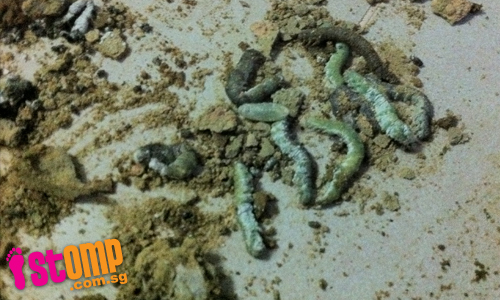
Today, I discovered yet another unfortunate victim of irresponsible anglers.
Friday, March 30, 2012


Monday, March 26, 2012
Saturday, March 17, 2012

Saturday, February 25, 2012

Thursday, February 2, 2012
Year of the Dragon: Seamoths
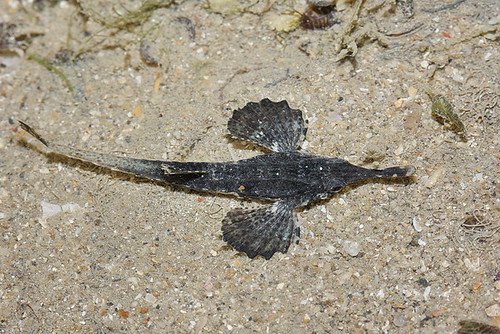
Kusu Island;
(Photo by James)
There really are quite a number of fishes with dragon-inspired names. Today, we'll look at a family of really bizarre-looking fishes which can be found in Singapore.
Wednesday, February 1, 2012
Year of the Dragon: The Dragon Eel

(Photo by Réunion Underwater Photography)
It's easy to look at a moray eel (F. Muraenidae) and imagine it to be some sort of underwater dragon, guarding the treasure within its cavernous lair. One species in particular has quite a unique appearance, and as a result carries a dragon-inspired name.
Tuesday, January 31, 2012
Year of the Dragon: The Dragon Wrasse
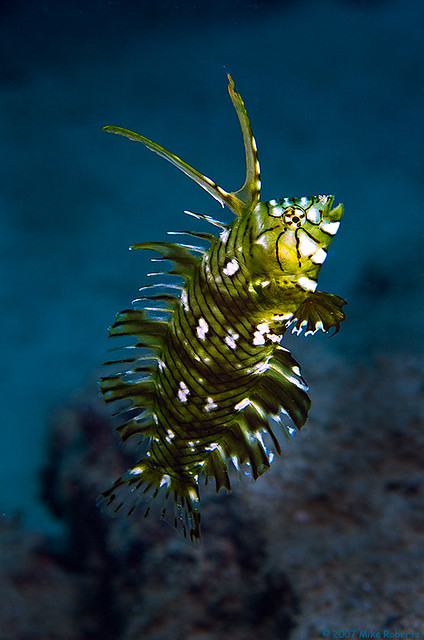
(Photo by Reeflections)
There are a number of fishes that have dragon-inspired names, and today's post will take a look at one such species.
Monday, January 30, 2012
Year of the Dragon: More Dragon Slugs

(Photo by paulhypnos)
Yesterday, we looked at a species of marine slug known as the blue dragon nudibranch, one that is seen quite often on reefs in Singapore waters. Today, my post will focus on a very different nudibranch that shares the same name.
Sunday, January 29, 2012

Saturday, January 28, 2012
Year of the Dragon: Dragon flowers

(Photo by Jörg Hempel)
It is amazing just how so many different creatures can be associated with dragons for some really spurious reasons. Take for example, the chinchillas (Chinchilla spp.), whose Chinese name of 龙猫 ('dragon cat') is due to the fact that they resemble a Japanese anime character who bears that same name in Chinese translations. Or the dragon trees (Dracaena spp.), named after their reddish sap that was extracted and marketed as the blood of mythical reptiles. And don't get me started on dragon fruit (Hylocereus spp.); the only possible link with dragons I think of comes from the apparently scaly fruits and spiny succulent stems.
With the various flowers named after dragons though, the connection with the mythical fire-breathing reptiles turns even more tenuous.
Friday, January 27, 2012
Year of the Dragon: Dragon Trees and Dragon's Blood

(Photo by Ayala Moriel)
Carrying on the theme of posts on organisms that are somehow associated with dragons, we now come to another interesting group of plants.
Thursday, January 26, 2012
Year of the Dragon: Dragon fruit
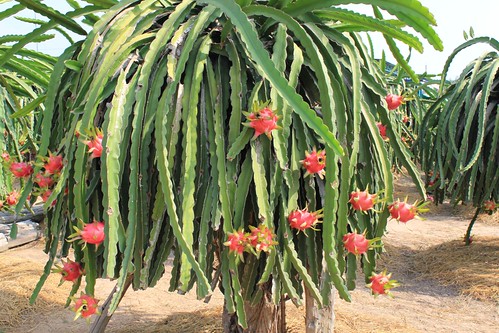
(Photo by daria_weber)
Moving away from animals for a while, this post will look at a plant that is familiar to most of us, and is linked to dragons by name.
Wednesday, January 25, 2012
Year of the Dragon: The "Dragon Cats"

(Photo by StefanKoeder)
An unfortunate consequence of having the Chinese zodiac associated with animals is that there are bound to be plenty of superstitious people who get a pet associated with that particular year, only to lose interest soon enough. Despite campaigns to encourage responsible pet ownership, the Year of the Rabbit was not a good one for plenty of pet bunnies, dumped once the novelty wore off. In Singapore, most exotic reptiles are (thankfully?) banned as pets, so we won't get a spike in cases of chameleons, iguanas or bearded dragons being released in our parks. However, there is the likelihood that by the end of the Year of the Dragon, we may see a rise in sales of another animal, and a corresponding spike in cases of abandonment and neglect. One thing's for certain, the chinchilla actually has very little to do with dragons.
Tuesday, January 24, 2012
Year of the Dragon: Singaporean Dragons
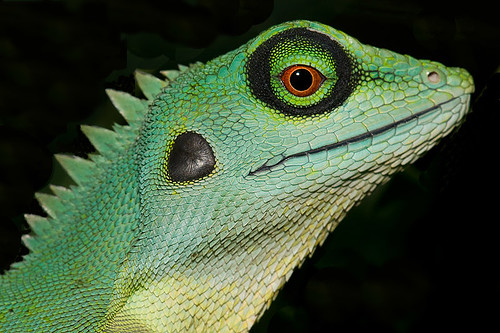
(Photo by sayhitoant)
As mentioned in yesterday's post, Singapore is home to a number of agamid lizards (F. Agamidae). This post will discuss the several species of agamids that are found here.
Monday, January 23, 2012
Year of the Dragon: Amazing Agamids
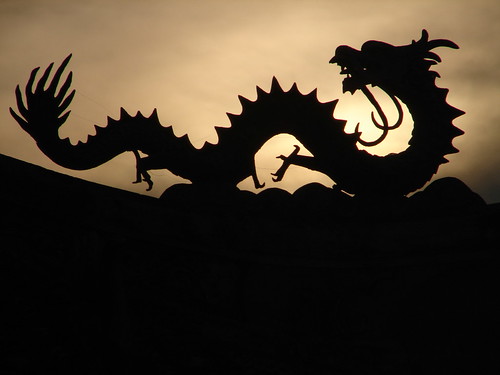
(Photo by ~zymon~)
According to the Chinese zodiac, it's now the Year of the Dragon, and I thought I'd do a special post on some of their real-life counterparts. No, dragons don't really exist, but there are a number of lizard species commonly known as 'dragons'.
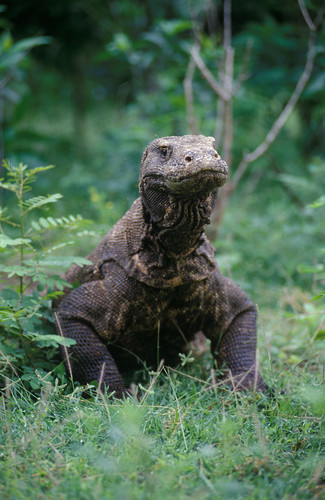
(Photo by mlp55)
The most famous 'dragon' is of course, the largest extant lizard, the Komodo dragon (Varanus komodoensis). With its fearsome, prehistoric appearance, one can easily imagine how early sightings of large monitor lizards may have led to stories about ferocious gigantic reptiles.
Besides the monitor lizards, however, there is a family of lizards which contains some very bizarre-looking members, known collectively as the agamids (F. Agamidae). Often adorned with frills and crests, some agamids look so strange that they would probably not appear out of place in a medieval bestiary.
Thursday, January 19, 2012
Flight of Dragons
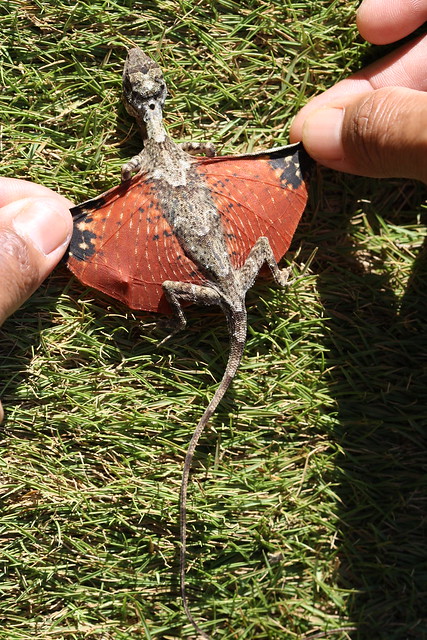
(Photo by Javier_M.)
Over the last couple of years, I've seen a particular image make its way around the Internet, popping up every now and then creating somewhat of a stir every time it resurfaces.
Wednesday, January 18, 2012

Saturday, January 14, 2012

Sunday, January 8, 2012
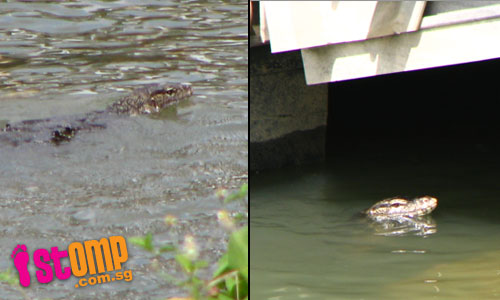
Ball-cutter fish

(Photo from The Sun)
Over the past week, you may have read about the discovery of a fish with a rather unsavory taste for a particularly vulnerable part of the human anatomy.
Saturday, January 7, 2012
Seven Links Blog Project: A Milestone Year
We're almost a week into the new year, and while I'm not really the sort who likes to reflect on the past year and mull over my successes and failures, Crystal Riley from Crystal and Bryan in Singapore has tagged me to take part in the Seven Links Blog Project, where I repost links to seven of my posts from different categories. Although I was tagged last year, I only found out last night, and I guess it's still not too late for me to look back on 2011.
Thursday, January 5, 2012
On Meat-eating Giant Pandas

(Photo from Huffington Post UK)
A few days ago, this sequence of camera trap images of a giant panda (Ailuropoda melanoleuca) gnawing on the carcass of an animal started showing up on news sites all over the world. It's received quite a fair bit of attention, and certainly reveals a darker side to the seemingly placid and peaceful nature of the giant panda. However, it does appear that much of the coverage of this story overlooks a couple of facts.
Subscribe to:
Posts (Atom)